. 2013 Jul;21(7):1316-23.
doi: 10.1038/mt.2013.68. Epub 2013 May 7.

Generation of a hypomorphic model of propionic acidemia amenable to gene therapy testing

Affiliations

Generation of a hypomorphic model of propionic acidemia amenable to gene therapy testing

Adam J Guenzel et al. Mol Ther. 2013 Jul.

Abstract

Propionic acidemia (PA) is a recessive genetic disease that results in an inability to metabolize certain amino acids and odd-chain fatty acids. Current treatment involves restricting consumption of these substrates or liver transplantation. Deletion of the Pcca gene in mice mimics the most severe forms of the human disease. Pcca(-) mice die within 36 hours of birth, making it difficult to test intravenous systemic therapies in them. We generated an adult hypomorphic model of PA in Pcca(-) mice using a transgene bearing an A138T mutant of the human PCCA protein. Pcca(-/-)(A138T) mice have 2% of wild-type PCC activity, survive to adulthood, and have elevations in propionyl-carnitine, methylcitrate, glycine, alanine, lysine, ammonia, and markers associated with cardiomyopathy similar to those in patients with PA. This adult model allowed gene therapy testing by intravenous injection with adenovirus serotype 5 (Ad5) and adeno-associated virus 2/8 (AAV8) vectors. Ad5-mediated more rapid increases in PCCA protein and propionyl-CoA carboxylase (PCC) activity in the liver than AAV8 and both vectors reduced propionylcarnitine and methylcitrate levels. Phenotypic correction was transient with first generation Ad whereas AAV8-mediated long-lasting effects. These data suggest that this PA model may be a useful platform for optimizing systemic intravenous therapies for PA.


Figures
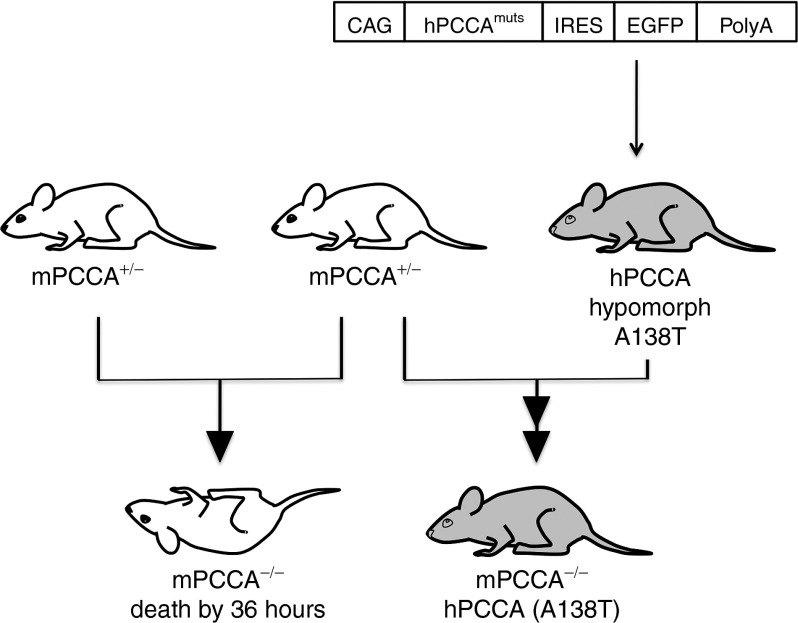
Figure 1
Figure 1
Strategy for generating PCCA hypomorph mice. Depiction of the insertion cassette microinjected into FVB mouse fertilized eggs (top). Two separate hypomorph constructs were injected, one with an A138T mutation and another with an A75P mutation. IRES-GFP DNA sequence was included to aid in genotyping founder mice. (bottom) Breeding strategies of Pcca−/− and Pcca−/−(A138T) mice. The A138T transcript increases survival well beyond the 36 hours observed in full knockout mice. CAG, cytomegalovirus early enhancer coupled with chicken β-actin promoter; EGFP, enhanced green fluorescent protein; IRES, internal ribosome entry site.
Figure 2
Figure 2
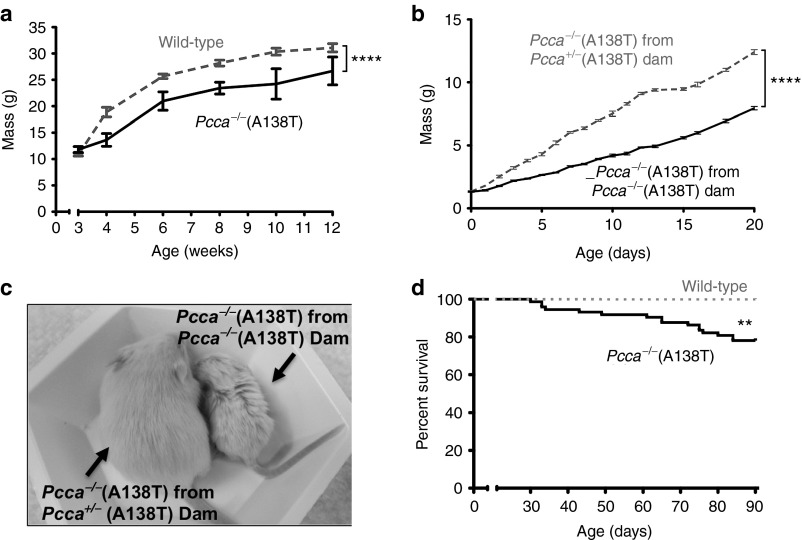
Growth of PCCA−/−(A138T) hypomorph mice. (a) Growth curve of Pcca−/−(A138T) mice versus wild-type animals with intact endogenous mouse Pcca (n ≥ 7 for all data points). (b) Growth curve of pups born from indicated dams. Pups from litters with ≥5 pups were analyzed (n = 14). (c) Photo of Pcca−/−(A138T) mice birthed by a Pcca+/− dam (left) alongside a mouse birthed by a Pcca−/−(A138T) dam (right), picture was taken when both mice were weaned at 3 weeks of age. (d) Kaplan–Meier survival curve depicting death rate of Pcca−/−(A138T) mice (n = 73) versus wild-type (n = 30). Error bars in the line graph depict SEM. ****P < 0.0001; **P < 0.01.
Figure 3
Figure 3
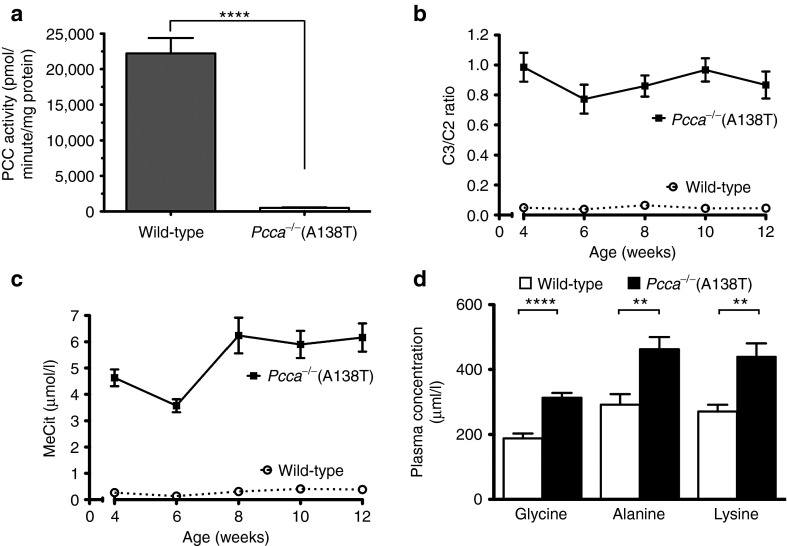
Biomarker concentrations in PCCA hypomorphs. (a) Determination of PCC enzyme activity in liver of Pcca−/−(A138T) mice (n = 10) as compared with wild-type mice (n = 3). (b) Ratio of propionylcarnitine (C3) to acetylcarnitine (C2) in dried blood spots. Pcca−/−(A138T) mice exhibit ~18-fold higher C3/C2 than wild-type animals (n ≥ 12 for all data points). (c) Levels of methyl citrate (MeCit) in the same samples (n ≥ 12 for all data points). (d) Comparison of indicated amino acid levels in plasma of wild-type or Pcca−/−(A138T) mice. Error bars in line and bar graphs depict SEM. ****P < 0.0001; **P < 0.01.
Figure 4
Figure 4
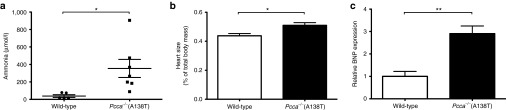
Phenotypic markers. At 8 months of age, mice were killed and their body mass was recorded. (a) Blood was drawn to determine concentration of ammonia in plasma samples. (b) Hearts were removed from the animals and their mass recorded and was normalized to total body mass. (c) Level of BNP mRNA obtained from mouse heart tissue was also determined. **P < 0.01; *P < 0.05.
Figure 5
Figure 5
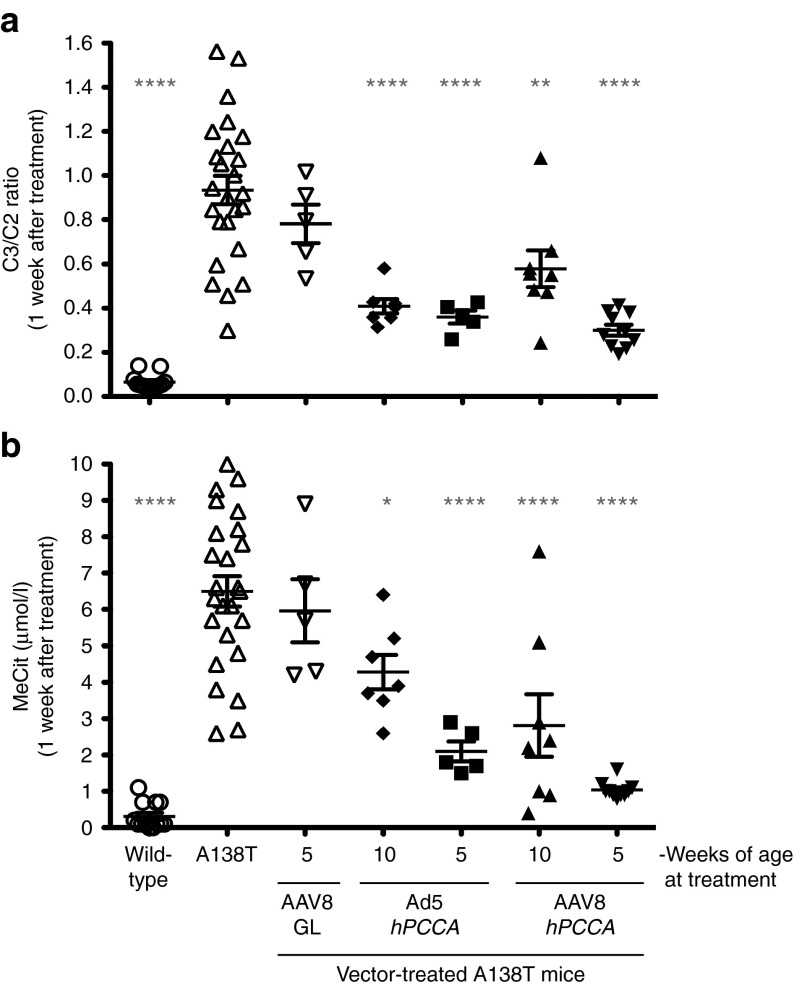
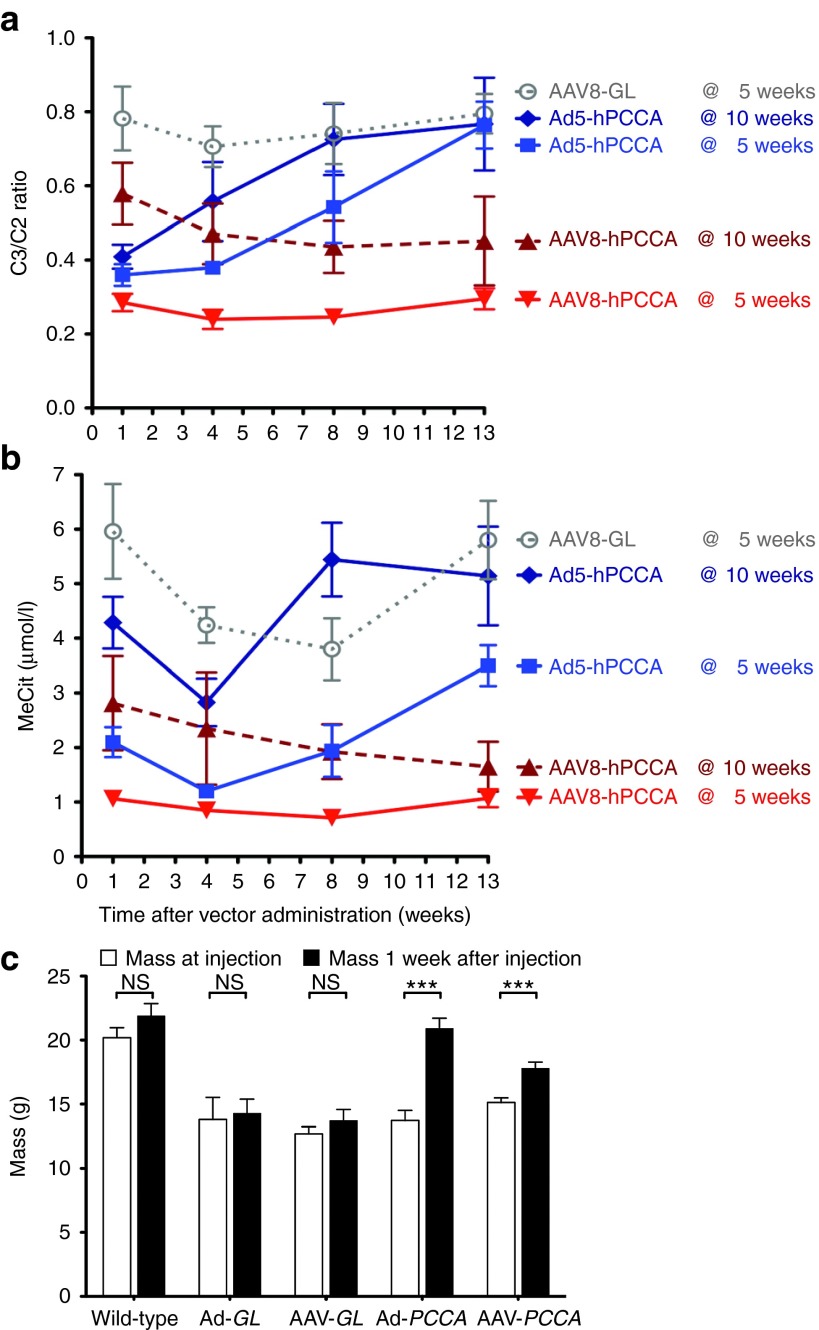
Biomarker response to treatment. (a) C3/C2 ratio assayed 1 week after administration of 5 × 1011 vg AAV2/8-hPCCAco at either 5 or 10 weeks of age along with 5 × 1010 vp Ad-hPCCAco at either 5 or 10 weeks of age. (b) The same samples were analyzed for MeCit levels. ****P < 0.0001; **P < 0.01; *P < 0.05; and asterisks also represent statistical significance compared with untreated Pcca-/- A138T mice. Error bars in graphs depict SEM.
Figure 6
Figure 6
Therapeutic response to viral vector treatment. (a) C3/C2 ratio assayed at time points up to 13 weeks after administration of control AAV2/8-GFPLuc at 5 weeks old (n = 5), AAV2/8-hPCCAco (n = 10 at 5 weeks old, n = 9 at 10 weeks old) or Ad-hPCCAco (n = 5 at 5 weeks old, n = 7 at 10 weeks old) as in Figure 4. (b) The same samples were analyzed for MeCit levels. (c) Body mass response 1 week after vector administration. Mass was recorded at 5 and 6 weeks of age for wild-type and Pcca−/−(A138T) mice born from a Pcca−/−(A138T) dam. At the time of the 5-week measurement, Pcca−/−(A138T) mice were injected with control AAV2/8-GFPLuc (n = 5), Ad5-GFPLuc (n = 5), Ad5-hPCCAco (n = 5), or AAV2/8-hPCCAco (n = 10). Five-week mass measurements are represented in the left column and 6-week measurements are represented in the right column for each treatment data set. Error bars in line and bar graphs depict SEM. NS, not significance.***P < 0.001.
Figure 7
Figure 7
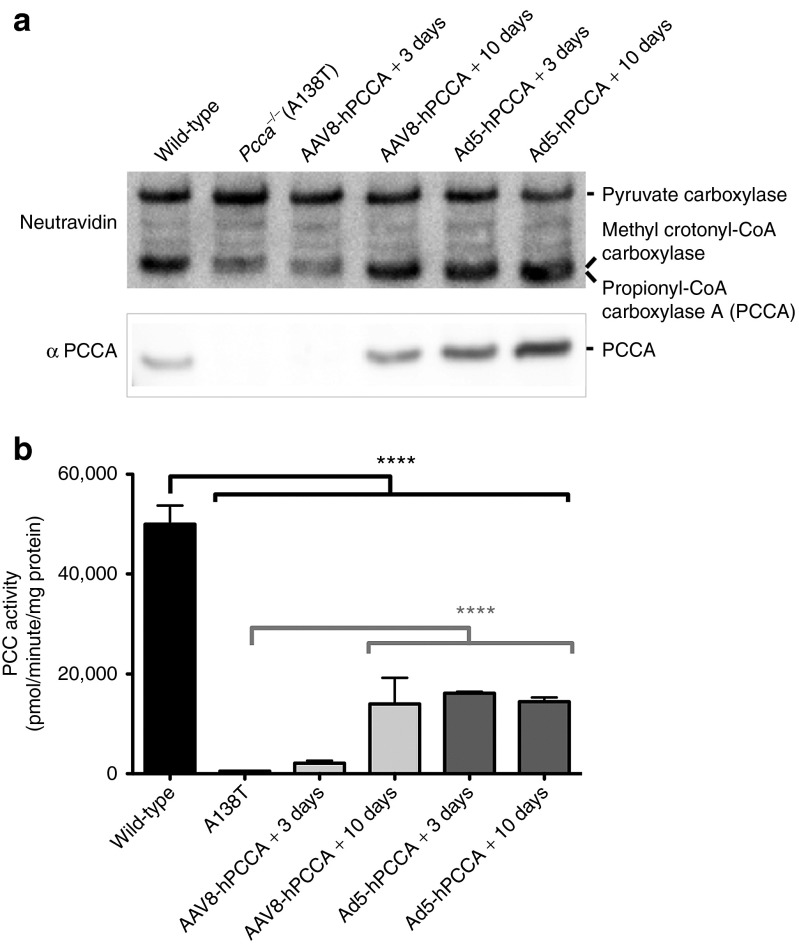
Endogenous and treatment protein levels. Pcca−/−(A138T) mice were treated with 5 × 1011 vg AAV2/8-hPCCAco or 5 × 1010 vp Ad-hPCCAco at 5 weeks of age. Livers were removed either 3 or 10 days after vector administration. (a) 25 μg of total liver protein was run on SDS-PAGE gels and blotted onto PVDF membrane. Blots were probed with either Neutravidin or anti-PCCA antibody. The upper band is consistent with pyruvate carboxylase and served as a loading control. (b) Pieces of the same livers were analyzed for PCC enzyme activity. ****P < 0.0001.

References

    1. Ravn K, Chloupkova M, Christensen E, Brandt NJ, Simonsen H, Kraus JP, et al. High incidence of propionic acidemia in greenland is due to a prevalent mutation, 1540insCCC, in the gene for the beta-subunit of propionyl CoA carboxylase. Am J Hum Genet. 2000;67:203–206. - PMC - PubMed
    1. Gravel RA, Lam KF, Mahuran D, Kronis A. Purification of human liver propionyl-CoA carboxylase by carbon tetrachloride extraction and monomeric avidin affinity chromatography. Arch Biochem Biophys. 1980;201:669–673. - PubMed
    1. Kalousek F, Darigo MD, Rosenberg LE. Isolation and characterization of propionyl-CoA carboxylase from normal human liver. Evidence for a protomeric tetramer of nonidentical subunits. J Biol Chem. 1980;255:60–65. - PubMed
    1. Huang CS, Sadre-Bazzaz K, Shen Y, Deng B, Zhou ZH, Tong L. Crystal structure of the alpha(6)beta(6) holoenzyme of propionyl-coenzyme A carboxylase. Nature. 2010;466:1001–1005. - PMC - PubMed
    1. Pérez B, Desviat LR, Rodríguez-Pombo P, Clavero S, Navarrete R, Perez-Cerdá C, et al. Propionic acidemia: identification of twenty-four novel mutations in Europe and North America. Mol Genet Metab. 2003;78:59–67. - PubMed

Publication types

Substances