


Role for the kinase SGK1 in stress, depression, and glucocorticoid effects on hippocampal neurogenesis
- PMID: 23650397
- PMCID: PMC3666742
- DOI: 10.1073/pnas.1300886110
Role for the kinase SGK1 in stress, depression, and glucocorticoid effects on hippocampal neurogenesis
Abstract
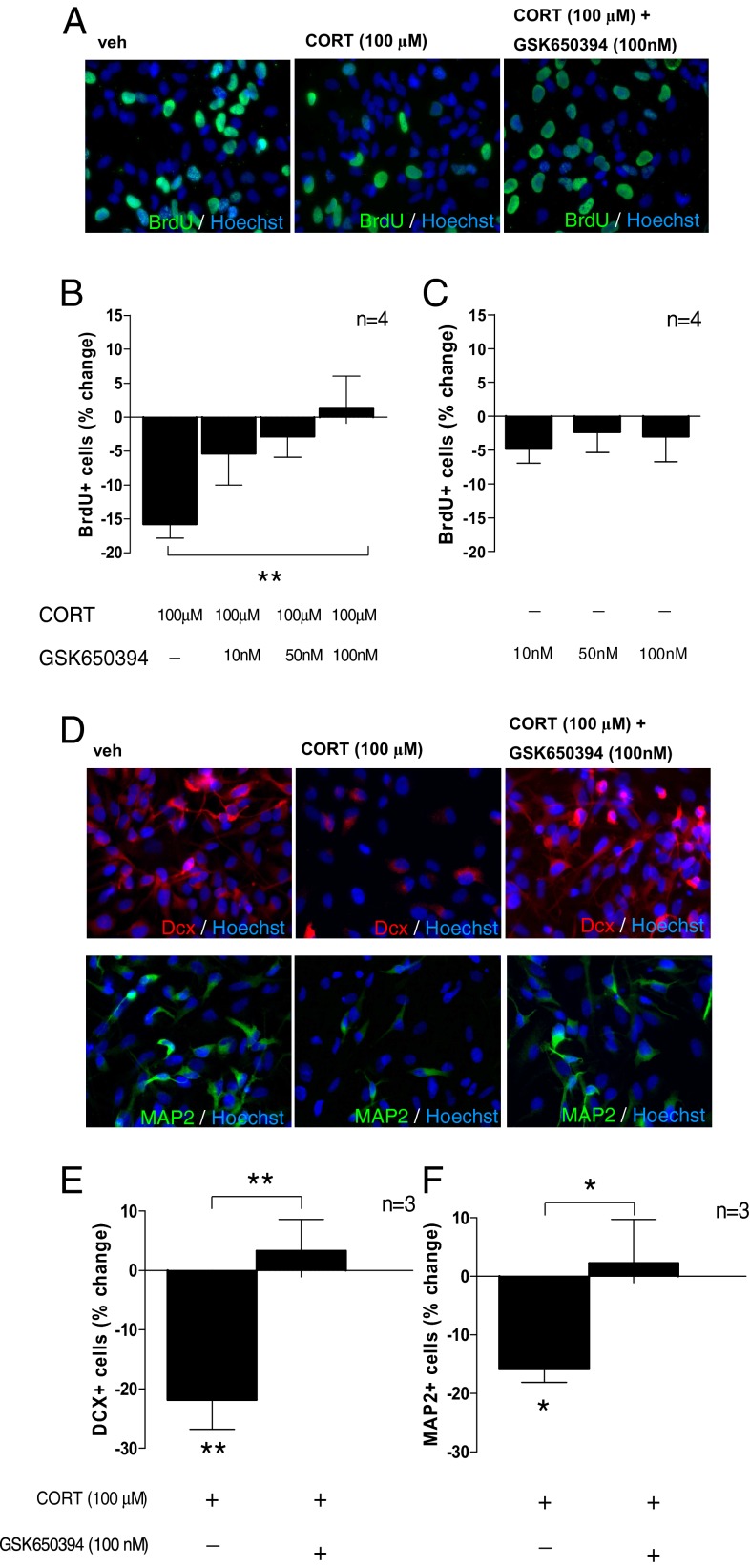
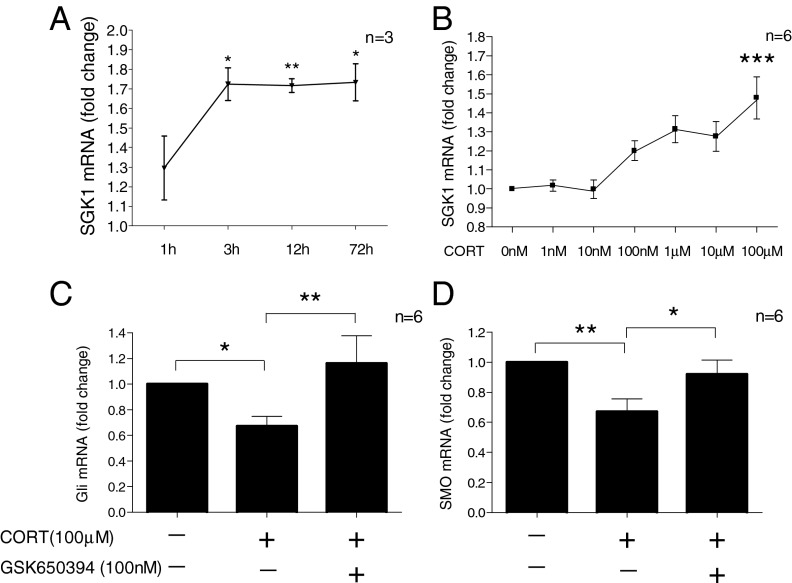
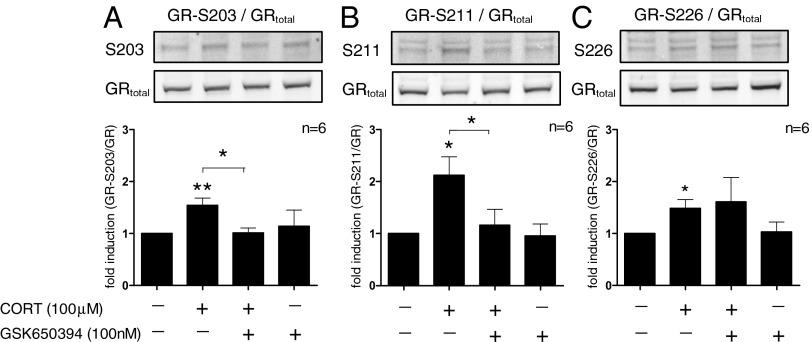
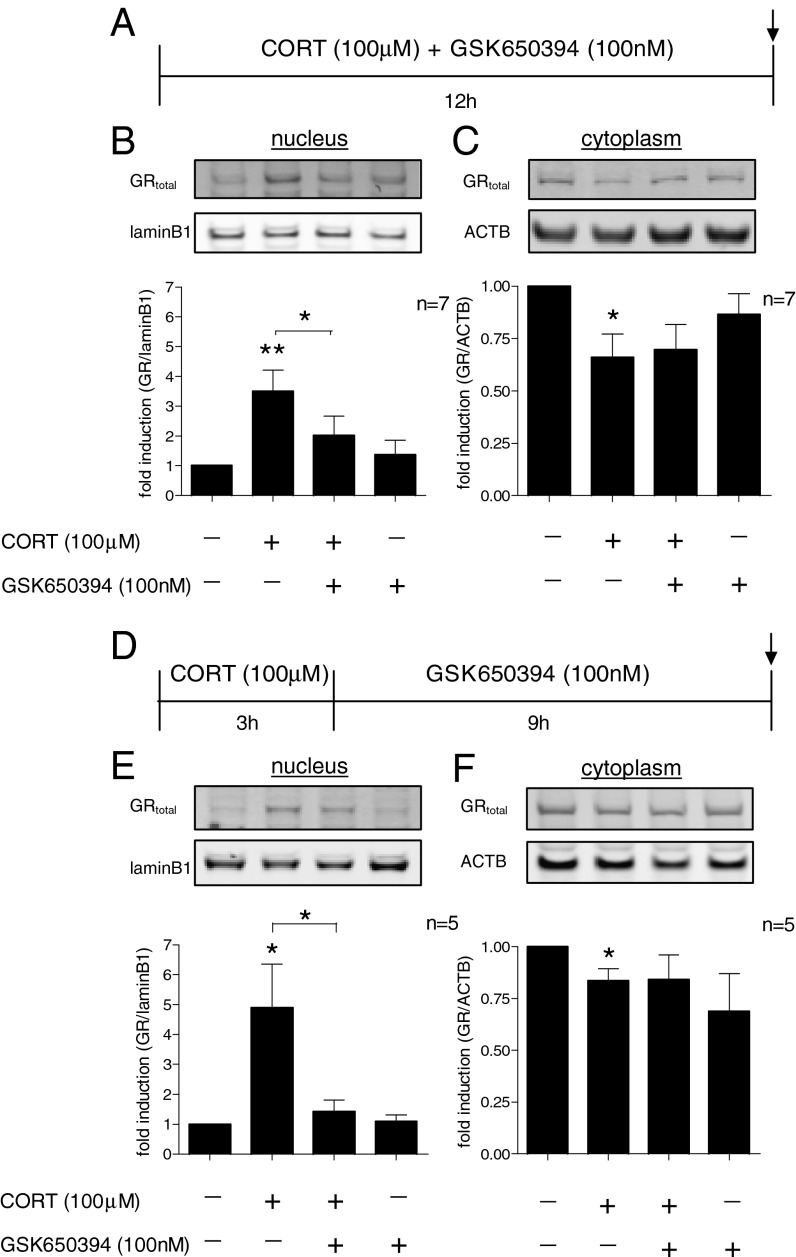
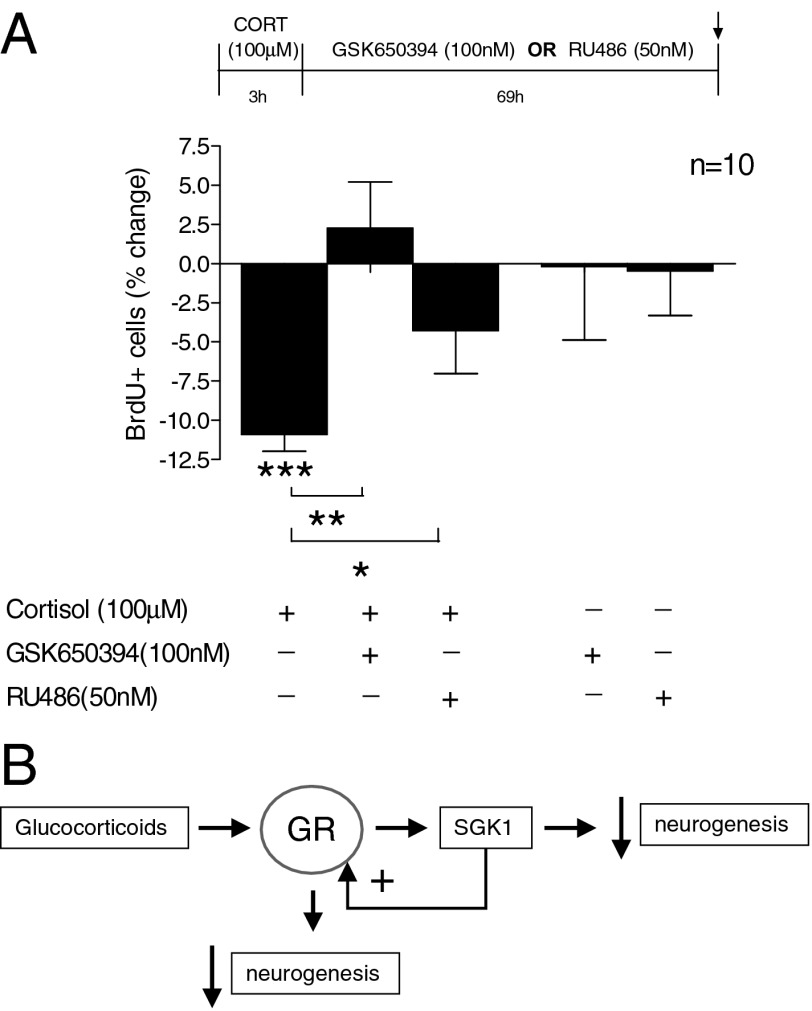
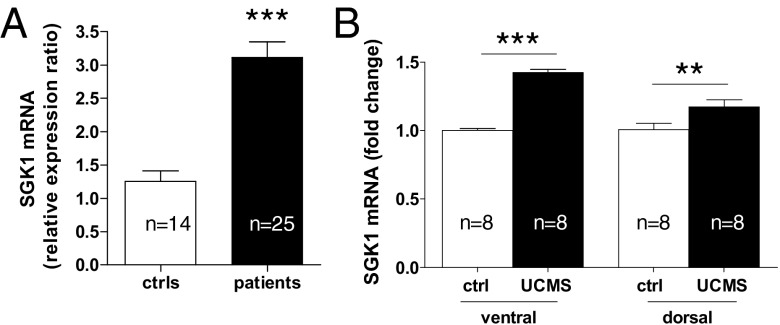
Stress and glucocorticoid hormones regulate hippocampal neurogenesis, but the molecular mechanisms mediating these effects are poorly understood. Here we identify the glucocorticoid receptor (GR) target gene, serum- and glucocorticoid-inducible kinase 1 (SGK1), as one such mechanism. Using a human hippocampal progenitor cell line, we found that a small molecule inhibitor for SGK1, GSK650394, counteracted the cortisol-induced reduction in neurogenesis. Moreover, gene expression and pathway analysis showed that inhibition of the neurogenic Hedgehog pathway by cortisol was SGK1-dependent. SGK1 also potentiated and maintained GR activation in the presence of cortisol, and even after cortisol withdrawal, by increasing GR phosphorylation and GR nuclear translocation. Experiments combining the inhibitor for SGK1, GSK650394, with the GR antagonist, RU486, demonstrated that SGK1 was involved in the cortisol-induced reduction in progenitor proliferation both downstream of GR, by regulating relevant target genes, and upstream of GR, by increasing GR function. Corroborating the relevance of these findings in clinical and rodent settings, we also observed a significant increase of SGK1 mRNA in peripheral blood of drug-free depressed patients, as well as in the hippocampus of rats subjected to either unpredictable chronic mild stress or prenatal stress. Our findings identify SGK1 as a mediator for the effects of cortisol on neurogenesis and GR function, with particular relevance to stress and depression.
Keywords: antidepressants; hypothalamus–pituitary–adrenal axis; neuroplasticity; stem cells.
Conflict of interest statement
Conflict of interest statement: J.P. acted as a consultant and received payment from ReNeuron Group within the last 2 y. C.M.P. has received fees as a speaker or as a member of advisory board, as well as research funding, from pharmaceutical companies that commercialize or are developing antidepressants in the last 3 y, such as Lilly, Servier, and Janssen. M.A.R. has received compensation as speaker/consultant for AstraZeneca, Bristol-Myers Squibb, Eli Lilly, Servier, and Takeda. P.A.Z. has received speaker fees from Servier.
Figures
References
-
- Mayer JL, et al. Brief treatment with the glucocorticoid receptor antagonist mifepristone normalises the corticosterone-induced reduction of adult hippocampal neurogenesis. J Neuroendocrinol. 2006;18(8):629–631. - PubMed
Publication types
MeSH terms
Substances
Grants and funding
LinkOut - more resources
Full Text Sources
Other Literature Sources
Medical
Molecular Biology Databases
