


LPLUNC1 inhibits nasopharyngeal carcinoma cell growth via down-regulation of the MAP kinase and cyclin D1/E2F pathways
- PMID: 23650533
- PMCID: PMC3641110
- DOI: 10.1371/journal.pone.0062869
LPLUNC1 inhibits nasopharyngeal carcinoma cell growth via down-regulation of the MAP kinase and cyclin D1/E2F pathways
Erratum in
- PLoS One. 2013;8(8). doi:10.1371/annotation/e120c2f3-efb3-4bac-931d-b53751136785
Abstract
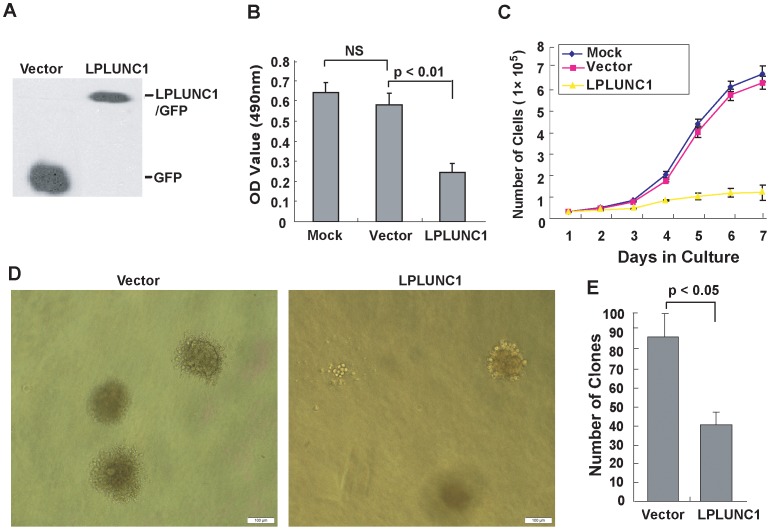
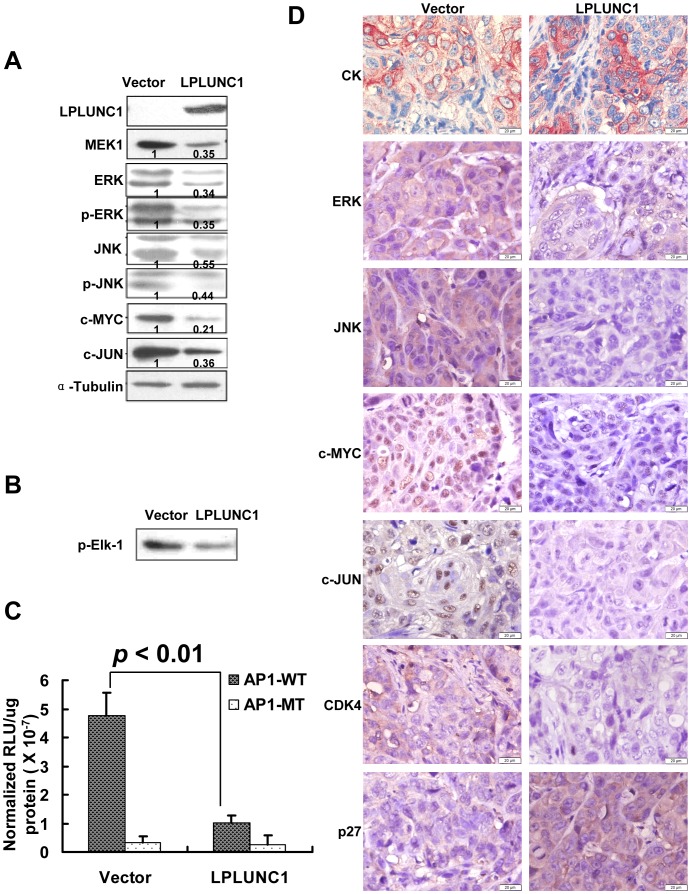
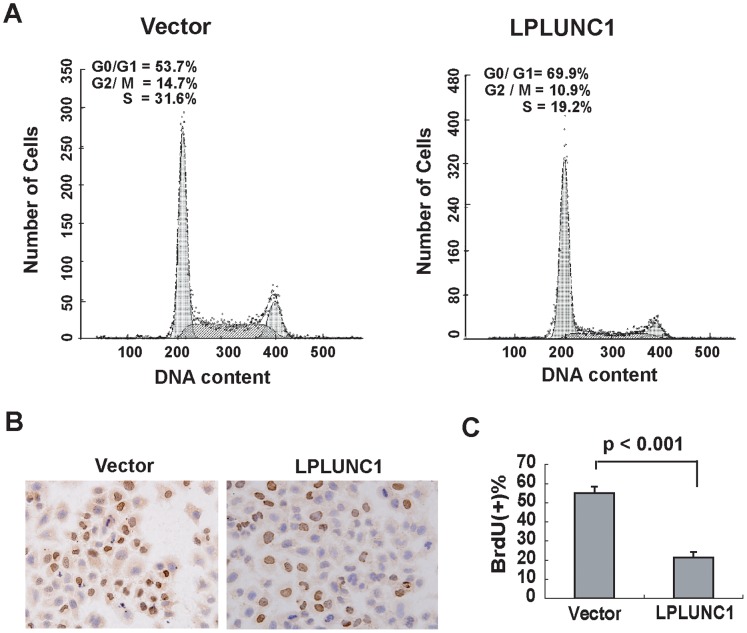
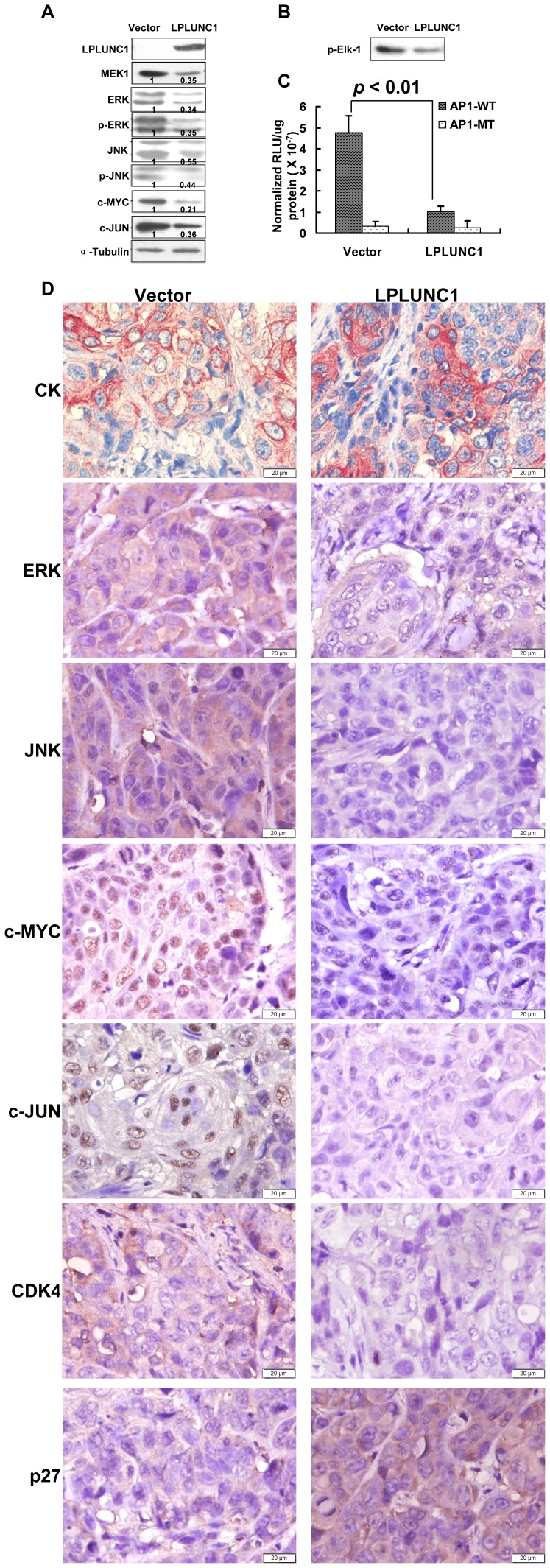
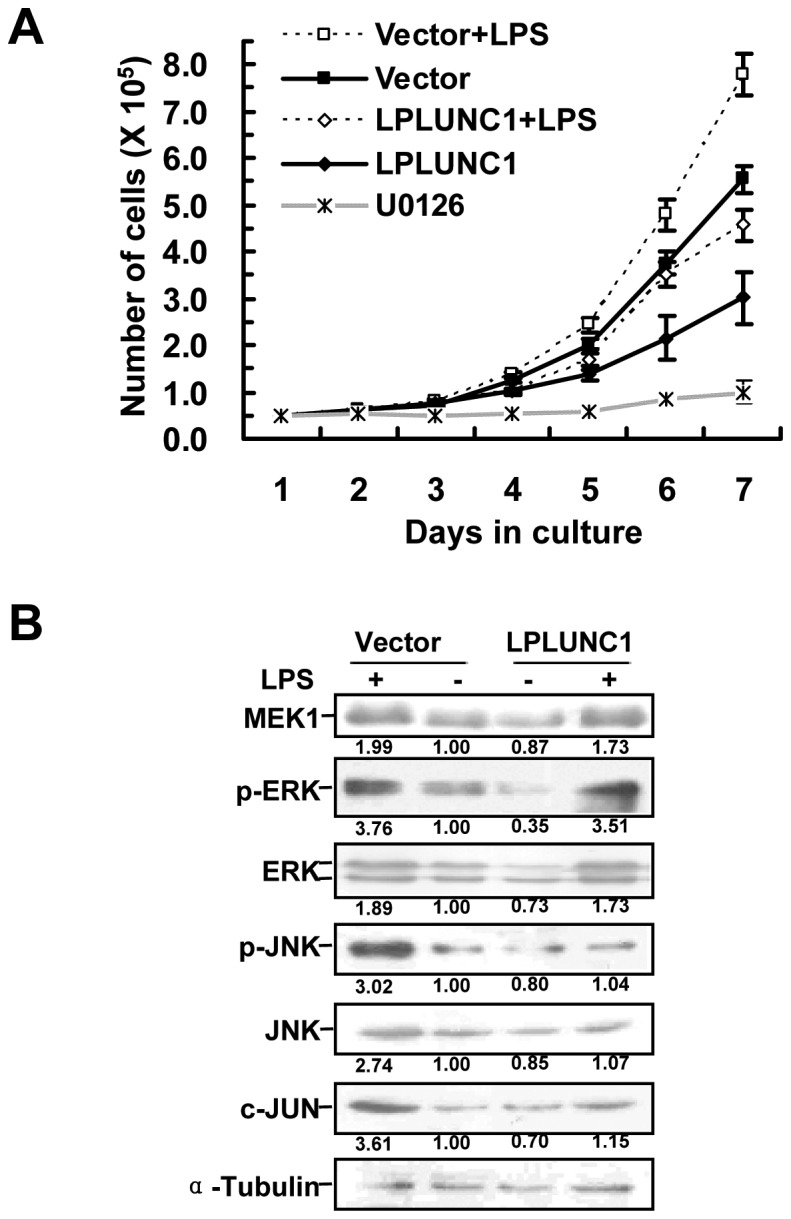
Long-palate, lung and nasal epithelium clone 1 (LPLUNC1) gene expression is relatively tissue specific. It is highly expressed in nontumor nasopharyngeal epithelial tissues, but its expression is reduced in nasopharyngeal carcinoma (NPC), indicating that LPLUNC1 may be associated with the tumorigenesis of NPC. To study the effects of LPLUNC1 on NPC tumorigenesis, a full-length LPLUNC1 expression plasmid was stably transfected into the NPC cell line, 5-8F. Our data indicated that LPLUNC1 inhibited NPC cell proliferation in vitro and tumor formation in vivo. LPLUNC1 also delayed cell cycle progression from G1 to S phase and inhibited the expression of cyclin D1, cyclin-dependent kinase 4 (CDK4) and phosphorylated Rb. To further investigate the molecular mechanisms underlying the suppressive effects of LPLUNC1 on NPC tumorigenesis, cDNA microarray was performed. These studies revealed that LPLUNC1 inhibited the expression of certain mitogen-activated protein (MAP) kinases (MAPK) kinases and cell cycle-related molecules. Western blotting confirmed that the expression of MEK1, phosphorylated ERK1/2, phosphorylated JNK1/2, c-Myc and c-Jun were inhibited by LPLUNC1. Furthermore, the transcriptional activity of AP-1 was down-regulated by LPLUNC1, suggesting that the MAPK signaling pathway is regulated by LPLUNC1. Taken together, the present study indicates that LPLUNC1 delays NPC cell growth by inhibiting the MAPK and cyclin D1/E2F pathways and suggests that LPLUNC1 may represent a promising candidate tumor suppressor gene associated with NPC.
Conflict of interest statement
Figures


References
-
- Hildesheim A, Levine PH (1993) Etiology of nasopharyngeal carcinoma: a review. Epidemiol Rev 15: 466–485. - PubMed
-
- Zeng Z, Huang H, Zhang W, Xiang B, Zhou M, et al. (2011) Nasopharyngeal carcinoma: advances in genomics and molecular genetics. Sci China Life Sci 54: 966–975. - PubMed
-
- Feng BJ, Huang W, Shugart YY, Lee MK, Zhang F, et al. (2002) Genome-wide scan for familial nasopharyngeal carcinoma reveals evidence of linkage to chromosome 4. Nat Genet 31: 395–399. - PubMed
-
- Xiong W, Zeng ZY, Xia JH, Xia K, Shen SR, et al. (2004) A susceptibility locus at chromosome 3p21 linked to familial nasopharyngeal carcinoma. Cancer Res 64: 1972–1974. - PubMed
-
- Deng L, Jing N, Tan G, Zhou M, Zhan F, et al. (1998) A common region of allelic loss on chromosome region 3p25.3–26.3 in nasopharyngeal carcinoma. Genes Chromosomes Cancer 23: 21–25. - PubMed
Publication types
MeSH terms
Substances
LinkOut - more resources
Full Text Sources
Other Literature Sources
Research Materials
Miscellaneous
