. 2013:4:1812.
doi: 10.1038/ncomms2840.

Transmission-blocking interventions eliminate malaria from laboratory populations

Affiliations
Free PMC article

Transmission-blocking interventions eliminate malaria from laboratory populations

A M Blagborough et al. Nat Commun. 2013.
Free PMC article

Abstract

Transmission-blocking interventions aim to reduce the prevalence of infection in endemic communities by targeting Plasmodium within the insect host. Although many studies have reported the successful reduction of infection in the mosquito vector, direct evidence that there is an onward reduction in infection in the vertebrate host is lacking. Here we report the first experiments using a population, transmission-based study of Plasmodium berghei in Anopheles stephensi to assess the impact of a transmission-blocking drug upon both insect and host populations over multiple transmission cycles. We demonstrate that the selected transmission-blocking intervention, which inhibits transmission from vertebrate to insect by only 32%, reduces the basic reproduction number of the parasite by 20%, and in our model system can eliminate Plasmodium from mosquito and mouse populations at low transmission intensities. These findings clearly demonstrate that use of transmission-blocking interventions alone can eliminate Plasmodium from a vertebrate population, and have significant implications for the future design and implementation of transmission-blocking interventions within the field.


Figures
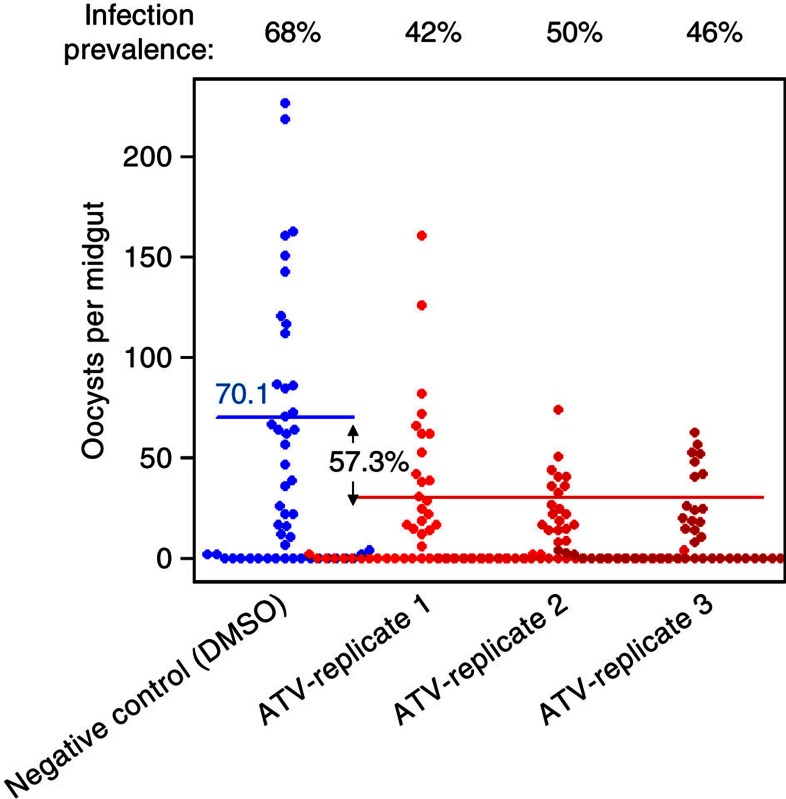
Figure 1
Figure 1. Transmission-blocking impact of atovaquone on P. berghei as determined by direct-feed assay.
ATV dosage used was 0.5 μg kg−1. An equal volume of DMSO (i.p.) was used as a negative control. Oocysts present on the mosquito midguts were counted 10 days post feeding. Each data point represents a single mosquito within an individual treatment group. X-axis points represent individual mice. Blue horizontal line indicates the mean number of oocysts for the negative control treatment; red horizontal line indicates the mean number of oocysts for all three ATV replicates. Mean ATV impact from three replicates was 57.3% reduction in oocyst intensity and a 32.3% reduction in infection prevalence (hereafter referred to as TBooc 57/32%).
Figure 2
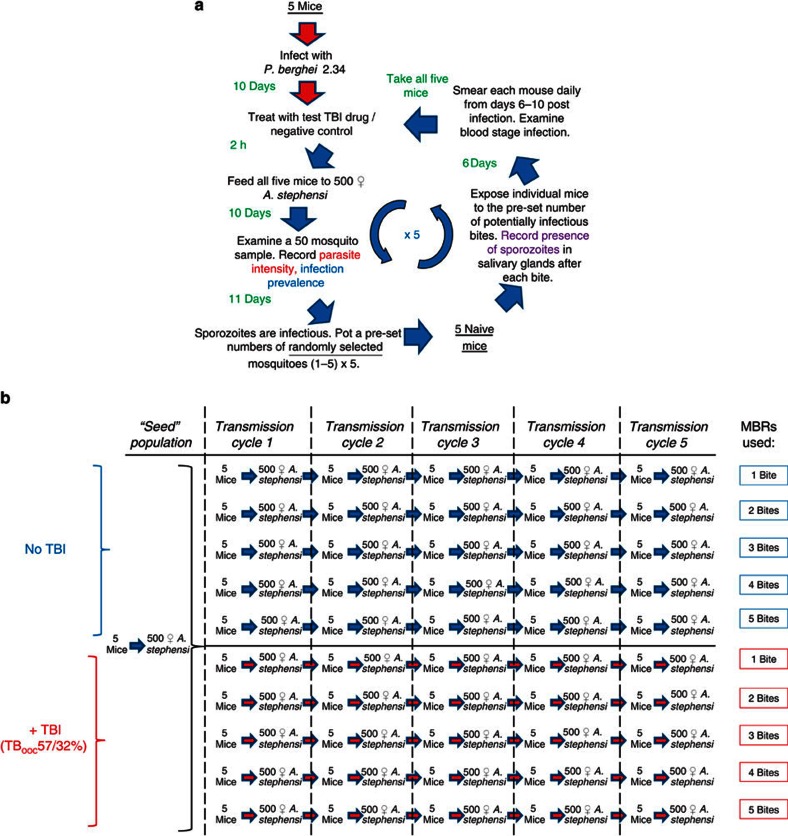
Figure 2. Experimental design of population transmission experiments.
(a) A single experimental round of mouse–mosquito–mouse transmission using P. berghei and Anopheles stephensi. (b) Schematic of performed population transmission experiments. Total number of mosquitoes and mice used are described. Ten paired parallel transmission experiments were performed, for five successive cycles of transmission. Red arrows indicate transmission carried out in presence of TBI (TBooc 57/32%), blue arrows indicate transmission carried out in absence of TBI (with control). Five MBRs of one to five (potentially infected mosquito bites per naive mouse) were examined.
Figure 3
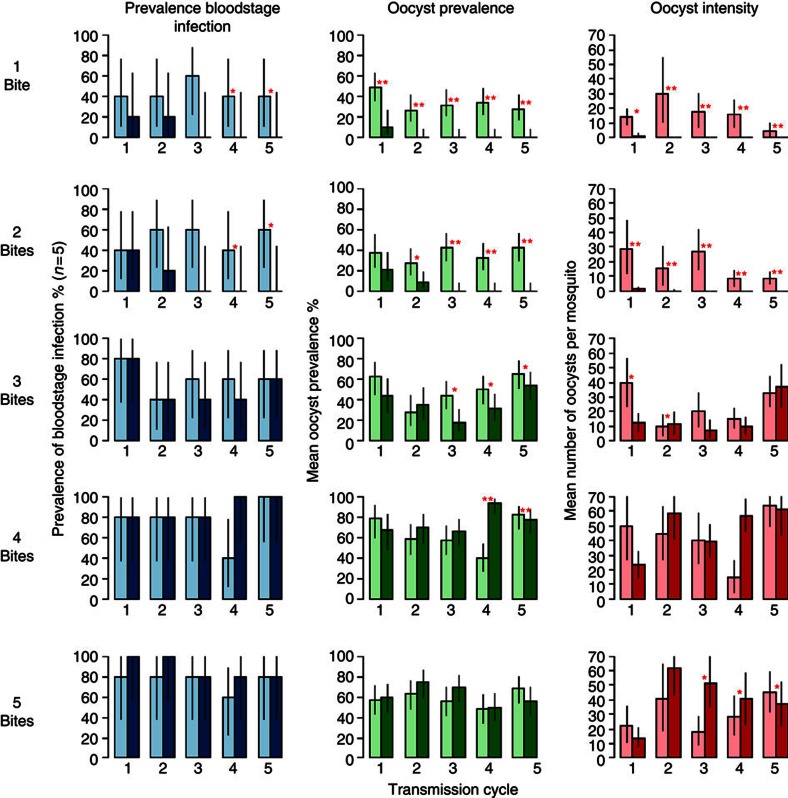
Figure 3. Effect of a TBI with an efficacy of TBooc 57/32% on host/vector infection over successive rounds of transmission.
Each row shows a different MBR with mice receiving either one, two, three, four or five bites per generation. The first column (blue bars) shows the number of mice developing parasitemias over the different rounds of the experiment, the second column (green bars) the percentage of mosquitoes developing oocysts and third column (red bars) the mean intensity of oocyst per mosquito. Lighter bars denote control group with no intervention while darker bars signify those administered with the TBI. Vertical grey lines indicate 95% CIs. Red stars indicate the number of rounds required for there to be a statistically significant difference between the control and treatment arms of the experiment (*P<0.05, **P<0.001). At each generation at a single biting rate, for mice n=10, mosquitoes n=1,000.
Figure 4
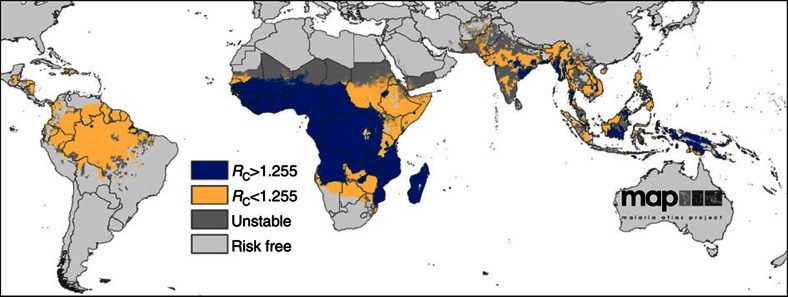
Figure 4. Spatial global malaria distribution of areas with Rc<1.255.
Blue: Rc>1.255, yellow: Rc<1.255. Areas of unstable transmission (medium grey areas) or no risk (light grey) are also indicated.

References

    1. WHO. WHO Global Malaria Program: World Malaria Report 2012 WHO (2012).
    1. Sinden R.E. A biologist's perspective on malaria vaccine development. Hum. Vaccin. 6, 3–11 (2010). - PubMed
    1. Alavi Y. et al.. The dynamics of interactions between Plasmodium and the mosquito: a study of the infectivity of Plasmodium berghei and Plasmodium gallinaceum, and their transmission by Anopheles stephensi, Anopheles gambiae and Aedes aegypti. Int. J. Parasitol. 33, 933–943 (2003). - PubMed
    1. Rosenberg R. Malaria: some considerations regarding parasite productivity. Trends Paras. 24, 487–491 (2008). - PubMed
    1. Smith D.L., Ellis McKenzie F., Snow R.W. & Hay S.I. Revisiting the basic reproductive number for malaria and its implications for malaria control. PLoS Biol. 5, 531–541 (2007). - PMC - PubMed

Publication types