


RIG-I detects triphosphorylated RNA of Listeria monocytogenes during infection in non-immune cells
- PMID: 23653683
- PMCID: PMC3639904
- DOI: 10.1371/journal.pone.0062872
RIG-I detects triphosphorylated RNA of Listeria monocytogenes during infection in non-immune cells
Abstract
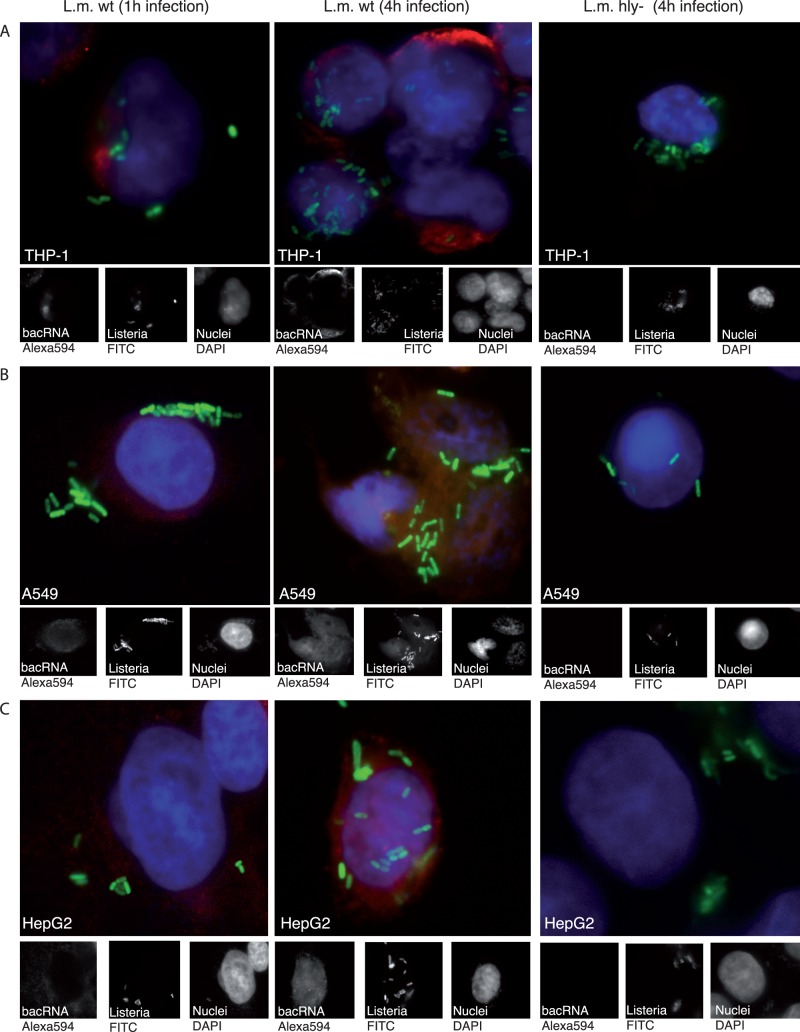
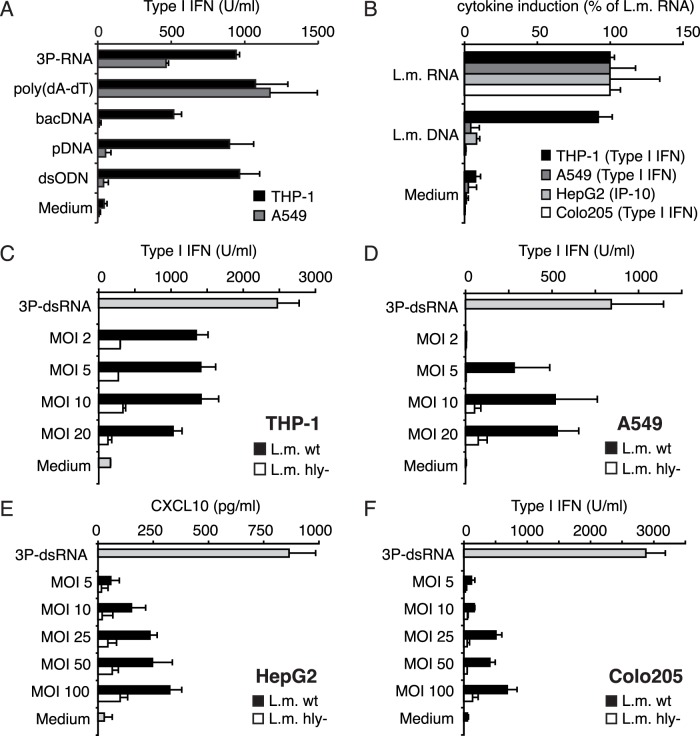
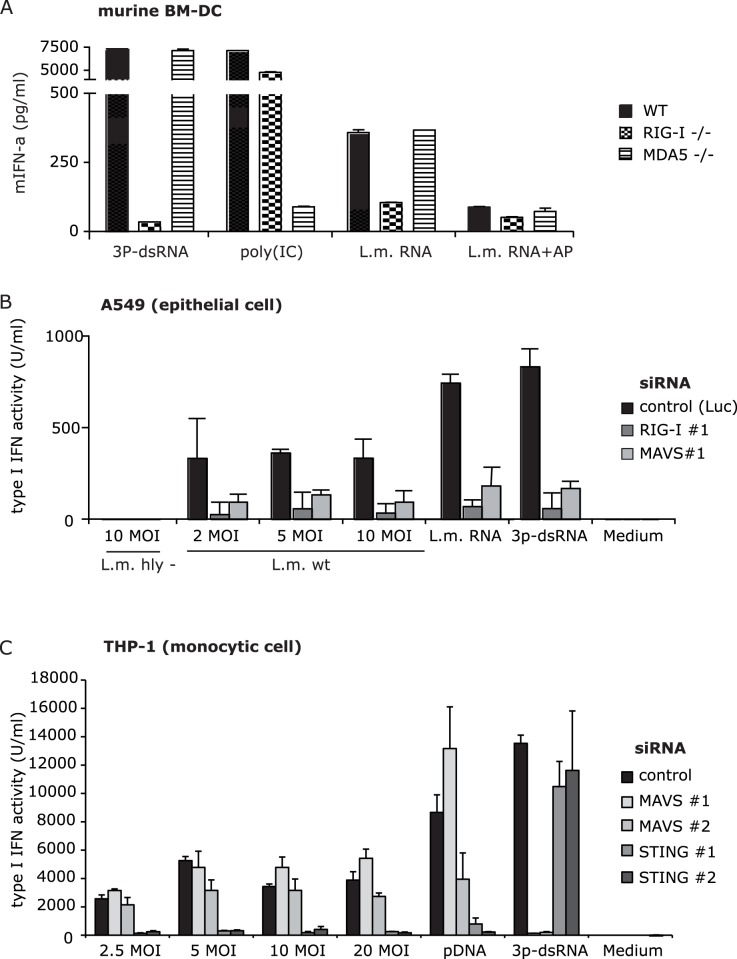
The innate immune system senses pathogens by pattern recognition receptors in different cell compartments. In the endosome, bacteria are generally recognized by TLRs; facultative intracellular bacteria such as Listeria, however, can escape the endosome. Once in the cytosol, they become accessible to cytosolic pattern recognition receptors, which recognize components of the bacterial cell wall, metabolites or bacterial nucleic acids and initiate an immune response in the host cell. Current knowledge has been focused on the type I IFN response to Listeria DNA or Listeria-derived second messenger c-di-AMP via the signaling adaptor STING. Our study focused on the recognition of Listeria RNA in the cytosol. With the aid of a novel labeling technique, we have been able to visualize immediate cytosolic delivery of Listeria RNA upon infection. Infection with Listeria as well as transfection of bacterial RNA induced a type-I-IFN response in human monocytes, epithelial cells or hepatocytes. However, in contrast to monocytes, the type-I-IFN response of epithelial cells and hepatocytes was not triggered by bacterial DNA, indicating a STING-independent Listeria recognition pathway. RIG-I and MAVS knock-down resulted in abolishment of the IFN response in epithelial cells, but the IFN response in monocytic cells remained unaffected. By contrast, knockdown of STING in monocytic cells reduced cytosolic Listeria-mediated type-I-IFN induction. Our results show that detection of Listeria RNA by RIG-I represents a non-redundant cytosolic immunorecognition pathway in non-immune cells lacking a functional STING dependent signaling pathway.
Conflict of interest statement
Figures
References
-
- Chen G, Shaw MH, Kim YG, Nunez G (2009) NOD-like receptors: role in innate immunity and inflammatory disease. Annu Rev Pathol 4: 365–398. - PubMed
-
- Schlee M, Hornung V, Hartmann G (2006) siRNA and isRNA: two edges of one sword. Mol Ther 14: 463–470. - PubMed
-
- Krieg AM, Yi AK, Matson S, Waldschmidt TJ, Bishop GA, et al. (1995) CpG motifs in bacterial DNA trigger direct B-cell activation. Nature 374: 546–549. - PubMed
-
- Hemmi H, Takeuchi O, Kawai T, Kaisho T, Sato S, et al. (2000) A Toll-like receptor recognizes bacterial DNA. Nature 408: 740–745. - PubMed
-
- Coch C, Busch N, Wimmenauer V, Hartmann E, Janke M, et al. (2009) Higher activation of TLR9 in plasmacytoid dendritic cells by microbial DNA compared with self-DNA based on CpG-specific recognition of phosphodiester DNA. J Leukoc Biol 86: 663–670. - PubMed
Publication types
MeSH terms
Substances
LinkOut - more resources
Full Text Sources
Other Literature Sources
Research Materials
Miscellaneous
