


Next-generation sequencing for viruses in children with rapid-onset type 1 diabetes
- PMID: 23657799
- PMCID: PMC4019381
- DOI: 10.1007/s00125-013-2924-y
Next-generation sequencing for viruses in children with rapid-onset type 1 diabetes
Abstract
Aims/hypothesis: Viruses are candidate causative agents in the pathogenesis of autoimmune (type 1) diabetes. We hypothesised that children with a rapid onset of type 1 diabetes may have been exposed to such agents shortly before the initiation of islet autoimmunity, possibly at high dose, and thus study of these children could help identify viruses involved in the development of autoimmune diabetes.
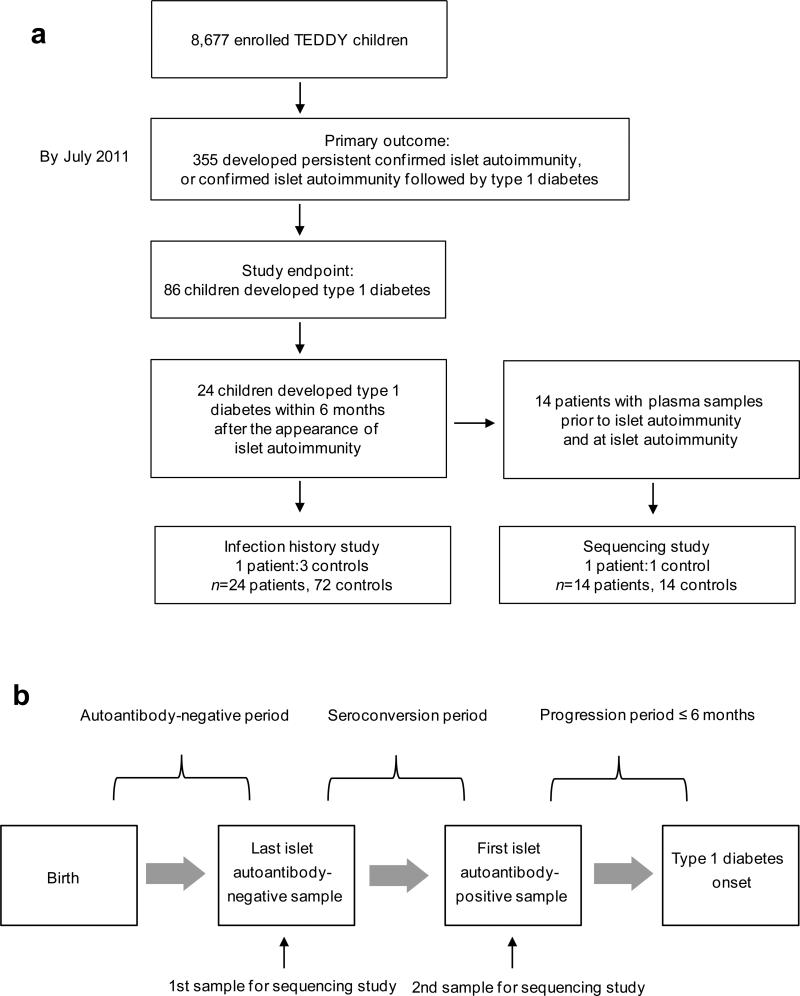
Methods: We used next-generation sequencing to search for viruses in plasma samples and examined the history of infection and fever in children enrolled in The Environmental Determinants of Diabetes in the Young (TEDDY) study who progressed to type 1 diabetes within 6 months from the appearance of islet autoimmunity, and in matched islet-autoantibody-negative controls.
Results: Viruses were not detected more frequently in plasma from rapid-onset patients than in controls during the period surrounding seroconversion. In addition, infection histories were found to be similar between children with rapid-onset diabetes and control children, although episodes of fever were reported less frequently in children with rapid-onset diabetes.
Conclusions/interpretation: These findings do not support the presence of viraemia around the time of seroconversion in young children with rapid-onset type 1 diabetes.
Figures
References
-
- Atkinson MA, Eisenbarth GS. Type 1 diabetes: new perspectives on disease pathogenesis and treatment. Lancet. 2001;358:221–229. - PubMed
-
- Roivainen M, Klingel K. Virus infections and type 1 diabetes risk. Curr Diab Rep. 2010;10:350–356. - PubMed
-
- Tauriainen S, Oikarinen S, Oikarinen M, Hyoty H. Enteroviruses in the pathogenesis of type 1 diabetes. Semin Immunopathol. 2011;33:45–55. - PubMed
Publication types
MeSH terms
Grants and funding
- UC4 DK063863/DK/NIDDK NIH HHS/United States
- DK 63865/DK/NIDDK NIH HHS/United States
- DK 63821/DK/NIDDK NIH HHS/United States
- U01 DK063836/DK/NIDDK NIH HHS/United States
- UC4 DK063836/DK/NIDDK NIH HHS/United States
- HHSN267200700014C/DK/NIDDK NIH HHS/United States
- DK 63790/DK/NIDDK NIH HHS/United States
- UC4 DK063865/DK/NIDDK NIH HHS/United States
- DK 63861/DK/NIDDK NIH HHS/United States
- DK 63863/DK/NIDDK NIH HHS/United States
- U01 DK063829/DK/NIDDK NIH HHS/United States
- UC4 DK095300/DK/NIDDK NIH HHS/United States
- DK 63829/DK/NIDDK NIH HHS/United States
- UC4 DK063861/DK/NIDDK NIH HHS/United States
- UC4 DK063829/DK/NIDDK NIH HHS/United States
- UC4 DK063821/DK/NIDDK NIH HHS/United States
- UC4DK095300/DK/NIDDK NIH HHS/United States
- DK 63836/DK/NIDDK NIH HHS/United States
- U01 DK063790/DK/NIDDK NIH HHS/United States
LinkOut - more resources
Full Text Sources
Other Literature Sources
Medical
Molecular Biology Databases
