


Genomic diversity and fitness of E. coli strains recovered from the intestinal and urinary tracts of women with recurrent urinary tract infection
- PMID: 23658245
- PMCID: PMC3695744
- DOI: 10.1126/scitranslmed.3005497
Genomic diversity and fitness of E. coli strains recovered from the intestinal and urinary tracts of women with recurrent urinary tract infection
Abstract
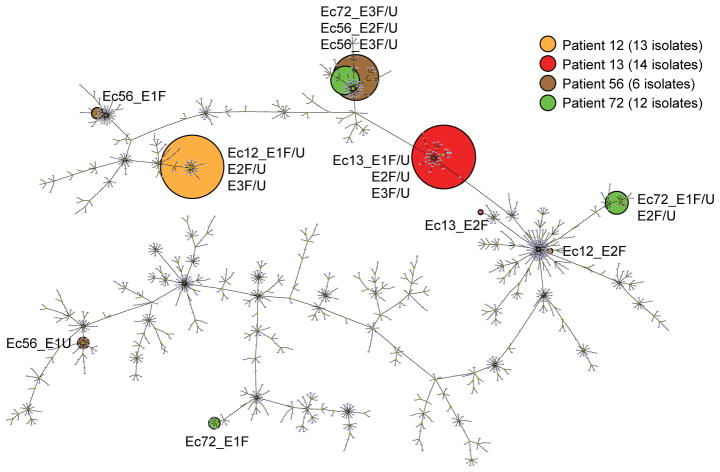
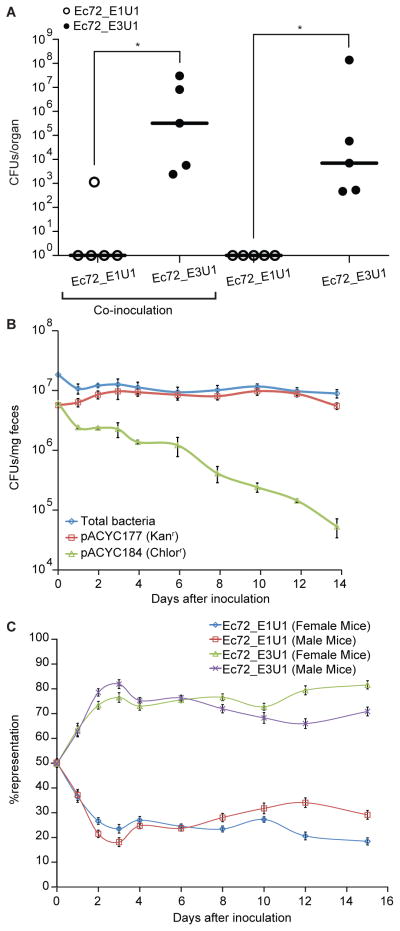
Urinary tract infections (UTIs) are common in women, and recurrence is a major clinical problem. Most UTIs are caused by uropathogenic Escherichia coli (UPEC). UPEC are generally thought to migrate from the gut to the bladder to cause UTI. UPEC form specialized intracellular bacterial communities in the bladder urothelium as part of a pathogenic mechanism to establish a foothold during acute stages of infection. Evolutionarily, such a specific adaptation to the bladder environment would be predicted to result in decreased fitness in other habitats, such as the gut. To examine this prediction, we characterized 45 E. coli strains isolated from the feces and urine of four otherwise healthy women with recurrent UTI. Multilocus sequence typing and whole genome sequencing revealed that two patients maintained a clonal population in both these body habitats throughout their recurrent UTIs, whereas the other two exhibited a wholesale shift in the dominant UPEC strain colonizing both sites. In vivo competition studies in mouse models, using isolates taken from one of the patients with a wholesale population shift, revealed that the strain that dominated her last UTI episode had increased fitness in both the gut and the bladder relative to the strain that dominated in preceding episodes. Increased fitness correlated with differences in the strains' gene repertoires and carbohydrate and amino acid utilization profiles. Thus, UPEC appear capable of persisting in both the gut and urinary tract without a fitness trade-off, emphasizing the need to widen our consideration of potential reservoirs for strains causing recurrent UTI.
Conflict of interest statement
Figures


Comment in
-
Re: Genomic diversity and fitness of E. coli strains recovered from the intestinal and urinary tracts of women with recurrent urinary tract infection.J Urol. 2013 Oct;190(4):1252-3. doi: 10.1016/j.juro.2013.06.075. Epub 2013 Jun 29. J Urol. 2013. PMID: 24029322 No abstract available.
References
-
- Foxman B. Epidemiology of urinary tract infections: Incidence, morbidity, and economic costs. Am J Med. 2002;113:5. - PubMed
-
- Foxman B. The epidemiology of urinary tract infection. Nat Rev Urol. 2010;7:653. - PubMed
-
- Hooton TM. Recurrent urinary tract infection in women. Int J Antimicrob Ag. 2001;17:259. - PubMed
-
- Qin J, Li R, Raes J, Arumugam M, Burgdorf KS, Manichanh C, Nielsen T, Pons N, Levenez F, Yamada T, Mende DR, Li J, Xu J, Li S, Li D, Cao J, Wang B, Liang H, Zheng H, Xie Y, Tap J, Lepage P, Bertalan M, Batto JM, Hansen T, Le Paslier D, Linneberg A, Nielsen HB, Pelletier E, Renault P, Sicheritz-Ponten T, Turner K, Zhu H, Yu C, Jian M, Zhou Y, Li Y, Zhang X, Qin N, Yang H, Wang J, Brunak S, Dore J, Guarner F, Kristiansen K, Pedersen O, Parkhill J, Weissenbach J, Bork P, Ehrlich SD. A human gut microbial gene catalogue established by metagenomic sequencing. Nature. 2010;464:59. - PMC - PubMed
Publication types
MeSH terms
Grants and funding
LinkOut - more resources
Full Text Sources
Other Literature Sources
Medical
Molecular Biology Databases
