. 2013 May 2;8(5):e62995.
doi: 10.1371/journal.pone.0062995. Print 2013.

A 3D analysis of flight behavior of Anopheles gambiae sensu stricto malaria mosquitoes in response to human odor and heat

Affiliations

A 3D analysis of flight behavior of Anopheles gambiae sensu stricto malaria mosquitoes in response to human odor and heat

Jeroen Spitzen et al. PLoS One. .

Abstract

Female mosquitoes use odor and heat as cues to navigate to a suitable landing site on their blood host. The way these cues affect flight behavior and modulate anemotactic responses, however, is poorly understood. We studied in-flight behavioral responses of females of the nocturnal malaria mosquito Anopheles gambiae sensu stricto to human odor and heat. Flight-path characteristics in a wind tunnel (flow 20 cm/s) were quantified in three dimensions. With wind as the only stimulus (control), short and close to straight upwind flights were recorded. With heat alone, flights were similarly short and direct. The presence of human odor, in contrast, caused prolonged and highly convoluted flight patterns. The combination of odor+heat resulted in longer flights with more landings on the source than to either cue alone. Flight speed was greatest (mean groundspeed 27.2 cm/s) for odor+heat. Odor alone resulted in decreased flight speed when mosquitoes arrived within 30 cm of the source whereas mosquitoes exposed to odor+heat maintained a high flight speed while flying in the odor plume, until they arrived within 15 cm of the source. Human odor evoked an increase in crosswind flights with an additive effect of heat at close range (<15 cm) to the source. This was found for both horizontal and vertical flight components. However, mosquitoes nevertheless made upwind progress when flying in the odor+heat generated plume, suggesting that mosquitoes scan their environment intensively while they progress upwind towards their host. These observations may help to improve the efficacy of trapping systems for malaria mosquitoes by (1) optimizing the site of odor release relative to trap entry and (2) adding a heat source which enhances a landing response.


Conflict of interest statement

Competing Interests: With respect to authors affiliated with Noldus IT and Biometris: This does not alter the authors’ adherence to all the PLOS ONE policies on sharing data and materials.

Figures

Figure 1
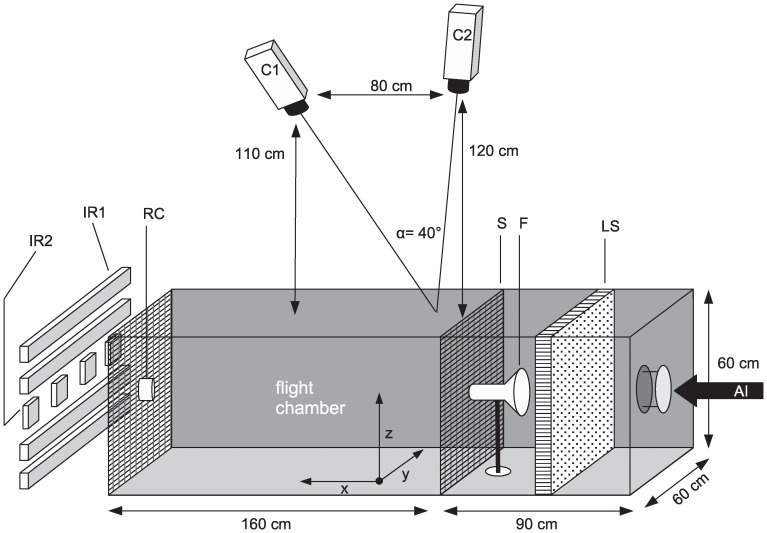
Figure 1. Schematic diagram of wind tunnel.
Air inlet (AI), lamination screen (LS), glass funnel containing heat element (F), mesh screen (S), release cup (RC), cameras (C1,2), IR lights type 1 (IR1), IR lights type 2 (IR2). The IR2 lights were operated by setting the accompanying adaptors at 9 Volts.
Figure 2
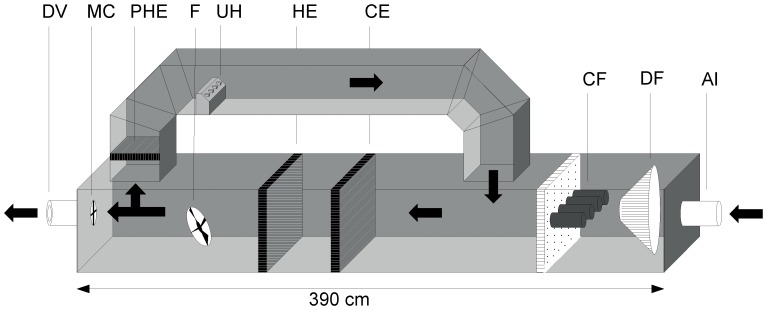
Figure 2. Schematic diagram of air treatment system.
Air inlet (AI), fine dust filter (DF), charcoal filter cartridges (CF), cooling element (CE), heating element (HE), ultrasonic humidifier (UH), fan (F), pre-heating element (PHE), measuring cross (MC), diaphragm valve (DV).
Figure 3
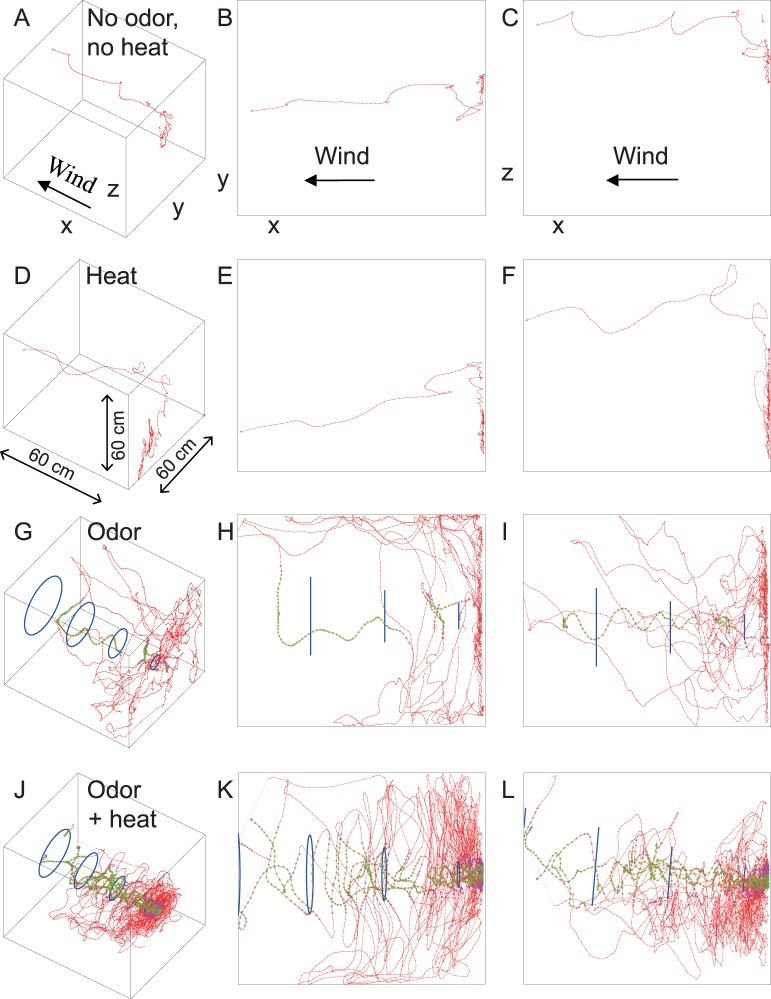
Figure 3. Examples of flight tracks of Anopheles gambiae s.s. for each treatment viewed from different angles.
Each treatment represents a single female. A–C clean acclimatized air only (control, 9 s), D–F heat (21 s), G–I human odor (112 s) and J–L human odor+heat (231 s). Red dots indicate samples outside the cone and transition zone, magenta triangles are used for samples within the transition zone and green stars indicate that the insect is tracked within the defined odor plume. Mosquitoes that landed near the center of the upwind screen, within a circle with a diameter of 5 cm, were recorded as landing on the source.
Figure 4
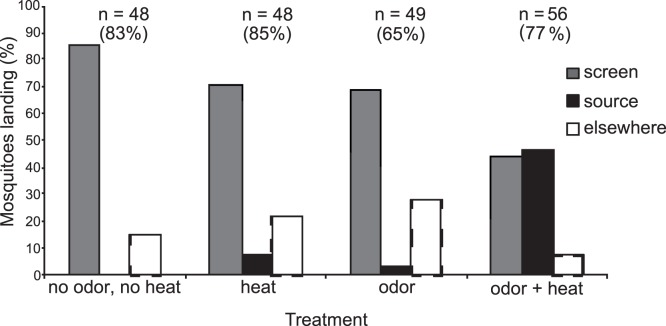
Figure 4. Mosquito responses with four different treatments.
The percentage of responding mosquitoes landing on the upwind screen, source, or elsewhere in the arena per treatment. n = Number of mosquitoes tested. Percentage (%) = percentage of mosquitoes leaving the release site within 3 min.
Figure 5
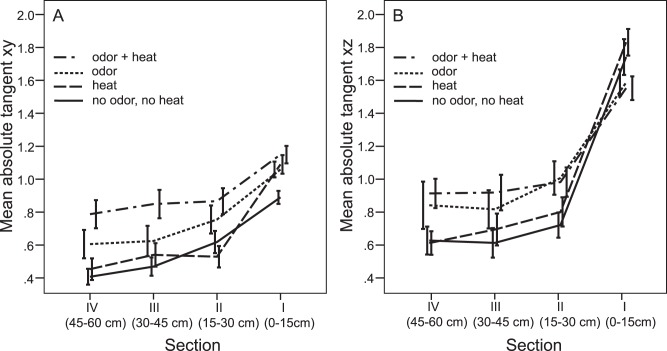
Figure 5. The degree of crosswind flight plotted for the horizontal (xy) and the vertical (xz) plane.
Mean (± s.e.m.) absolute tangent of mosquito flight paths at four different sections from the upwind screen for each treatment including the control (no odor, no heat).
Figure 6
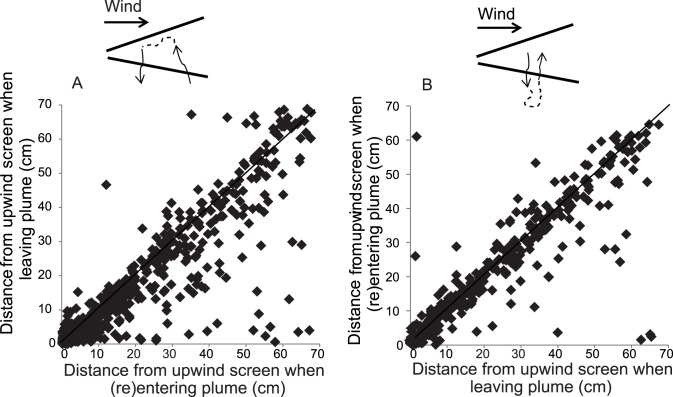
Figure 6. Displacement of ‘odor+heat’ treatment mosquitoes along the x axis of the wind tunnel in relation to entering and leaving the plume.
A - Distance from the upwind screen at the moment of entering the plume (x axis) and the moment of leaving (y axis). B - Distance from the upwind screen at the moment of flying outside the plume and (re-) contacting the plume. The figure represents all individuals (n = 16) that landed near the odor+heat source. The absolute number of occurrences per mosquito is given in table S3. The solid line represents a theoretical situation where net up- or downwind displacement between the moments of entering and leaving, or vice versa is equal.
Figure 7
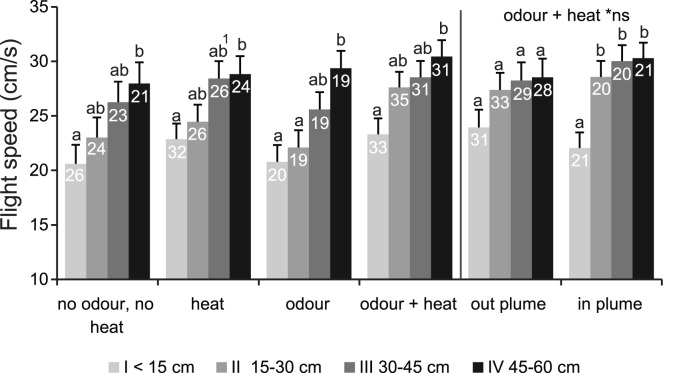
Figure 7. Mean (± s.e.m.) flight speed (cm/s) over all time intervals with an upwind velocity component in different sections from the upwind screen.
Flight speed is relative to the boundaries of the wind tunnel. Wind speed was 20 cm/s. Different letters indicate significant differences between sections (GLM, Equal variances Tukey (T), P<0.05, 1 P = 0.051). Numbers inside bars represent the number of included flights. The flight speed for the treatment odor+heat is also presented while flying outside the plume and inside the plume, respectively. * Differences between out plume and in plume speed, within a distance section, were not significant (ns, independent sample t-tests, P>0.05).

References

    1. Cardé RT, Bell WJ (1995) Chemical ecology of insects 2. New York, Chapman & Hall. 439 p.
    1. Cardé RT, Willis MA (2008) Navigational strategies used by insects to find distant, wind-borne sources of odor. J Chem Ecol 34: 854–866 (doi: 10.1007/s10886-008-9484-5).. - DOI - PubMed
    1. Gillies MT (1980) The role of carbon dioxide in host-finding by mosquitoes (Diptera:Culicidae): a review. Bull Entomol Res70: 525–532 (doi:10.1017/S0007485300007811).. - DOI
    1. Takken W (1991) The role of olfaction in host-seeking of mosquitoes: a review. Insect Sci & Appl 12: 287–295 (doi:10.1017/S1742758400020816).. - DOI
    1. Takken W, Knols BGJ (1999) Odor-mediated behaviour of afrotropical malaria mosquitoes. Annu Rev Entomol 44: 131–157 (doi: 10.1146/annurev.ento.44.1.131).. - DOI - PubMed

Publication types