Coil type does not affect angiographic follow-up outcomes of cerebral aneurysm coiling: a systematic review and meta-analysis
- PMID: 23660290
- PMCID: PMC7965611
- DOI: 10.3174/ajnr.A3598
Coil type does not affect angiographic follow-up outcomes of cerebral aneurysm coiling: a systematic review and meta-analysis
Abstract
Background and purpose: Previous studies varied in their conclusions about the superiority of second-generation coils compared with bare platinum. In this systematic review and meta-analysis, we assessed differences in reported unfavorable angiographic outcomes of cerebral aneurysms treated with coil embolization as a function of coil type.
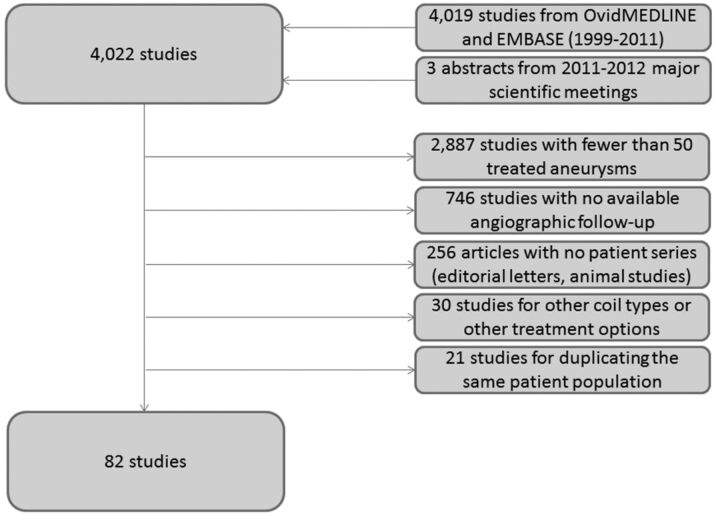
Materials and methods: This systematic review covered 1999-2011 through the use of Ovid MEDLINE and EMBASE. Search terms were "subarachnoid hemorrhage," "intracranial aneurysms," "endovascular treatment," and "coiling." Inclusion criteria were studies reporting >50 aneurysms with imaging follow-up. We defined "unfavorable angiographic outcome" as either "recanalization," <90% occlusion, or "incomplete occlusion" at follow-up. Rates of unfavorable outcomes were pooled through the use of random effects models and compared across various coil types. Multivariate random effects meta-regression models were used to further explore the differences in outcomes related to coil type.
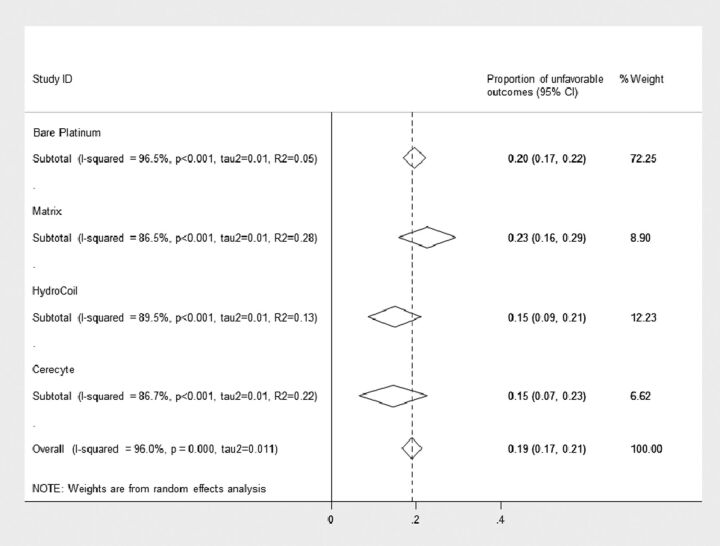
Results: We included 82 studies, comprising 90 patient cohorts, among which, 65 (72%) used bare platinum coils, 8 (8.9%) used Matrix, 11 (12%) used HydroCoil, and 6 (6.7%) used Cerecyte. The overall unfavorable outcome rate was 19% (95% CI: 17%,21%). Unfavorable outcome rates were 20% (95% CI: 17%, 22%) for bare platinum coils, 23% (95% CI: 16%, 29%) for Matrix, 15% (95% CI: 9%, 21%) for HydroCoil, and 15% (95% CI: 7%, 23%) for Cerecyte, respectively. The difference in unfavorable outcome rates among the various coil types was not statistically significant after adjusting for baseline characteristics, including aneurysm size, rupture status, and follow-up duration.
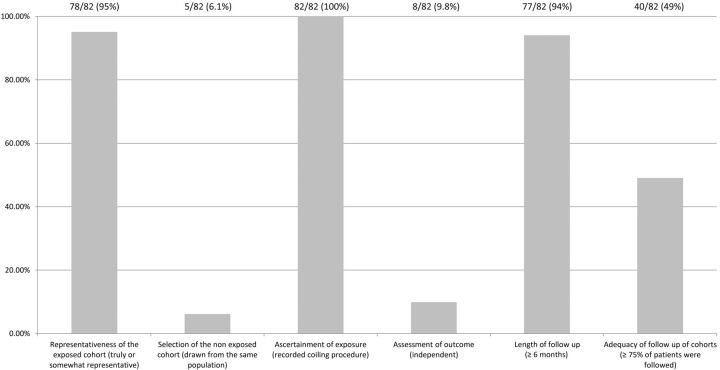
Conclusions: The rate of unfavorable angiographic outcomes was not statistically different across the major approved coil types. The quality of the evidence, however, remains low because of high heterogeneity, small sample size, and potential publication bias.
Figures
References
-
- Linfante I, Akkawi NM, Perlow A, et al. Polyglycolide/polylactide-coated platinum coils for patients with ruptured and unruptured cerebral aneurysms: a single-center experience. Stroke 2005;36:1948–53 - PubMed
-
- Ishii A, Murayama Y, Nien YL, et al. Immediate and midterm outcomes of patients with cerebral aneurysms treated with Matrix1 and Matrix2 coils: a comparative analysis based on a single-center experience in 250 consecutive cases. Neurosurgery 2008;63:1071–79 - PubMed
Publication types
MeSH terms
LinkOut - more resources
Full Text Sources
Other Literature Sources
Medical