


Cumulative incidence and risk factors for hospitalization and surgery in a population-based cohort of ulcerative colitis
- PMID: 23660997
- PMCID: PMC4526131
- DOI: 10.1097/MIB.0b013e31828c84c5
Cumulative incidence and risk factors for hospitalization and surgery in a population-based cohort of ulcerative colitis
Abstract
Background: We sought to identify clinical and demographic features influencing hospitalization and colectomy in a population-based inception cohort of ulcerative colitis.
Methods: Between 1970 and 2004, a total of 369 patients (58.5% males) from Olmsted County, MN, were followed from diagnosis for 5401 person-years. The cumulative probability of hospitalization and colectomy were estimated using the Kaplan-Meier method. Cox proportional hazards regression was used to identify factors associated with hospitalization and colectomy.
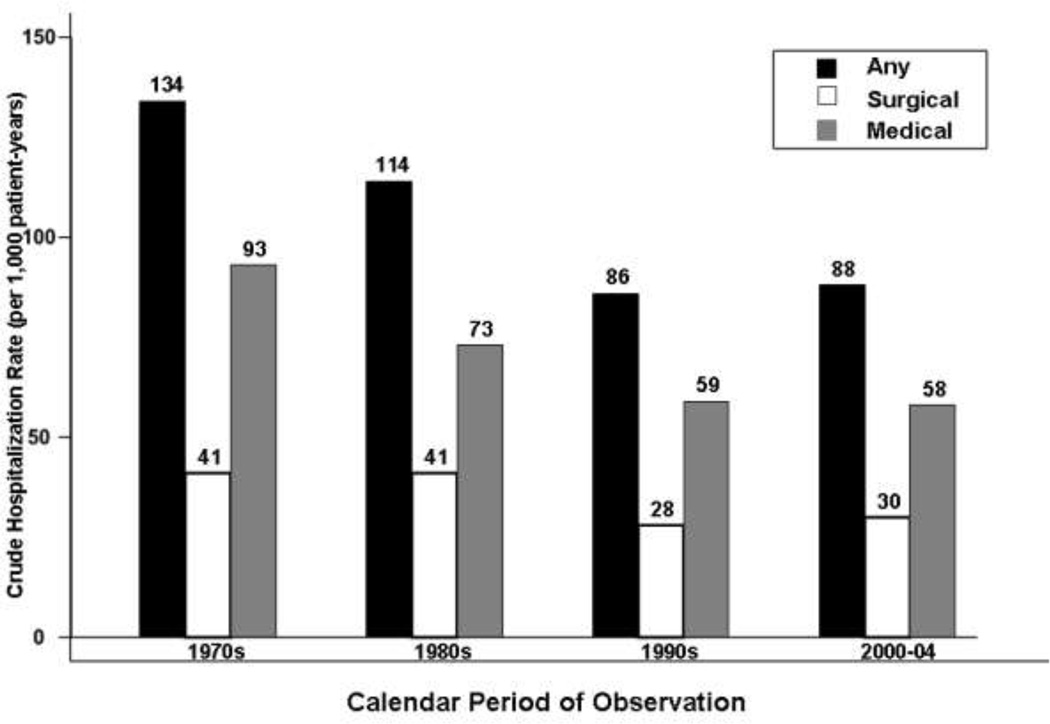
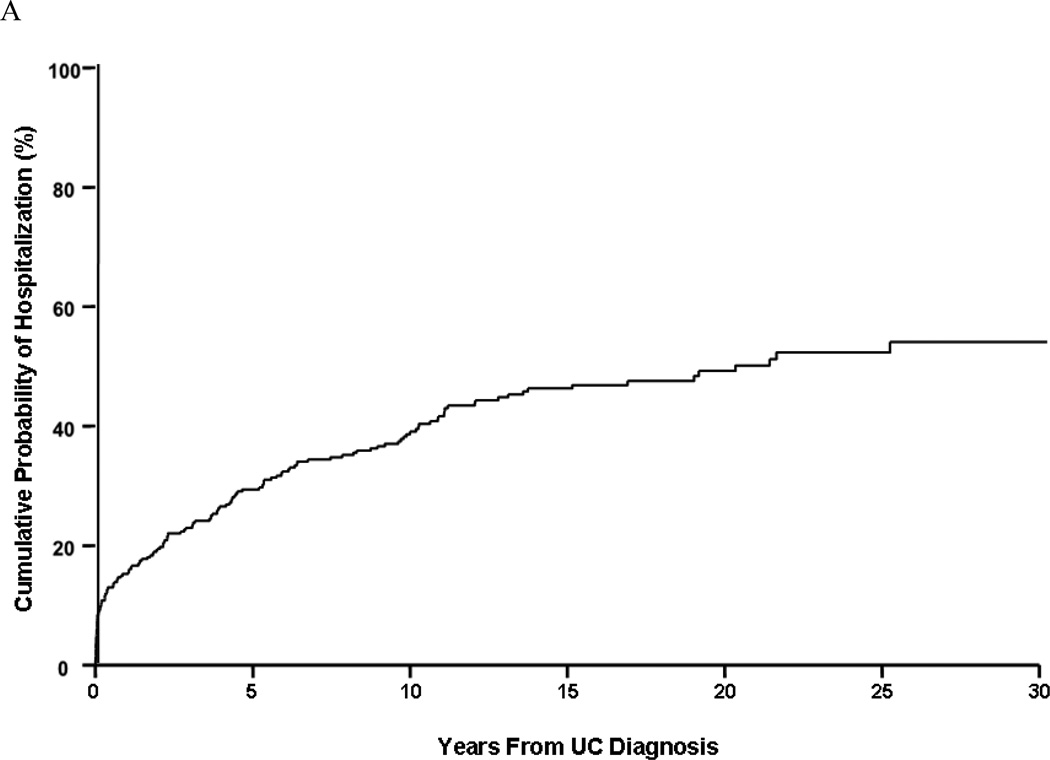
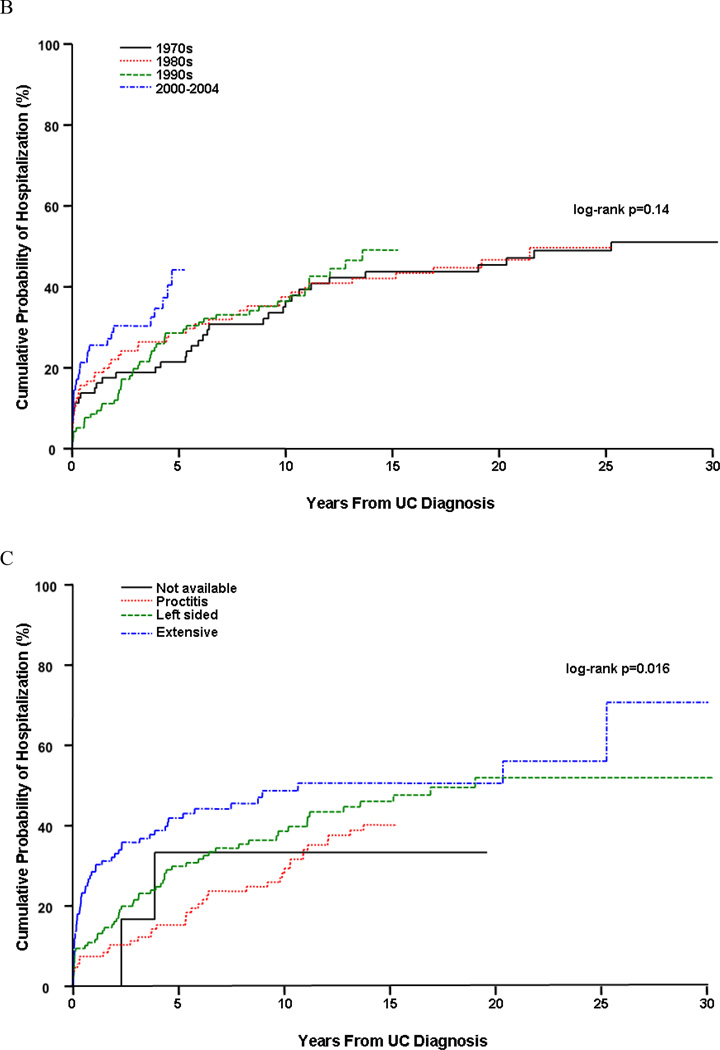
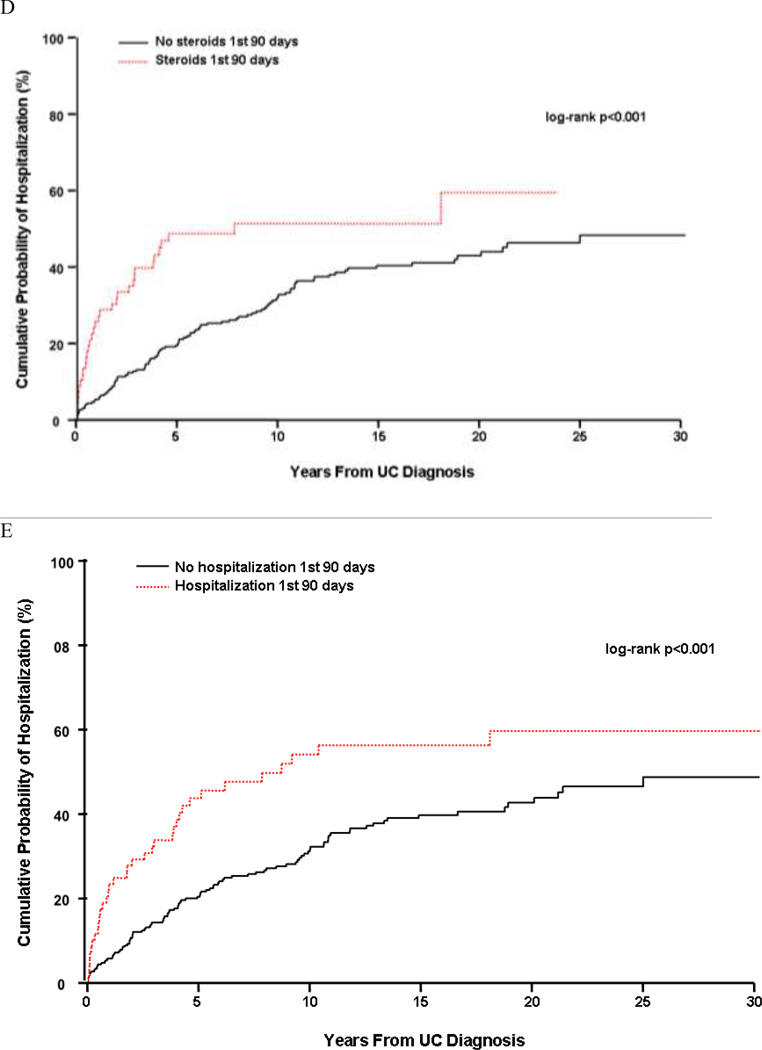
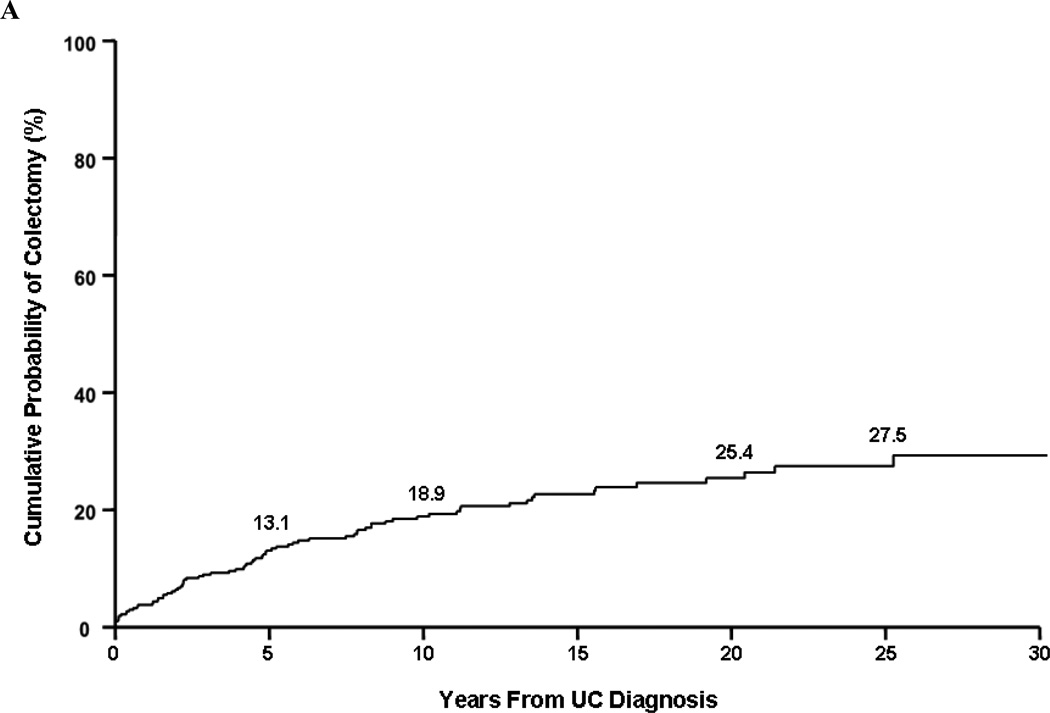
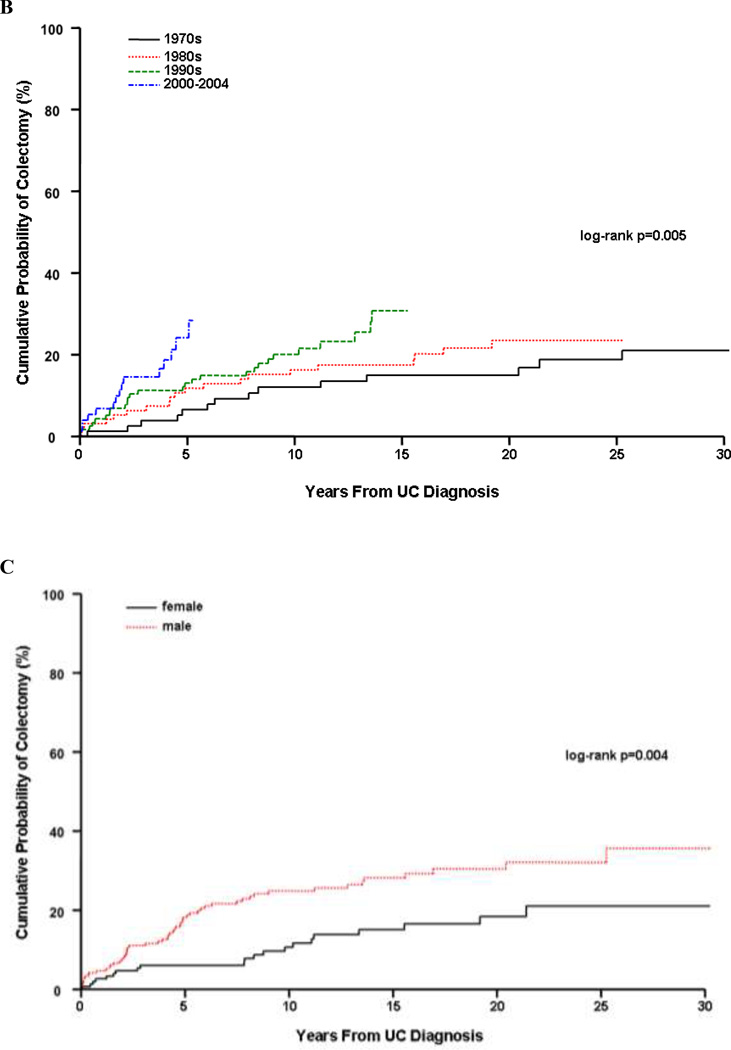
Results: The cumulative probability of first hospitalization was 29.4% at 5 years (95% confidence interval [CI], 24.5%-34.1%), 38.7% at 10 years (33.1%-43.8%), 49.2% at 20 years (42.7%-55.2%), and 52.3% at 30 years (45.1%-59.7%). The incidence rate of hospitalizations decreased over the last 4 decades, although cumulative probability of first hospitalization increased with successive decades of diagnosis. Early need for corticosteroids (hazard ratio [HR], 1.8; 95% CI, 1.1%-2.7%) and early need for hospitalization (HR, 1.5; 95% CI, 1.02-2.4) were independent predictors of hospitalization after 90 days of illness. The cumulative probability of colectomy from the time of diagnosis was 13.1% at 5 years (95% CI, 9.4%-16.6%), 18.9% at 10 years (95% CI, 14.4%-23.2%), and 25.4% at 20 years (95% CI, 19.8%-30.8%). Male gender (HR, 2.1; 95% CI, 1.3-3.5), diagnosis in the 1990s (HR, 2.0; 95% CI, 1.01-4.0), and diagnosis in 2000 to 2004 (HR, 3.7; 95% CI, 1.7-8.2) were significantly associated with colectomy risk.
Conclusions: Colectomy rates were comparable to reports from northern Europe. The numbers of hospitalizations show a decreasing trend. Male gender and being diagnosed in the 2000 to 2004 period predicted colectomy while extensive colitis predicted future hospitalizations.
Figures
References
-
- Loftus CG, Loftus EV, Jr, Harmsen WS, et al. Update on the incidence and prevalence of Crohn's disease and ulcerative colitis in Olmsted County, Minnesota, 1940–2000. Inflamm Bowel Dis. 2007;13:254–261. - PubMed
-
- Ingle SB, Loftus EV, Jr, Tremaine WJ, et al. Increasing incidence and prevalence of inflammatory bowel disease in Olmsted County, Minnesota, 2001 – 2004. Gastroenterology. 2007;132:A19–A20.
-
- Loftus EV, Jr, Friedman HS, Delgado DJ, et al. Colectomy subtypes, follow-up surgical procedures, postsurgical complications, and medical charges among ulcerative colitis patients with private health insurance in the United States. Inflamm Bowel Dis. 2009;15:566–575. - PubMed
-
- Hay JW, Hay AR. Inflammatory bowel disease: costs-of-illness. J Clin Gastroenterol. 1992;14:309–317. - PubMed
-
- Blomqvist P, Ekbom A. Inflammatory bowel diseases: health care and costs in Sweden in 1994. Scand J Gastroenterol. 1997;32:1134–1139. - PubMed
Publication types
MeSH terms
Grants and funding
LinkOut - more resources
Full Text Sources
Other Literature Sources
Medical