


Antigenically intact hemagglutinin in circulating avian and swine influenza viruses and potential for H3N2 pandemic
- PMID: 23661027
- PMCID: PMC3650665
- DOI: 10.1038/srep01822
Antigenically intact hemagglutinin in circulating avian and swine influenza viruses and potential for H3N2 pandemic
Abstract
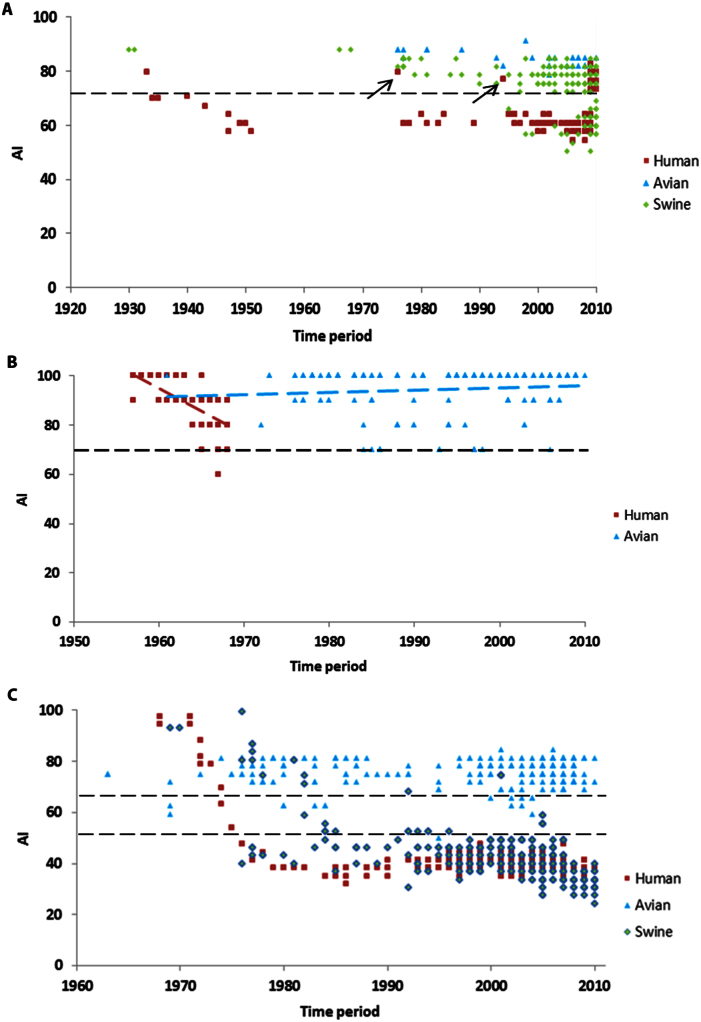
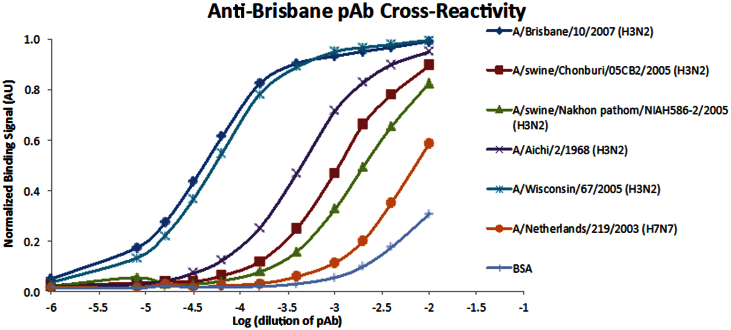
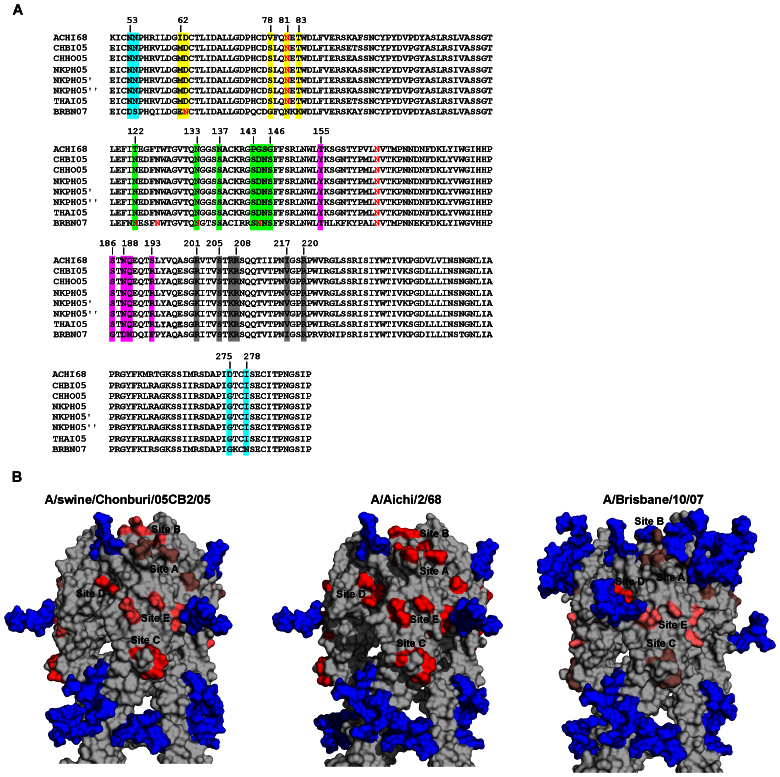
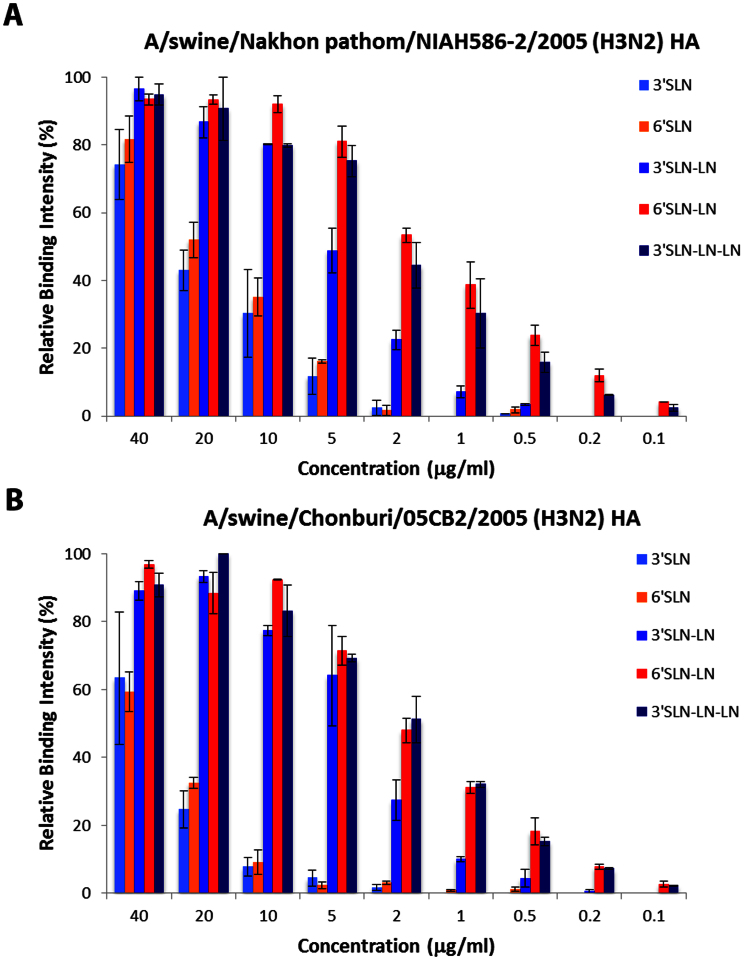
The 2009 swine-origin H1N1 influenza, though antigenically novel to the population at the time, was antigenically similar to the 1918 H1N1 pandemic influenza, and consequently was considered to be "archived" in the swine species before reemerging in humans. Given that the H3N2 is another subtype that currently circulates in the human population and is high on WHO pandemic preparedness list, we assessed the likelihood of reemergence of H3N2 from a non-human host. Using HA sequence features relevant to immune recognition, receptor binding and transmission we have identified several recent H3 strains in avian and swine that present hallmarks of a reemerging virus. IgG polyclonal raised in rabbit with recent seasonal vaccine H3 fail to recognize these swine H3 strains suggesting that existing vaccines may not be effective in protecting against these strains. Vaccine strategies can mitigate risks associated with a potential H3N2 pandemic in humans.
Figures
References
-
- Cunha B. A. Influenza: historical aspects of epidemics and pandemics. Infectious disease clinics of North America 18, 141–155 (2004). - PubMed
-
- Russell C. J. & Webster R. G. The genesis of a pandemic influenza virus. Cell 123, 368–371 (2005). - PubMed
-
- Taubenberger J. K. et al. Characterization of the 1918 influenza virus polymerase genes. Nature 437, 889–893 (2005). - PubMed
-
- Scholtissek C., Rohde W., Von Hoyningen V. & Rott R. On the origin of the human influenza virus subtypes H2N2 and H3N2. Virology 87, 13–20 (1978). - PubMed
Publication types
MeSH terms
Substances
Grants and funding
LinkOut - more resources
Full Text Sources
Other Literature Sources
Medical
