


Successful implantation after reducing matrix metalloproteinase activity in the uterine cavity
- PMID: 23663265
- PMCID: PMC3655829
- DOI: 10.1186/1477-7827-11-37
Successful implantation after reducing matrix metalloproteinase activity in the uterine cavity
Abstract
Background: Recently, the concept of recurrent implantation failure (RIF) in assisted reproductive technology has been enlarged. Chronic uterine inflammation is a known cause of implantation failure and is associated with high matrix metalloproteinase (MMP) activity in uterine cavity flushing. MMP activity of women with RIF has been reported to be higher than that of fertile women. In the present retrospective study we evaluated the efficacy of treatment for high MMP activity in the uterine cavity of patients with RIF.
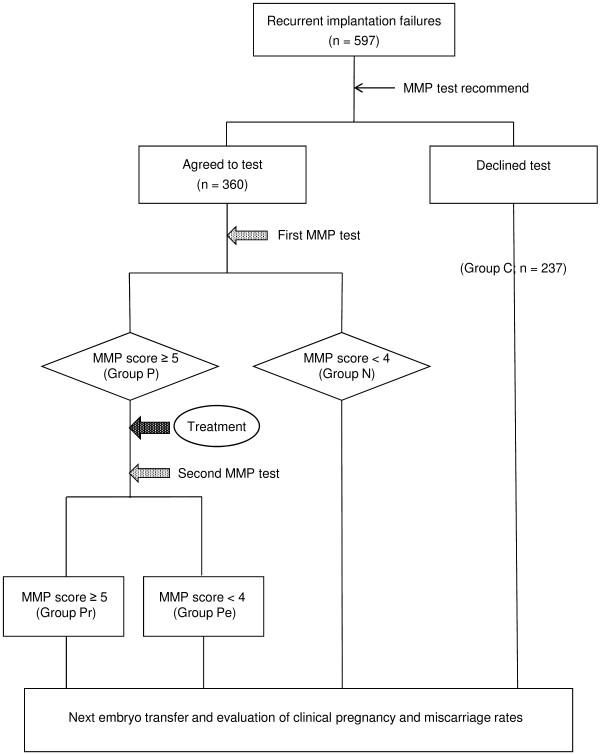
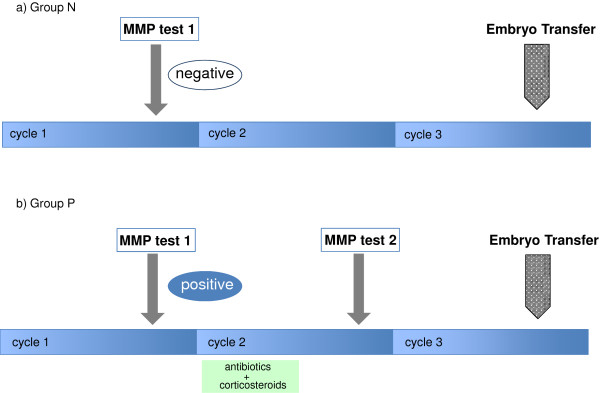
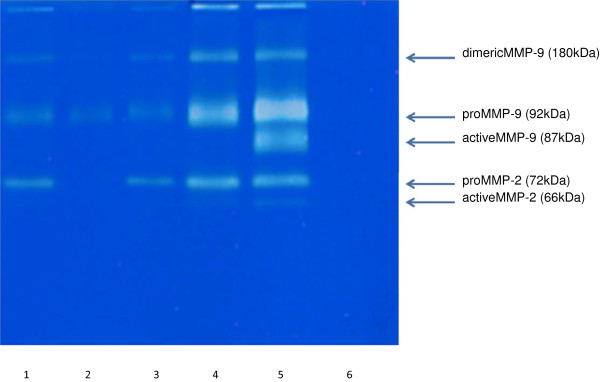
Methods: Of the 597 patients recruited to the study, 360 patients underwent MMP measurements and 237 patients did not (control group). All patients had failed to become pregnant, despite at least two transfers of good-quality embryos. Gelatinase MMP-2 and MMP-9 activity in uterine flushing fluid was detected by enzymology (MMP test). All samples were classified into two groups (positive or negative) based on the intensity of the bands on the enzyme zymogram, which represents the degree of MMP activity. Patients who tested positive on the initial test were treated for 2 weeks with a quinolone antibiotic and a corticosteroid, and subsequently underwent a second MMP test. Negative results on the second MMP tests after treatment and subsequent rates of pregnancy and miscarriage were used to evaluate the efficacy of treatment. Data were analyzed by the Mann-Whitney U-test and the chi-square test.
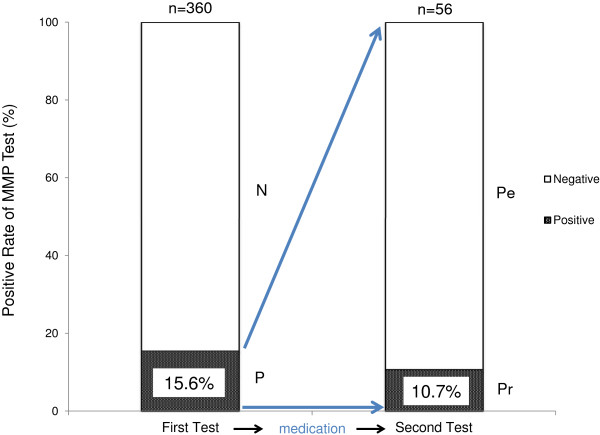
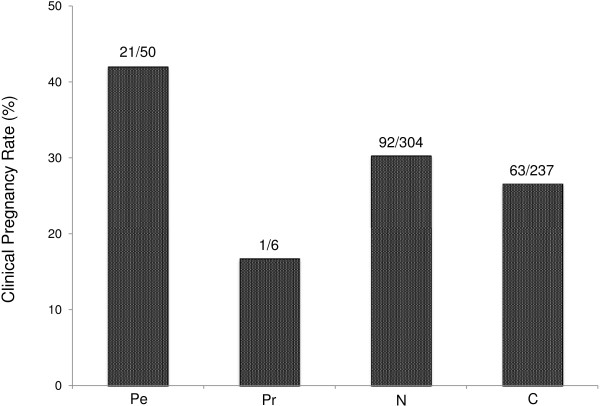
Results: Of the patients who underwent the MMP test, 15.6% had positive results (high MMP activity). After treatment, 89.3% of patients had negative results on the second MMP test. These patients had a significantly better pregnancy rate (42.0%) than the control group (26.6%), as well as a lower miscarriage rate (28.5% vs 36.5%, respectively).
Conclusions: A 2-week course of antibiotics and corticosteroids effectively improves the uterine environment underlying RIF by reducing MMP activity.
Figures
References
-
- Lee TH, Chen CD, Tsai YY, Chang LJ, Ho HN, Yang YS. Embryo quality is more important for younger women whereas age is more important for older women with regard to in vitro fertilization outcome and multiple pregnancy. Fertil Steril. 2006;86:64–69. - PubMed
-
- Navot D, Bergh PA, Williams MA, Garrisi GJ, Guzman I, Sandler B, Grunfeld L. Poor oocyte quality rather than implantation failure as a cause of age-related decline in female fertility. Lancet. 1991;337:1375–1377. - PubMed
-
- Mukherjee T, Copperman AB, McCaffrey C, Cook CA, Bustillo M, Obasaju MF. Hydrosalpinx fluid has embryotoxic effects on murine embryogenesis: a case for prophylactic salpingectomy. Fertil Steril. 1996;66:851–853. - PubMed
-
- Strandell A, Waldenström U, Nilsson L, Hamberger L. Hydrosalpinx reduces in-vitro fertilization/embryo transfer pregnancy rates. Hum Reprod. 1994;9:861–863. - PubMed
Publication types
MeSH terms
Substances
LinkOut - more resources
Full Text Sources
Other Literature Sources
Molecular Biology Databases
Miscellaneous
