


Auditory P3 in antidepressant pharmacotherapy treatment responders, non-responders and controls
- PMID: 23664712
- PMCID: PMC3744638
- DOI: 10.1016/j.euroneuro.2013.03.003
Auditory P3 in antidepressant pharmacotherapy treatment responders, non-responders and controls
Abstract
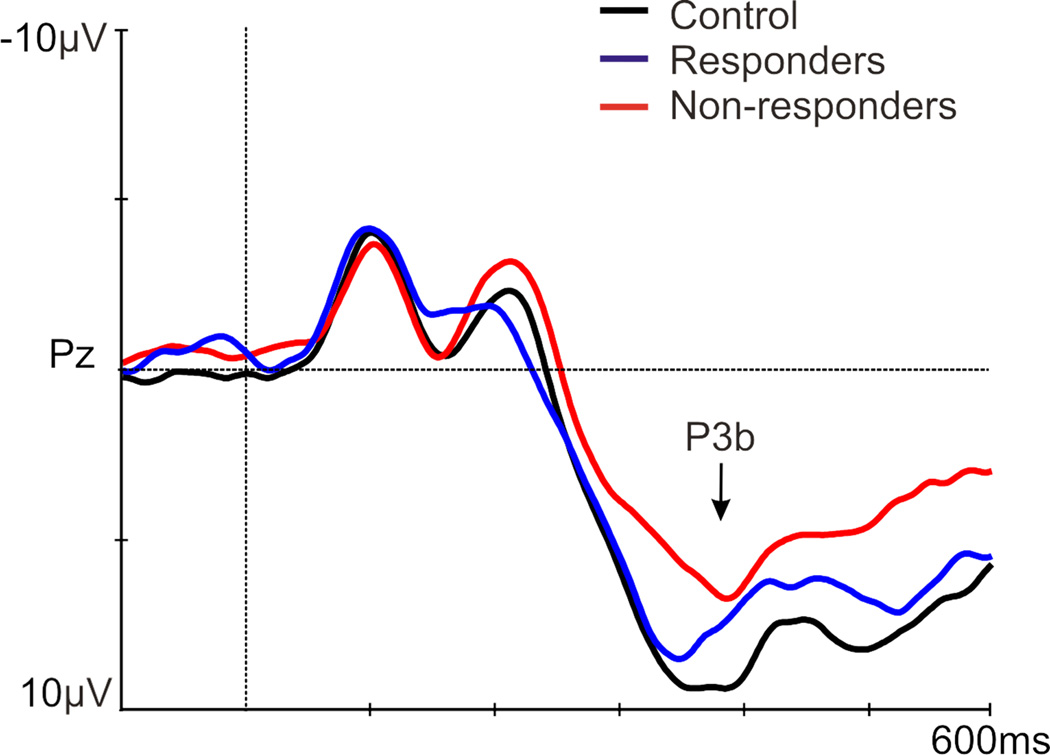
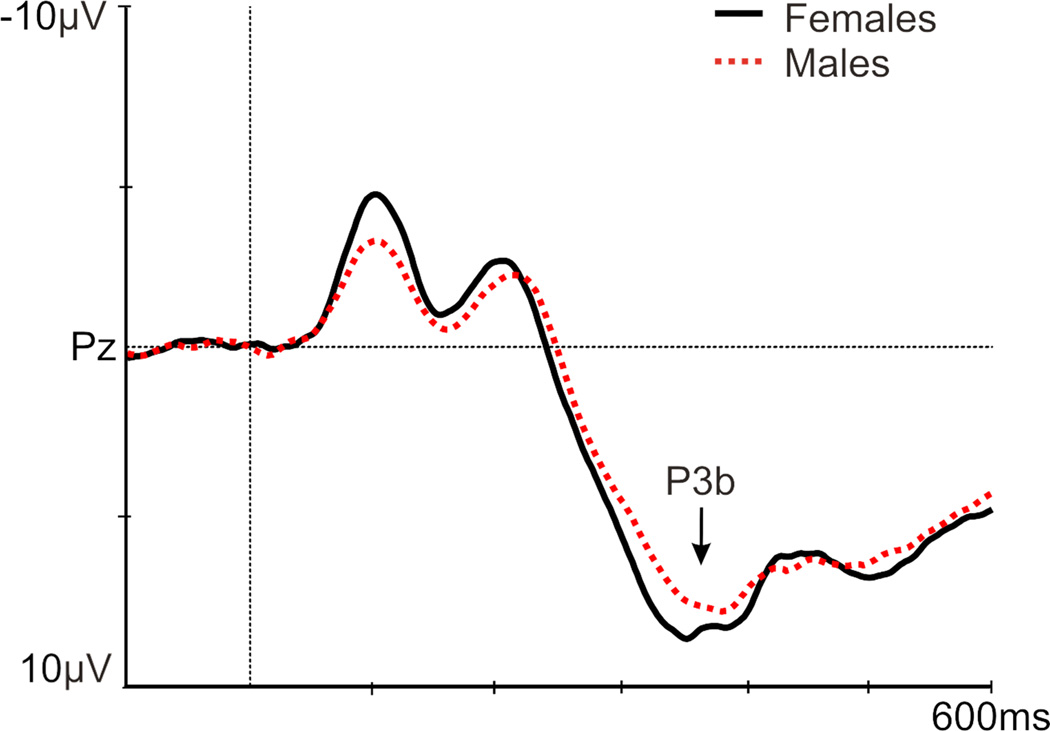
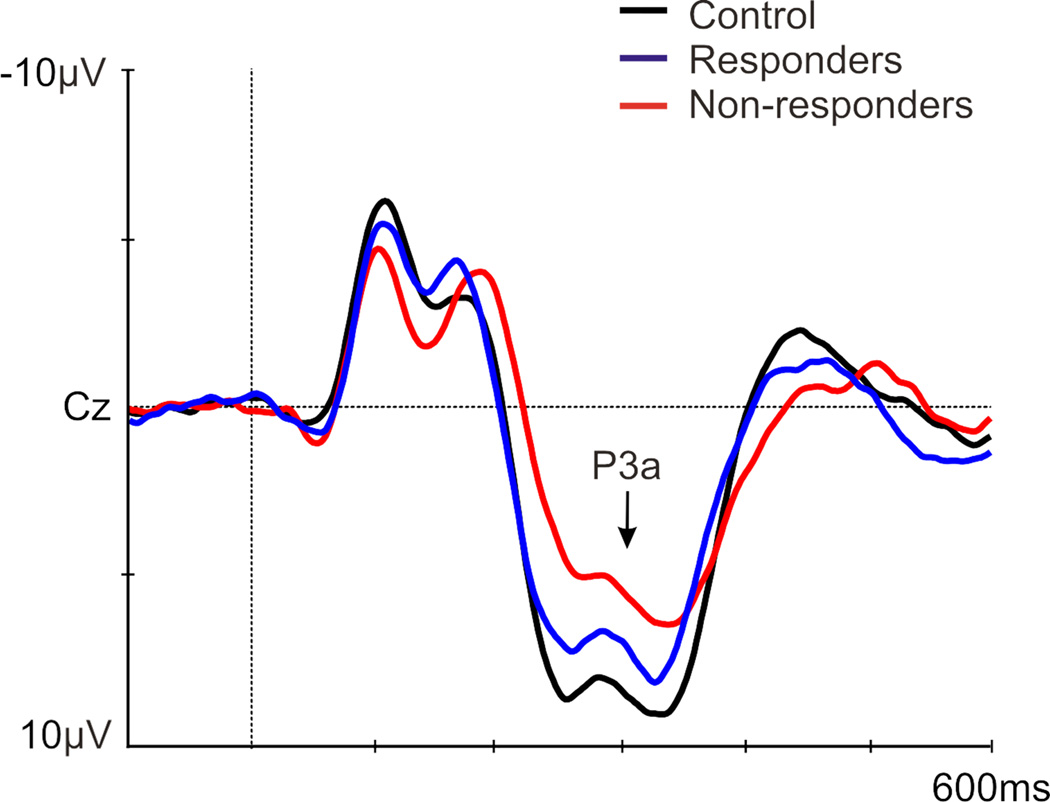
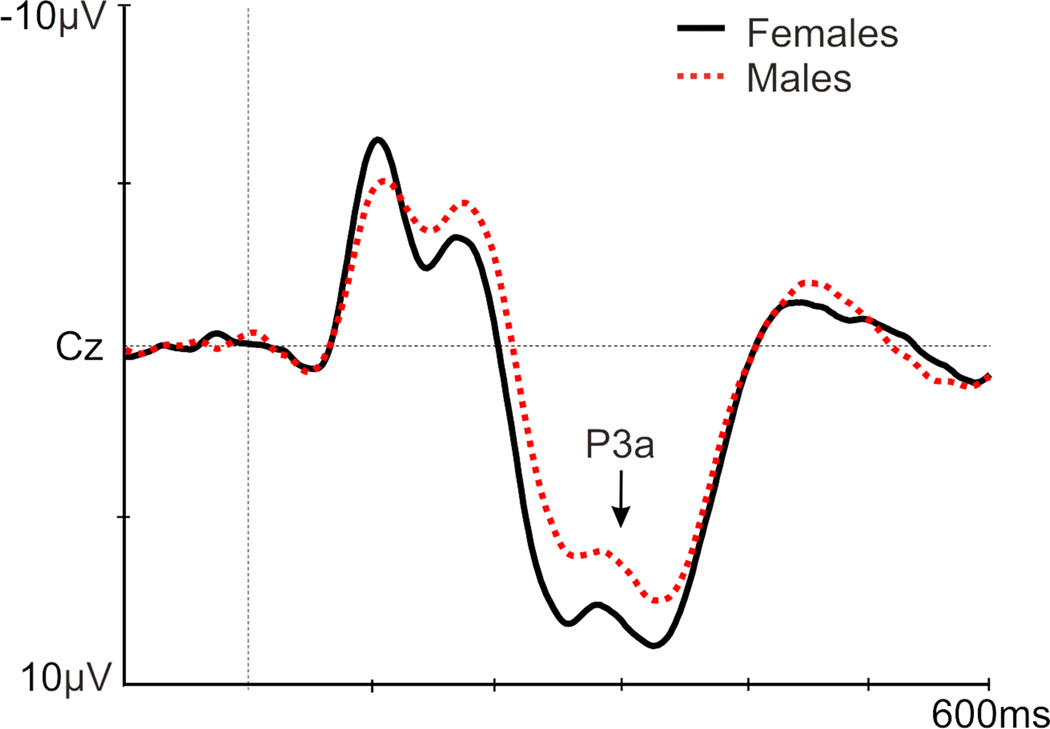
Event-related potentials (ERPs), derived from electroencephalographic (EEG) recordings, can index electrocortical activity related to cognitive operations. The fronto-central P3a ERP is involved in involuntary processing of novel auditory information, whereas the parietal P3b indexes controlled attention processing. The amplitude of the auditory P3b has been found to be decreased in major depressive disorder (MDD). However, few studies have examined the relations between the P3b, the related P3a, and antidepressant treatment response. We tested 53 unmedicated individuals (25 females) with MDD, as well as 43 non-depressed controls (23 females) on the novelty oddball task, wherein infrequent deviant (target) and frequent standard (non-target) tones were presented, along with infrequent novel (non-target/distractor) sounds. The P3a and P3b ERPs were assessed to novel and target sounds, respectively, as were their accompanying behavioral performance measures. Depression ratings and the antidepressant response status were assessed following 12 weeks of pharmacotherapy with three different regimens. Antidepressant treatment non-responders had smaller baseline P3a/b amplitudes than responders and healthy controls. Baseline P3b amplitude also weakly predicted the extent of depression rating changes by week 12. Females exhibited larger P3a/b amplitudes than males. With respect to task performance, controls had more target hits than treatment non-responders. ERP measures correlated with clinical changes in males and with behavioral measures in females. These results suggest that greater (or control-like) baseline P3a/b amplitudes are associated with a positive antidepressant response, and that gender differences characterize the P3 and, by extension, basic attentive processes.
Keywords: Antidepressant drugs; Major depressive disorder (MDD); P3a; P3b; Prediction; Sex.
Copyright © 2013 Elsevier B.V. and ECNP. All rights reserved.
Conflict of interest statement
Figures
References
-
- Ancy J, Gangadhar BN, Janakiramaiah N. 2018;Normal’ P300 amplitude predicts rapid response to ECT in melancholia. J Affect Disord. 1996;41:211–215. - PubMed
-
- Bange F, Bathien N. Visual and cognitive dysfunction in depression: an event-related potential study. Electroencephalogr Clin Neurophysiol. 1998;108:472–481. - PubMed
-
- Baranov-Krylov IN, Shuvaev VT, Kanunikov IE. Interhemisphere differences during tasks involving attention and selection of lateralized stimuli. Neurosci Behav Physiol. 2007;37(8):811–820. - PubMed
-
- Beck AT, Steer RA, Brown GK. Manual for the Beck Depression Inventory-II. San Antonio, TX: Psychological Corporation; 1996.
-
- Bremner JD, Vythilingam M, Vermetten E, Vaccarino V, Charney DS. Deficits in hippocampal and anterior cingulate functioning during verbal declarative memory encoding in midlife major depression. Am J Psychiatry. 2004;161:637–645. - PubMed
Publication types
MeSH terms
Substances
Grants and funding
LinkOut - more resources
Full Text Sources
Other Literature Sources
Medical
