


Evaluation of cartilage degeneration in a rat model of rotator cuff tear arthropathy
- PMID: 23664745
- PMCID: PMC3806888
- DOI: 10.1016/j.jse.2013.03.014
Evaluation of cartilage degeneration in a rat model of rotator cuff tear arthropathy
Abstract
Background and hypothesis: Rotator cuff tears are the most common injury seen by shoulder surgeons. Glenohumeral osteoarthritis develops in many late-stage rotator cuff tear patients as a result of torn cuff tendons, termed "cuff tear arthropathy." However, the mechanisms of cuff tear arthropathy have not been fully established. It has been hypothesized that a combination of synovial and mechanical factors contribute equally to the development of cuff tear arthropathy. The goal of this study was to assess the utility of this model in investigating cuff tear arthropathy.
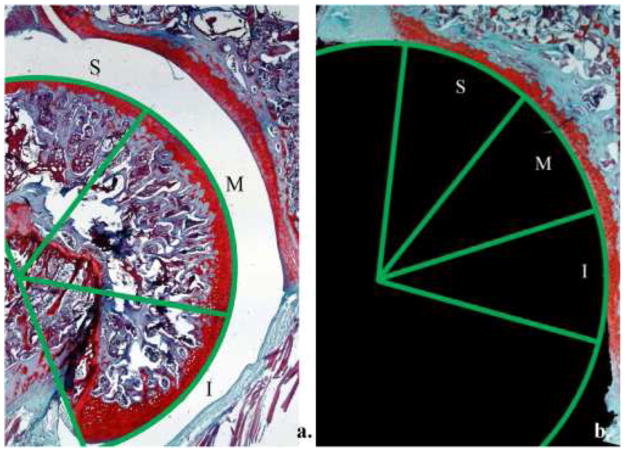
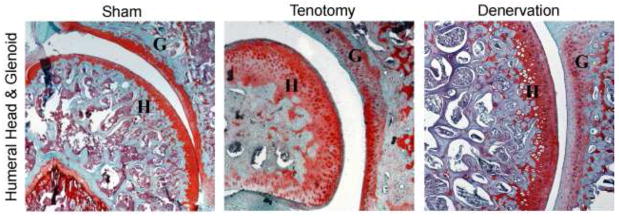
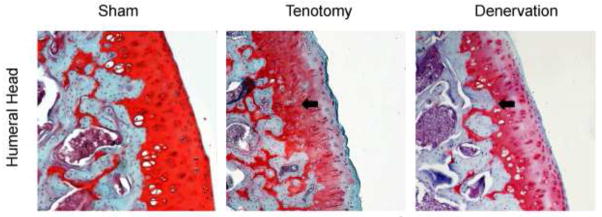
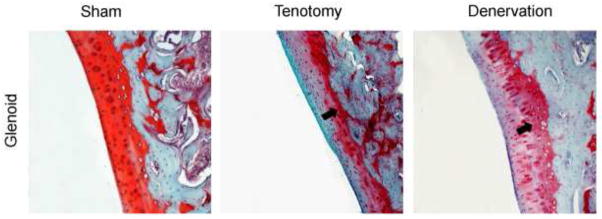
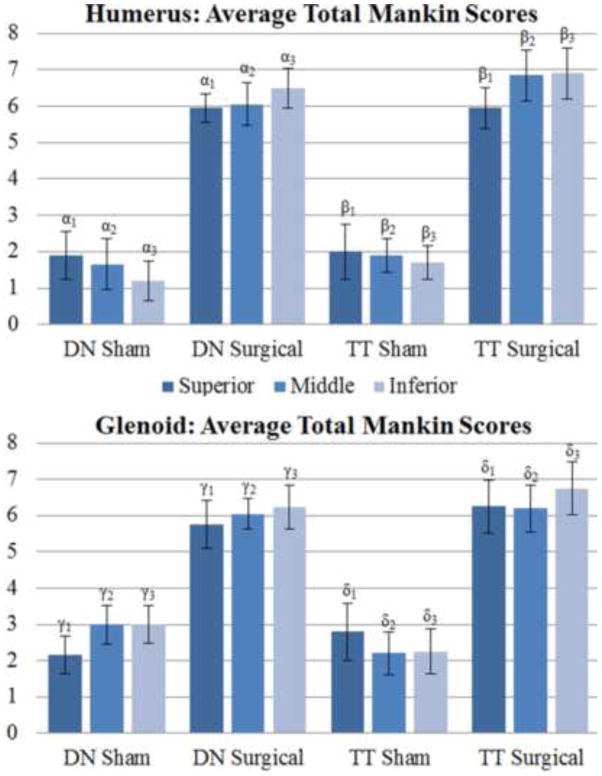
Materials and methods: We used a rat model that accurately reflects rotator cuff muscle degradation after massive rotator cuff tears through either infraspinatus and supraspinatus tenotomy or suprascapular nerve transection. Using a modified Mankin scoring system, we found significant glenohumeral cartilage damage after both rotator cuff tenotomy and suprascapular nerve transection after only 12 weeks.
Results: Cartilage degeneration was similar between groups and was present on both the humeral head and the glenoid. Denervation of the supraspinatus and infraspinatus muscles without opening the joint capsule caused cartilage degeneration similar to that found in the tendon transection group.
Conclusions: Our results suggest that altered mechanical loading after rotator cuff tears is the primary factor in cartilage degeneration after rotator cuff tears. Clinically, understanding the process of cartilage degeneration after rotator cuff injury will help guide treatment decisions in the setting of rotator cuff tears.
Level of evidence: Basic science study, animal model.
Keywords: Animal Model; Basic Science Study; Massive rotator cuff tear; arthropathy; articular cartilage; histology; osteoarthritis.
Copyright © 2013 Journal of Shoulder and Elbow Surgery Board of Trustees. Published by Mosby, Inc. All rights reserved.
Conflict of interest statement
No authors have any conflicts of interest to disclose.
Figures
References
-
- Chou CH, Lee CH, Lu LS, Song IW, Chuang HP, Kuo SY, et al. Direct assessment of articular cartilage and underlying subchondral bone reveals a progressive gene expression change in human osteoarthritic knees. Osteoarthritis Cartilage. 2012;21:450–61. doi: 10.1016/j.joca.2012.11.016.. - DOI - PMC - PubMed
-
- Gotoh M, Hamada K, Yamakawa H, Nakamura M, Yamazaki H, Ueyama Y, et al. Perforation of rotator cuff increases interleukin 1beta production in the synovium of glenohumeral joint in rotator cuff diseases. J Rheumatol. 2000;27:2886–92. - PubMed
Publication types
MeSH terms
Grants and funding
LinkOut - more resources
Full Text Sources
Other Literature Sources
Medical
Research Materials
