


Interactions between alcohol and the antiretroviral medications ritonavir or efavirenz
- PMID: 23666322
- PMCID: PMC3737351
- DOI: 10.1097/ADM.0b013e318293655a
Interactions between alcohol and the antiretroviral medications ritonavir or efavirenz
Abstract
Objective: Alcohol abuse occurs frequently in those with human immunodeficiency virus (HIV) infection. Alcohol has been linked to poor response to HIV treatment and more rapid progression of HIV. One possible contributor to such observations is drug interactions between alcohol and antiretroviral (ARV) medications. This study examined drug interactions between antiretroviral therapies (ARTs) containing either efavirenz or ritonavir with alcohol.
Methods: Human immunodeficiency virus-infected individuals not currently receiving ARTs participated in a randomized, double-blind, placebo-controlled study in which alcohol (or placebo) was administered and followed by blood sampling for pharmacokinetics, subjective, cardiovascular, and neuropsychological responses obtained at predetermined times. Antiretroviral therapy was then initiated and alcohol (or placebo) sessions were repeated after at least 2 weeks of observed ART.
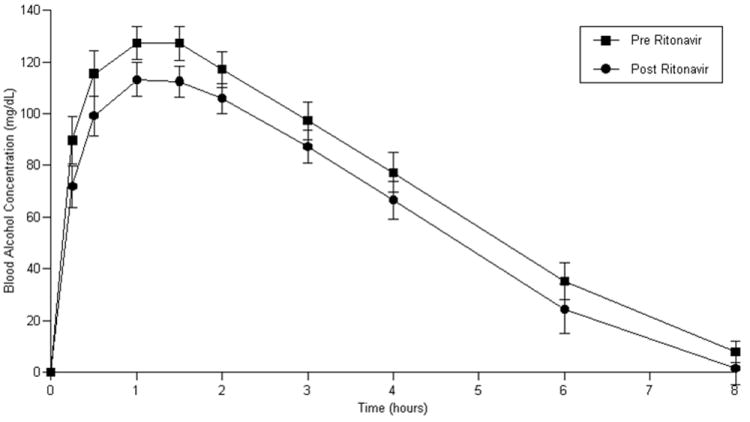
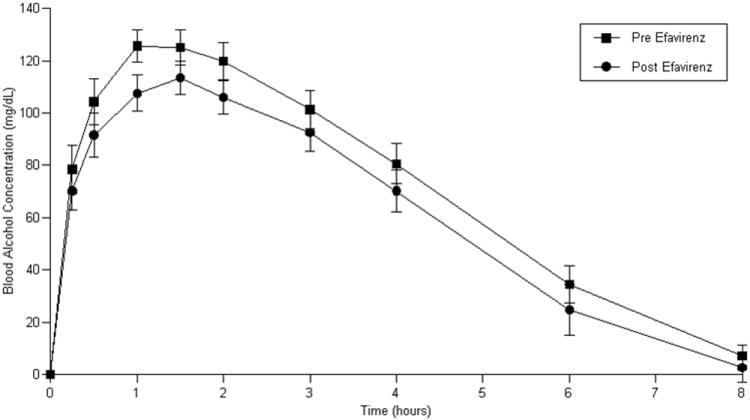
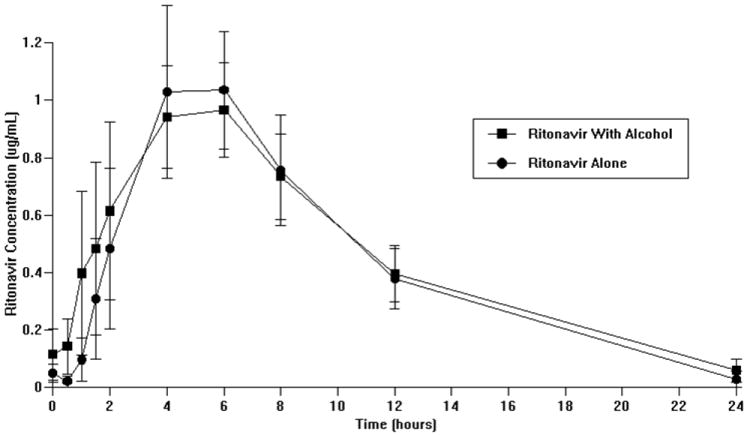
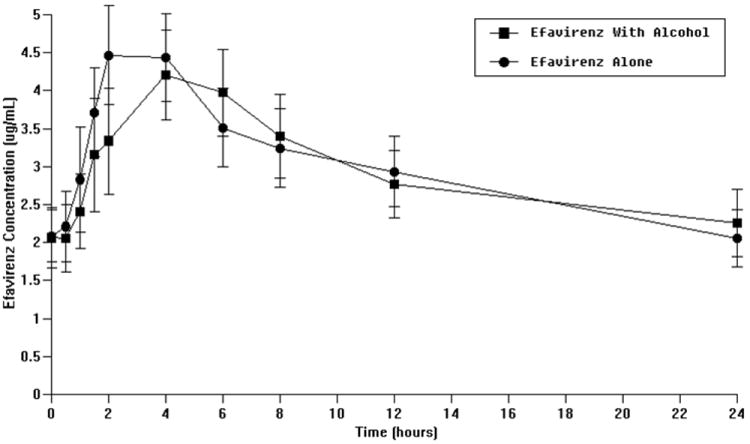
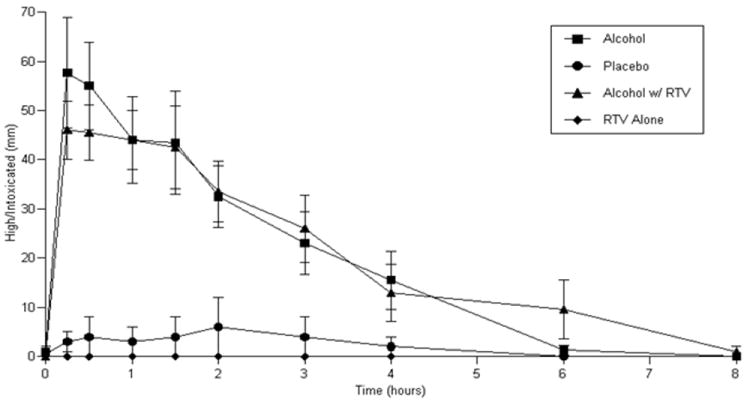
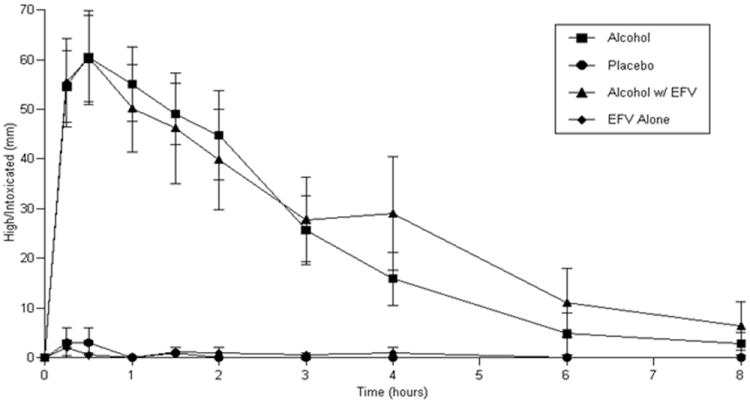
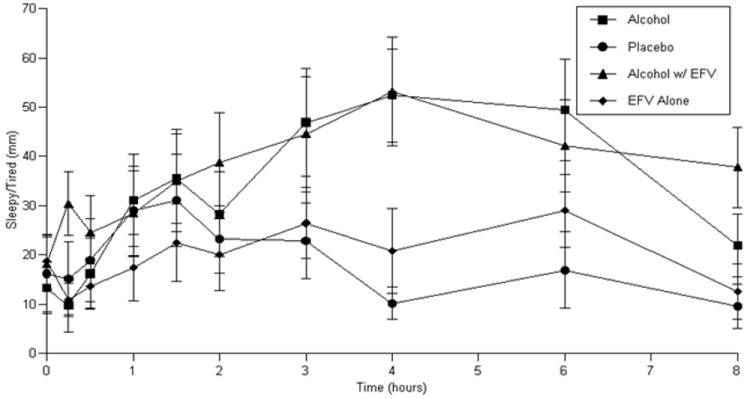
Results: Blood alcohol concentrations (BAC) were lower after ART in a pattern consistent with decreased bioavailability. No effect of alcohol on ritonavir or efavirenz pharmacokinetics was observed. A pharmacodynamic interaction between alcohol and efavirenz was observed as evidenced by no change in intoxication or drowsiness before and after efavirenz ART despite lower BAC.
Conclusions: These results show the effectiveness of implementing ART and its role in diminution of BAC, which could be associated with decreased risk of physiological toxicities related to alcohol consumption relative to those with untreated HIV infection. A potential pharmacodynamic interaction between alcohol and efavirenz was observed as demonstrated by a lack of decline in ratings of intoxication and drowsiness despite decreased BAC. Alcohol consumption did not alter the pharmacokinetics of ritonavir or efavirenz.
Figures
References
-
- Bosron WF, Ehrig T, Li TK. Genetic factors in alcohol metabolism and alcoholism. Semin Liver Dis. 1993;13(2):126–135. - PubMed
-
- Fung HB, Stone EA, Piacenti FJ. Tenofovir disoproxil fumarate: a nucleotide reverse transcriptase inhibitor for the treatment of HIV infection. Clin Ther. 2002;24(10):1515–1548. - PubMed
Publication types
MeSH terms
Substances
Grants and funding
LinkOut - more resources
Full Text Sources
Other Literature Sources
Medical
