


Using natural variation in Drosophila to discover previously unknown endoplasmic reticulum stress genes
- PMID: 23667151
- PMCID: PMC3670321
- DOI: 10.1073/pnas.1307125110
Using natural variation in Drosophila to discover previously unknown endoplasmic reticulum stress genes
Abstract
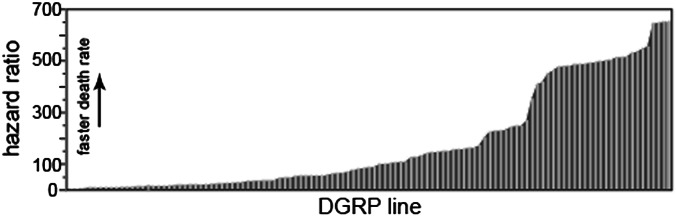
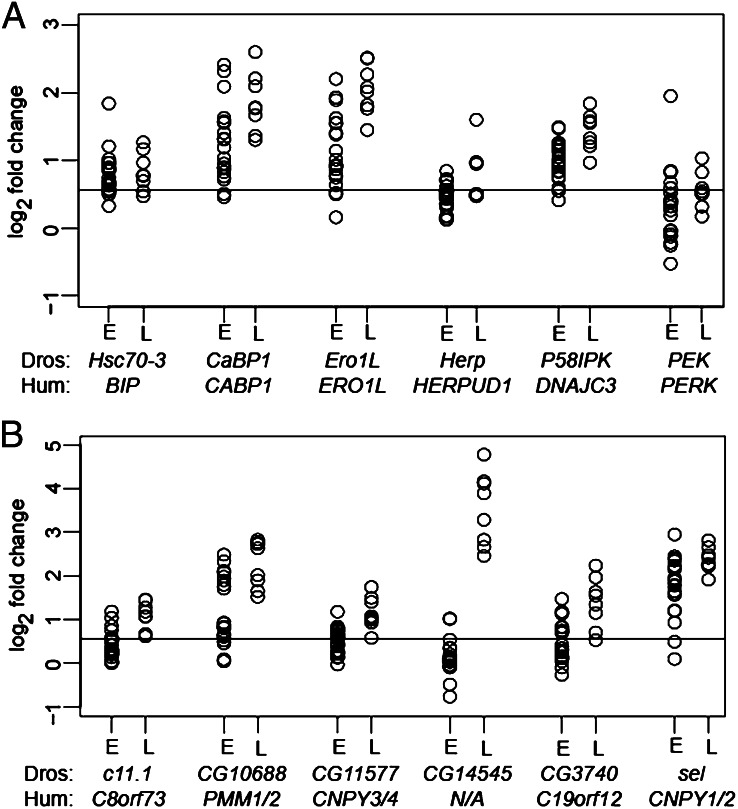
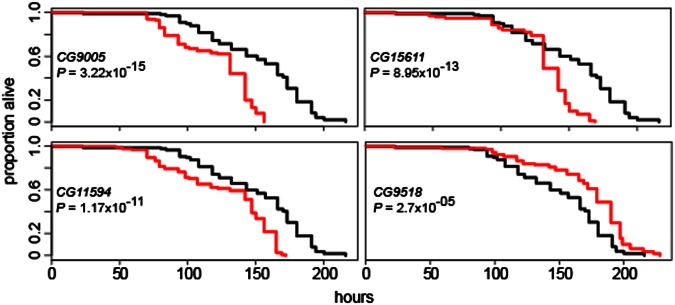
Natural genetic variation is a rich resource for identifying novel elements of cellular pathways such as endoplasmic reticulum (ER) stress. ER stress occurs when misfolded proteins accumulate in the ER and cells respond with the conserved unfolded protein response (UPR), which includes large-scale gene expression changes. Although ER stress can be a cause or a modifying factor of human disease, little is known of the amount of variation in the response to ER stress and the genes contributing to such variation. To study natural variation in ER stress response in a model system, we measured the survival time in response to tunicamycin-induced ER stress in flies from 114 lines from the sequenced Drosophila Genetic Reference Panel of wild-derived inbred strains. These lines showed high heterogeneity in survival time under ER stress conditions. To identify the genes that may be driving this phenotypic variation, we profiled ER stress-induced gene expression and performed an association study. Microarray analysis identified variation in transcript levels of numerous known and previously unknown ER stress-responsive genes. Survival time was significantly associated with polymorphisms in candidate genes with known (i.e., Xbp1) and unknown roles in ER stress. Functional testing found that 17 of 25 tested candidate genes from the association study have putative roles in ER stress. In both approaches, one-third of ER stress genes had human orthologs that contribute to human disease. This study establishes Drosophila as a useful model for studying variation in ER stress and identifying ER stress genes that may contribute to human disease.
Conflict of interest statement
The authors declare no conflict of interest.
Figures
References
-
- Dermitzakis ET. Cellular genomics for complex traits. Nat Rev Genet. 2012;13(3):215–220. - PubMed
-
- Mackay TF, Stone EA, Ayroles JF. The genetics of quantitative traits: Challenges and prospects. Nat Rev Genet. 2009;10(8):565–577. - PubMed
-
- Bernales S, Papa FR, Walter P. Intracellular signaling by the unfolded protein response. Annu Rev Cell Dev Biol. 2006;22:487–508. - PubMed
Publication types
MeSH terms
Substances
Associated data
- Actions
Grants and funding
LinkOut - more resources
Full Text Sources
Other Literature Sources
Molecular Biology Databases
