


The Impact of an Innovative Mindfulness-Based Stress Reduction Program on the Health and Well-Being of Nurses Employed in a Corporate Setting
- PMID: 23667348
- PMCID: PMC3646311
- DOI: 10.1080/15555240.2013.779518
The Impact of an Innovative Mindfulness-Based Stress Reduction Program on the Health and Well-Being of Nurses Employed in a Corporate Setting
Abstract
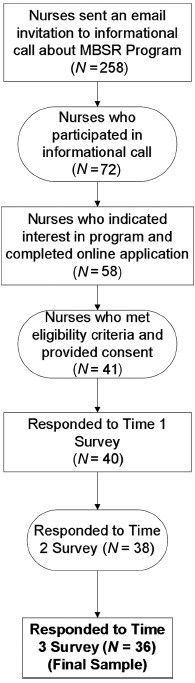
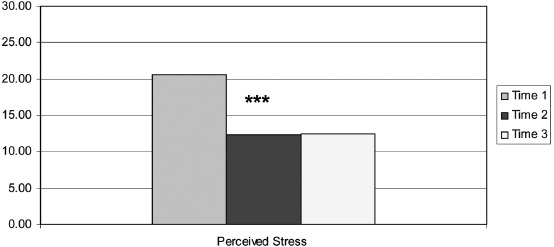
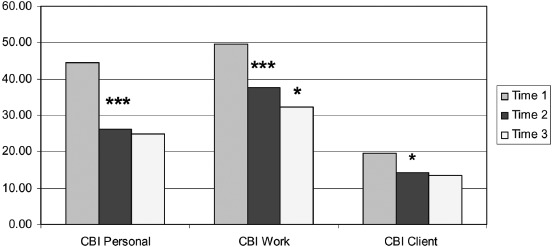
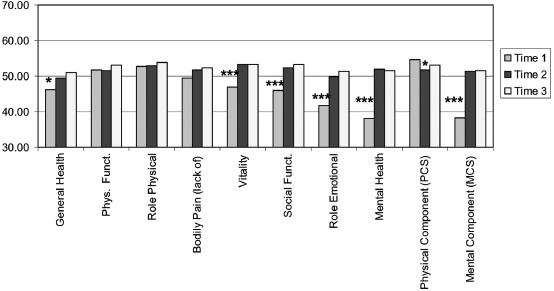
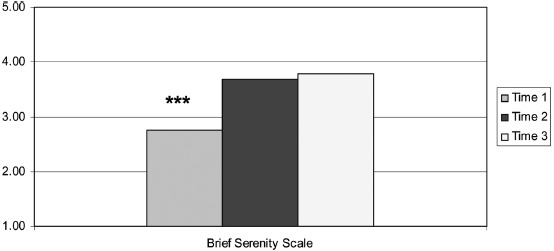
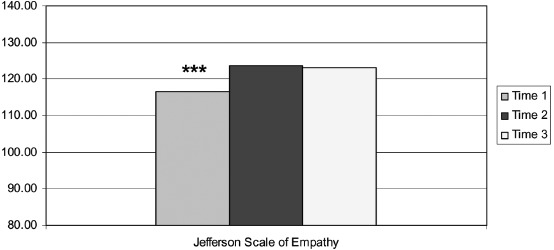
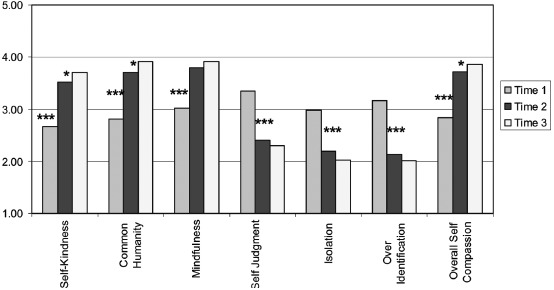
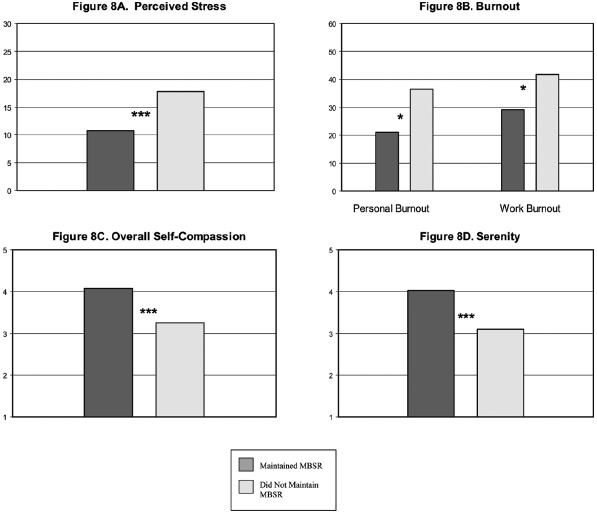
This study implemented an innovative new model of delivering a Mindfulness-Based Stress Reduction (MBSR) program that replaces six of the eight traditional in-person sessions with group telephonic sessions (tMBSR) and measured the program's impact on the health and well-being of nurses employed within a large health care organization. As part of a nonrandomized pre-post intervention study, 36 nurses completed measures of health, stress, burnout, self-compassion, serenity, and empathy at three points in time. Between baseline (Time 1) and the end of the 8-week tMBSR intervention (Time 2), participants showed improvement in general health, t(37) = 2.8, p < .01, decreased stress, t(37) = 6.8, p < .001, decreased work burnout, t(37) = 4.0, p < .001, and improvement in several other areas. Improvements were sustained 4 months later (Time 3), and individuals who continued their MBSR practice after the program demonstrated better outcomes than those that did not. Findings suggest that the tMBSR program can be a low cost, feasible, and scalable intervention that shows positive impact on health and well-being, and could allow MBSR to be delivered to employees who are otherwise unable to access traditional, on-site programs.
Keywords: Mindfulness-Based Stress Reduction (MBSR); burnout; healthcare; meditation; nursing; stress.
Figures
References
-
- Aiken L. H., Clarke S. P., Sloane D. M., Sochalski J., Silber J. H. Hospital nurse staffing and patient mortality, nurse burnout, and Job dissatisfaction. Journal of the American Medical Association. 2002;288(16):1987–1993. - PubMed
-
- American Institute of Stress. Workplace stress. (n.d.). Retrieved from http://www.stress.org/workplace-stress/
-
- American Psychological Association. Overwhelmed by workplace stress? You're not alone. (n.d.). Retrieved from http://www.apa.org/helpcenter/work-stress.aspx.
-
- Beckman H. B., Wendland M., Mooney C., Krasner M. S., Quill T. E., Suchman A. L., Epstein R. M. The impact of a program in mindful communication on primary care physicians. Academic Medicine. 2012;87(6):815–819. - PubMed
-
- Beddoe A. E., Murphy S. O. Does mindfulness decrease stress and foster empathy among nursing students? The Journal of Nursing Education. 2004;43(7):305–312. - PubMed
LinkOut - more resources
Full Text Sources
Other Literature Sources
Medical
Research Materials