


Acute lymphoblastic leukemia experience: epidemiology and outcome of two different regimens
- PMID: 23667722
- PMCID: PMC3647715
- DOI: 10.4084/MJHID.2013.024
Acute lymphoblastic leukemia experience: epidemiology and outcome of two different regimens
Abstract
Objectives: Accurate data about adult acute lymphoblastic leukemia (ALL) are lacking. We aim to assess demographics, prognostic factors, and outcome of ALL therapy at King Hussein Cancer Center (KHCC) in Jordan, and to compare the efficacy of two protocols.
Methods: We reviewed medical records of adults diagnosed and treated for ALL at KHCC from January, 2007 to December, 2011.
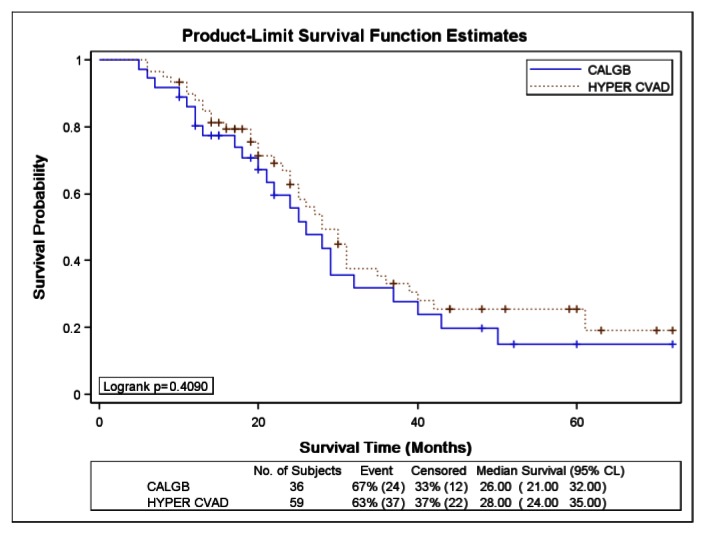
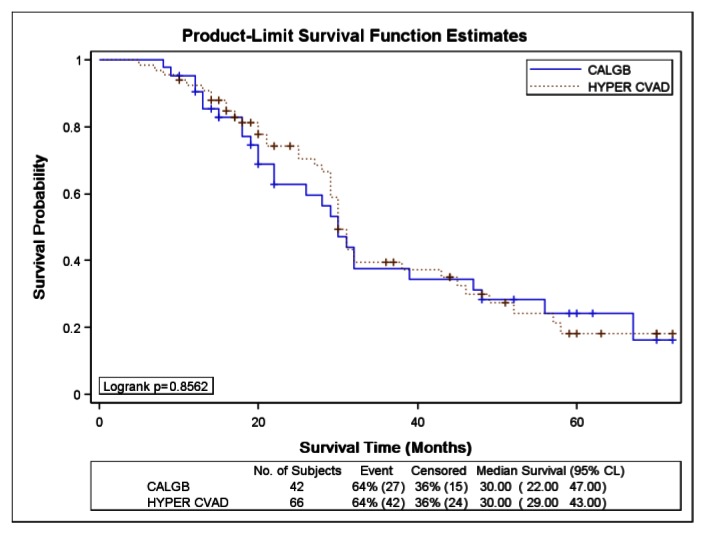
Results: Over a 5-year period, 108 patients with ALL were treated (66 with the Hyper-CVAD regimen, and 42 with the CALGB 8811 regimen). Median age at diagnosis was 33 years, with 63% males. The most common immunophenotype was CD10-positive common ALL, and 16% have BCR-ABL translocation. Complete response (CR) rate was 88%. After a median follow-up of 32 months (range, 10-72 months), the median survival (MS) was 30 months, and CR duration (CRD) was 28 months. In the multivariate analysis, the presence of BCR-ABL translocation was the only poor prognostic factor with lower MS of 23 months (p<0.01). There was no difference in MS or CRD between the two used regimens.
Conclusion: International protocols for adult ALL were successfully applied to our patients. There is no difference in efficacy between Hyper-CVAD and CALGB 8811 regimens. Future protocols for adult ALL should incorporate new targeted agents and minimal residual disease monitoring to improve outcome.
Figures
References
-
- Kantarjian HM, Walters RS, Keating MJ, et al. Results of the vincristine, doxorubicin, and dexamethasone regimen in adults with standard and high-risk acute lymphocytic leukemia. J Clin Oncol. 1990;8:994–1004. - PubMed
-
- Hoelzer D, Thiel E, Loffler H, et al. Prognostic factors in a multicenter study for treatment of acute lymphoblastic leukemia in adults. Blood. 1988;71:123–131. - PubMed
LinkOut - more resources
Full Text Sources
Other Literature Sources
Miscellaneous