A randomized crossover study to assess the effect of an oat-rich diet on glycaemic control, plasma lipids and postprandial glycaemia, inflammation and oxidative stress in Type 2 diabetes
- PMID: 23668675
- PMCID: PMC4232050
- DOI: 10.1111/dme.12228
A randomized crossover study to assess the effect of an oat-rich diet on glycaemic control, plasma lipids and postprandial glycaemia, inflammation and oxidative stress in Type 2 diabetes
Abstract
Aims: In the UK, lifestyle intervention is first-line management in Type 2 diabetes. It is unclear what type of diet is most efficacious for improving glycaemic control. This study investigated the effects of an oat-enriched diet on glycaemic control, postprandial glycaemia, inflammation and oxidative stress compared with standard dietary advice.
Methods: In a randomized crossover design, 27 volunteers with Type 2 diabetes, managed on diet and lifestyle only, were observed for two consecutive 8-week periods following either the oat-enriched diet or re-enforced standard dietary advice. Volunteers attended at baseline (habitual intake) and 8 and 16 weeks. Measurements included basic clinical measurements and fasted and postprandial (3-h) glucose and insulin in response to a healthy test meal. Markers of inflammation and oxidative stress, including high-sensitivity C-reactive protein, interleukin 6, interleukin 18, tumour necrosis factor-alpha, adiponectin, thiobarbituric acid reactive substances, oxygen radical antioxidant capacity, oxidized LDL and urinary isoprostanes, were also measured at fasting and in the postprandial period.
Results: There were no diet-related effects on glycaemic control or glycaemic or insulinaemic responses to the test meal. Total cholesterol (5.1 ± 1.0 vs. 4.9 ± 0.8 mmol/l, P = 0.019) concentrations declined following the oat-enriched diet compared with standard dietary advice. There was a postprandial decline in adiponectin concentration (P = 0.009), but no effect of dietary intervention. None of the measures of oxidative stress or inflammation were altered by the oat-enriched diet compared with standard dietary advice.
Conclusion: The oat-enriched diet had a modest impact on lipid lowering, but did not impact on oxidative stress or inflammation in these volunteers with Type 2 diabetes.
© 2013 The Authors. Diabetic Medicine published by John Wiley & Sons Ltd on behalf of Diabetes UK.
Figures
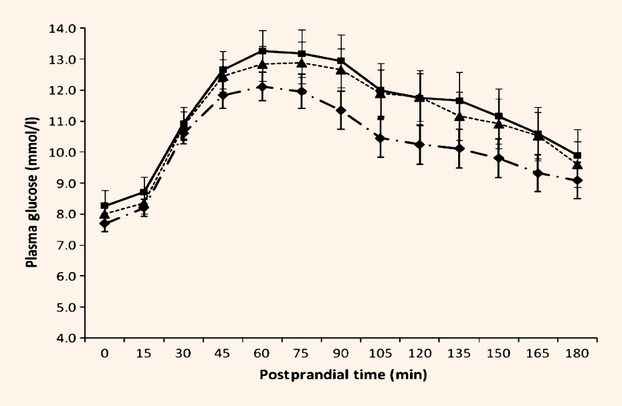
 ); standard dietary advice (
 ); oat-enriched diet (
 ). Effect of time, P < 0.001. Effect of diet, P = 0.036. Interaction between postprandial time × diet, P < 0.001.
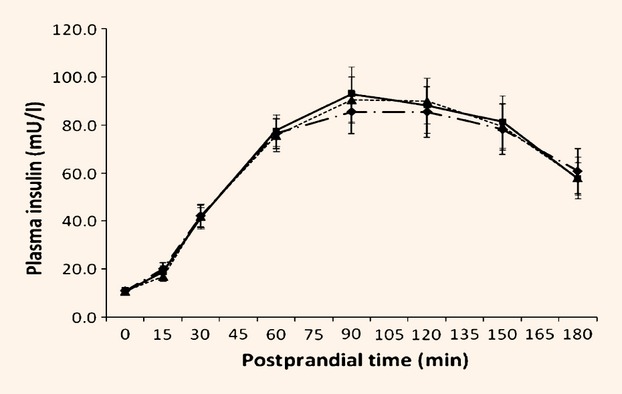 ); standard dietary advice (); oat-enriched diet (). Effect of postprandial time, P < 0.001. Effect of diet, P = 0.967. Interaction between postprandial time × diet, P = 0.774.
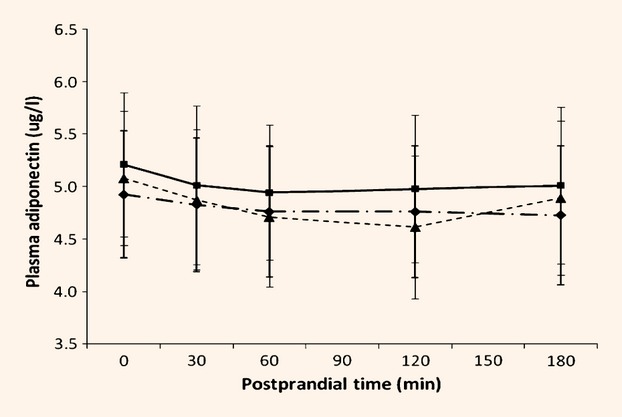 ); standard dietary advice (); oat-enriched diet (). Effect of time, P = 0.009. Effect of diet, P = 0.452. Interaction between postprandial time × diet, P = 0.582.
References
-
- NICE. Type 2 Diabetes: National Clinical Guideline for Management in Primary and Secondary Care. London: Royal College of Physicians, National Collaborating Centre for Chronic Conditions; 2008. (update). - PubMed
-
- Brand JC, Colagiuri S, Crossman S, Allen A, Roberts DC, Truswell AS. Low glycaemic index foods improve long-term glycaemic control in NIDDM. Diabetes Care. 1991;14:95–101. - PubMed
-
- The DECODE Study Group, on behalf of the European Diabetes Epidemiology Group. Glucose tolerance and cardiovascular mortality. Comparison of fasting and 2-hour diagnostic criteria. Arch Intern Med. 2001;161:397–405. - PubMed
-
- Quagliaro L, Piconi L, Assaloni R, Martinelli L, Motz E, Ceriello A. Intermittent high glucose enhances apoptosis related to oxidative stress in human umbilical vein endothelial cells. The role of protein kinase C and NAD(P)H-oxidase activation. Diabetes. 2003;52:2795–2904. - PubMed
Publication types
MeSH terms
Substances
Associated data
Grants and funding
LinkOut - more resources
Full Text Sources
Other Literature Sources
Medical
Research Materials