


Safety and effectiveness of insulin detemir in different age-groups in the a1chieve study
- PMID: 23670204
- PMCID: PMC3687092
- DOI: 10.1007/s13300-013-0021-3
Safety and effectiveness of insulin detemir in different age-groups in the a1chieve study
Abstract
Introduction: Diabetes therapy should balance glycemic control with risk of adverse events. This sub-analysis of the A1chieve study evaluated clinical safety and effectiveness of insulin detemir in different age-groups (≤40 years, >40-65 years, and >65 years) of insulin-experienced and insulin-naïve people with type 2 diabetes.
Methods: A1chieve was an international, open-label, non-interventional, 24-week study in 66,726 people with type 2 diabetes starting/switching to therapy with biphasic insulin aspart 30, insulin detemir or insulin aspart (alone/in combination) in routine clinical practice. This sub-analysis evaluated clinical safety and effectiveness in patients starting/switching to insulin detemir (±oral glucose-lowering drugs).
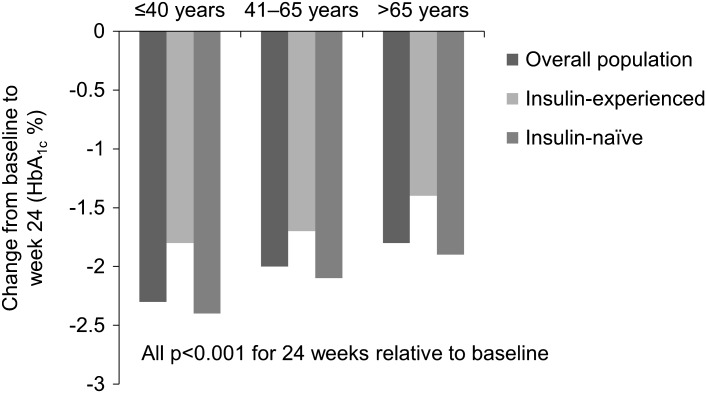
Results: In total, 15,241 patients were included in the sub-analysis. In all age-groups, the proportion of participants experiencing any, major or nocturnal hypoglycemia was significantly (all p < 0.05) reduced relative to baseline, except in insulin-naïve patients for any and nocturnal hypoglycemia, where there was a significant increase or no significant change in patients aged >65 years and >40-65 years, respectively, and no significant change in major hypoglycemia in insulin-naïve patients aged ≤40 years. Seven serious adverse drug reactions were reported. Body weight was significantly reduced in patients aged ≤40 years and >40-65 years and significantly increased in insulin-naïve patients aged >65 years at 24 weeks. At 24 weeks, glycated hemoglobin was reduced by 2.3%, 2.0%, and 1.8%, in the ≤40 years, >40-65 years, and >65 years age-groups, respectively (all p < 0.001). Fasting and post-prandial plasma glucose were significantly reduced and health-related quality of life (HRQoL) significantly improved across all patient cohorts (all p < 0.001).
Conclusion: After 24-week treatment with insulin detemir, all age-groups of insulin-experienced and insulin-naïve patients had significantly improved glycemic control and HRQoL. The proportion of patients experiencing hypoglycemia was reduced in all age-groups but unchanged in insulin-naïve patients aged >40-65 years and increased in insulin-naïve patients aged >65 years. The safety and effectiveness of insulin detemir may benefit all age-groups.
Figures
References
-
- International Diabetes Federation. IDF Diabetes Atlas 2012 Update, 5th edn. Brussels, Belgium; 2012.
-
- International Diabetes Federation. IDF Clinical Guidelines Task Force. Global guideline for type 2 diabetes. Brussels, Belgium; 2012.
-
- Inzucchi SE, Bergenstal RM, Buse JB, et al. Management of hyperglycemia in type 2 diabetes: a patient-centered approach: position statement of the American Diabetes Association (ADA) and the European Association for the Study of Diabetes (EASD) Diabetes Care. 2012;35:1364–1379. doi: 10.2337/dc12-0413. - DOI - PMC - PubMed
LinkOut - more resources
Full Text Sources
Other Literature Sources
