


MAPKs and signal transduction in the control of gastrointestinal epithelial cell proliferation and differentiation
- PMID: 23670595
- PMCID: PMC3676833
- DOI: 10.3390/ijms140510143
MAPKs and signal transduction in the control of gastrointestinal epithelial cell proliferation and differentiation
Abstract
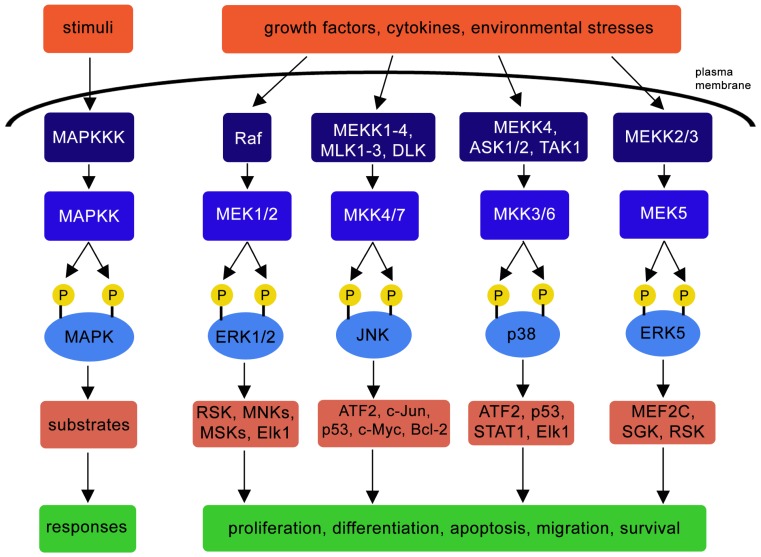
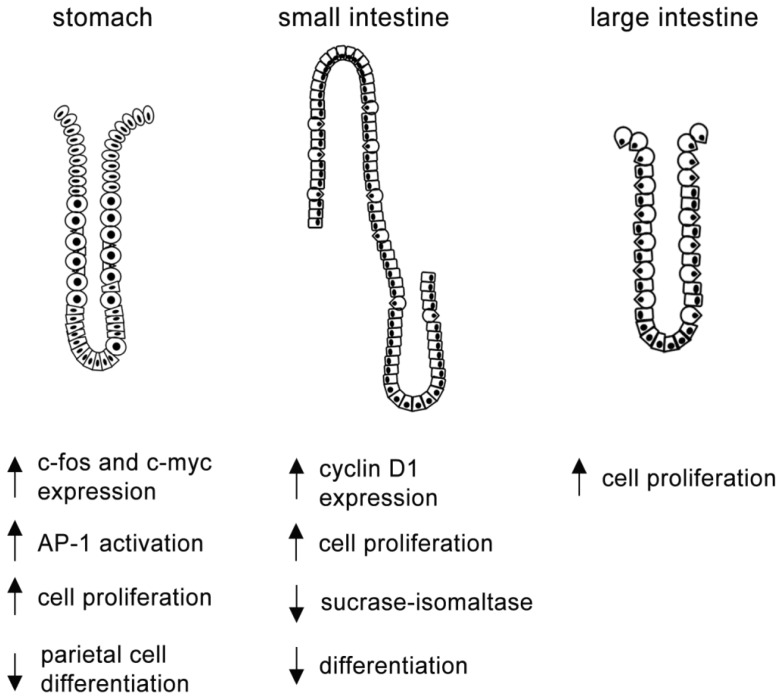
Mitogen-activated protein kinase (MAPK) pathways are activated by several stimuli and transduce the signal inside cells, generating diverse responses including cell proliferation, differentiation, migration and apoptosis. Each MAPK cascade comprises a series of molecules, and regulation takes place at different levels. They communicate with each other and with additional pathways, creating a signaling network that is important for cell fate determination. In this review, we focus on ERK, JNK, p38 and ERK5, the major MAPKs, and their interactions with PI3K-Akt, TGFβ/Smad and Wnt/β-catenin pathways. More importantly, we describe how MAPKs regulate cell proliferation and differentiation in the rapidly renewing epithelia that lines the gastrointestinal tract and, finally, we highlight the recent findings on nutritional aspects that affect MAPK transduction cascades.
Figures
References
-
- Wagner E.F., Nebreda A.R. Signal integration by JNK and p38 MAPK pathways in cancer development. Nat. Rev. Cancer. 2009;9:537–549. - PubMed
-
- Schlessinger J. Common and distinct elements in cellular signaling via EGF and FGF receptors. Science. 2004;306:1506–1507. - PubMed
-
- Kyriakis J.M., Avruch J. Mammalian MAPK signal transduction pathways activated by stress and inflammation: A 10-year update. Physiol. Rev. 2012;92:689–737. - PubMed
Publication types
MeSH terms
Substances
LinkOut - more resources
Full Text Sources
Other Literature Sources
Research Materials
Miscellaneous
