


Transcriptomic and proteomic responses of sweetpotato whitefly, Bemisia tabaci, to thiamethoxam
- PMID: 23671574
- PMCID: PMC3650016
- DOI: 10.1371/journal.pone.0061820
Transcriptomic and proteomic responses of sweetpotato whitefly, Bemisia tabaci, to thiamethoxam
Abstract
Background: The sweetpotato whitefly, Bemisia tabaci (Hemiptera: Aleyrodidae), is one of the most widely distributed agricultural pests. Although it has developed resistance to many registered insecticides including the neonicotinoid insecticide thiamethoxam, the mechanisms that regulate the resistance are poorly understood. To understand the molecular basis of thiamethoxam resistance, "omics" analyses were carried out to examine differences between resistant and susceptible B. tabaci at both transcriptional and translational levels.
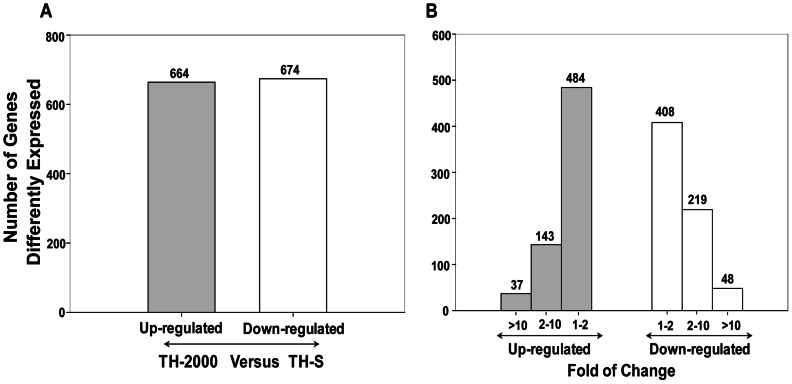
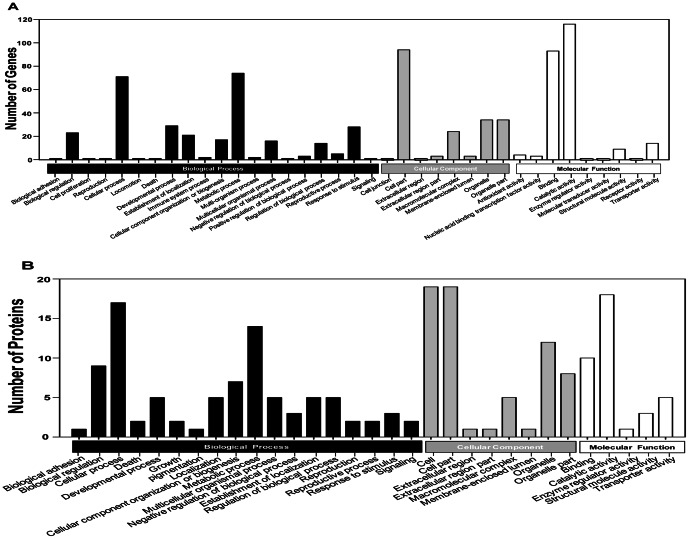
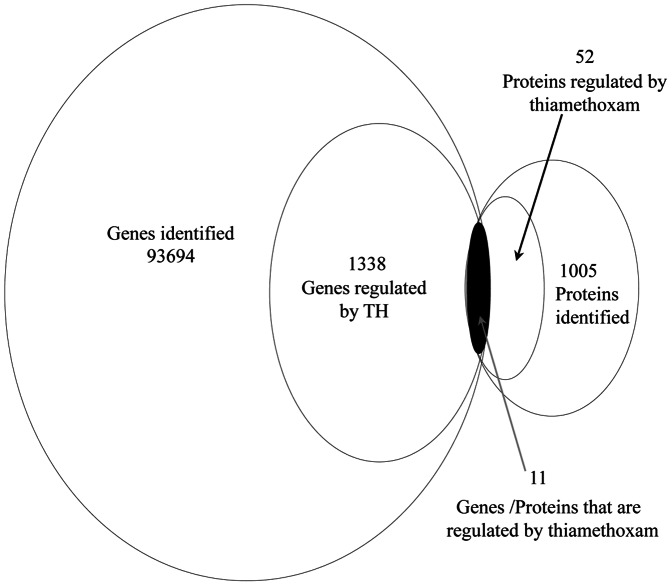
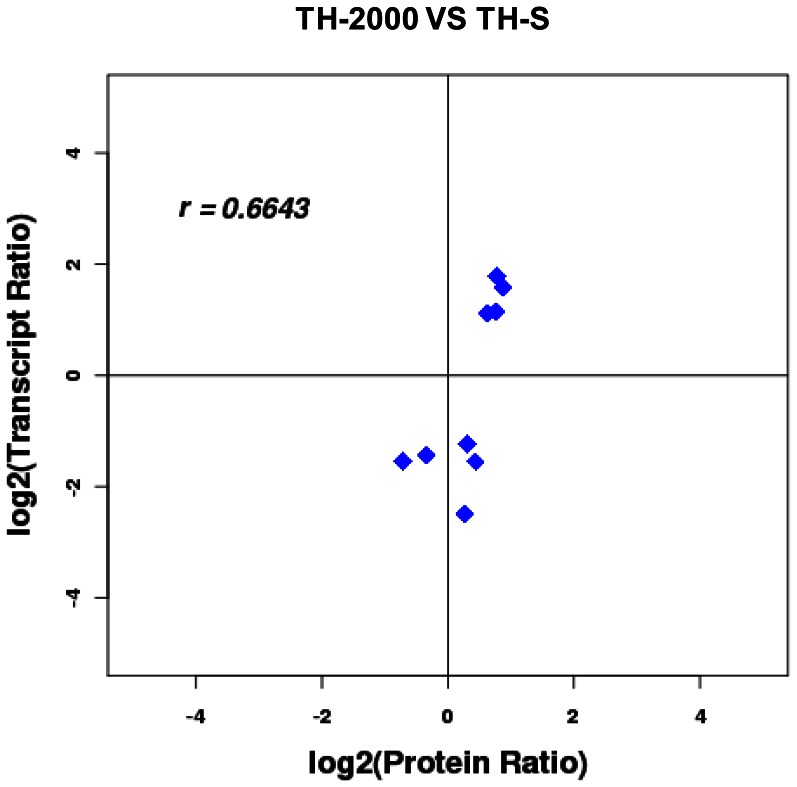
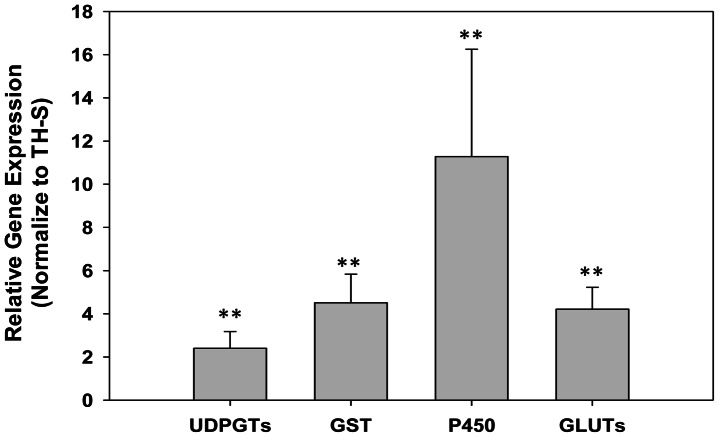
Results: A total of 1,338 mRNAs and 52 proteins were differentially expressed between resistant and susceptible B. tabaci. Among them, 11 transcripts had concurrent transcription and translation profiles. KEGG analysis mapped 318 and 35 differentially expressed genes and proteins, respectively, to 160 and 59 pathways (p<0.05). Thiamethoxam treatment activated metabolic pathways (e.g., drug metabolism), in which 118 transcripts were putatively linked to insecticide resistance, including up-regulated glutathione-S-transferase, UDP glucuronosyltransferase, glucosyl/glucuronosyl transferase, and cytochrome P450. Gene Ontology analysis placed these genes and proteins into protein complex, metabolic process, cellular process, signaling, and response to stimulus categories. Quantitative real-time PCR analysis validated "omics" response, and suggested a highly overexpressed P450, CYP6CX1, as a candidate molecular basis for the mechanistic study of thiamethoxam resistance in whiteflies. Finally, enzymatic activity assays showed elevated detoxification activities in the resistant B. tabaci.
Conclusions: This study demonstrates the applicability of high-throughput omics tools for identifying molecular candidates related to thiamethoxam resistance in an agricultural important insect pest. In addition, transcriptomic and proteomic analyses provide a solid foundation for future functional investigations into the complex molecular mechanisms governing the neonicotinoid resistance in whiteflies.
Conflict of interest statement
Figures
References
-
- James DG, Price TS (2002) Fecundity in two-spottd spider mite (Acari:Tetranychidae) is increased by direct and systemic exposure to imidacloprid. J Econ Entomol 95: 729–732. - PubMed
-
- Tomizawa M, Casida JE (2005) Neonicotinoid insecticide toxicology: Mechanisms of Selective Action. Annu Rev Pharmacol Toxicol 45: 247–268. - PubMed
-
- Tomizawa M, Casida JE (2003) Selective toxicity of neonicotinoids attributable to specificity of insect and mammalian nicotinic receptors. Annu Rev Entomol 48: 339–364. - PubMed
-
- Daborn PJ, Yen JL, Bogwitz MR, Le Goff G, Feil E, et al. (2002) A single P450 allele associated with insecticide resistance in Drosophila . Science 297: 2253–2256. - PubMed
Publication types
MeSH terms
Substances
LinkOut - more resources
Full Text Sources
Other Literature Sources
Molecular Biology Databases
