


Validation of an excretory/secretory antigen based-ELISA for the diagnosis of Opisthorchis felineus infection in humans from low trematode endemic areas
- PMID: 23671589
- PMCID: PMC3650035
- DOI: 10.1371/journal.pone.0062267
Validation of an excretory/secretory antigen based-ELISA for the diagnosis of Opisthorchis felineus infection in humans from low trematode endemic areas
Abstract
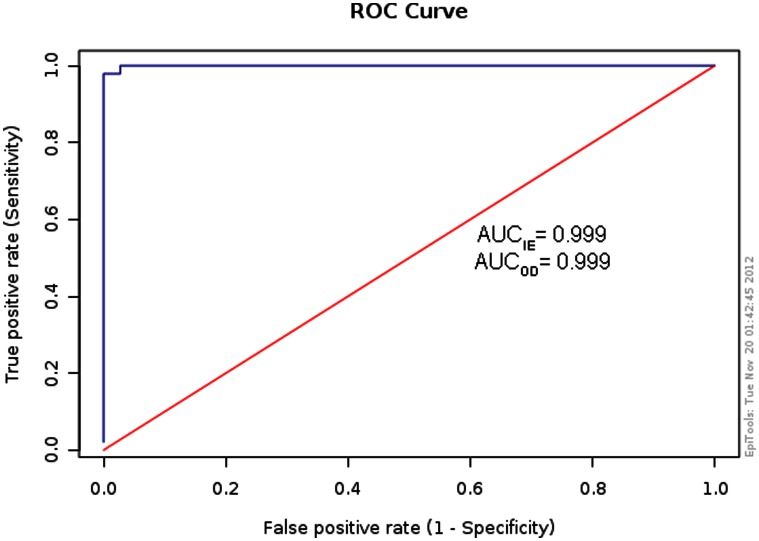
Since opisthorchiasis does not show pathognomonic signs or symptoms, physicians can have serious problems to make a differential diagnosis of this infection in non endemic areas, in particular when there is a simultaneous occurrence with other seasonal infections. Moreover, symptomatic infections due to O. felineus can last a few weeks and then the signs and symptoms disappear, but the worms survive in the bile ducts for years causing hepatobiliary diseases including hepatomegaly, cholangitis, fibrosis of the periportal system, cholecystitis, and gallstones. Consequently, an early diagnosis prevents chronicity and loss of working days. The detection of specific antibodies has been considered as a complementary tool to the fecal examination to establish the definitive diagnosis of this infection and for the follow up. Therefore the aim of this work was the development and validation of an enzyme-linked immunosorbent assay (ELISA) using excretory/secretory antigens (ESA) from O. felineus adult worms to detect anti-Opisthorchis IgG in human sera. A total of 370 human sera were tested: 144 sera from persons with a confirmed diagnosis of opisthorchiasis, 110 sera from healthy Italian people, and 116 sera from people with other parasitic or non-parasitic infections. Results were analyzed by receiver-operator characteristic (ROC) curve analysis. The accuracy of the test, calculated by the area under curve (AUC), yielded a 0.999 value, indicating the high performance of the test. The sensitivity was 100% (95% CI: 97.40% to 100%) and no false-negative sera were detected; the specificity was 99.09% (95% CI: 95.02% to 99.83%). The validated ELISA shows a good performance in terms of sensitivity, repeatability and reproducibility, and it is suitable to detect anti-Opisthorchis IgG in human sera for diagnostic purposes and for the follow up to assess the efficacy of drug treatment.
Conflict of interest statement
Figures
References
-
- Pozio E, Armignacco O, Ferri F, Gómez-Morales MA (2013) Opisthorchis felineus an emerging infection in Italy and its implication for the European Union. Acta Tropica 126: 54–62. - PubMed
-
- Rivolta S (1884) Sopra una specie di Distoma nel gatto e nel cane. Giornale di Anatomia Fisiologica e Patologia degli Animali 16: 20–28.
-
- Perroncito E (1901) I parassiti dell'uomo e degli animali utili e le più comuni malattie da essi prodotte. Milan: Dottor Francesco Vallardi ed.: 400p.
-
- Crotti D, D'Annibale ML, Crotti S (2007) Opistorchiasi autoctona del Lago Trasimeno (Perugia): descrizione di due episodi epidemici da Opisthorchis felineus e problematiche diagnostiche differenziali. Microbiologia Medica 42: 36–41.
Publication types
MeSH terms
Substances
LinkOut - more resources
Full Text Sources
Other Literature Sources
