


White vegetables: glycemia and satiety
- PMID: 23674805
- PMCID: PMC3650508
- DOI: 10.3945/an.112.003509
White vegetables: glycemia and satiety
Abstract
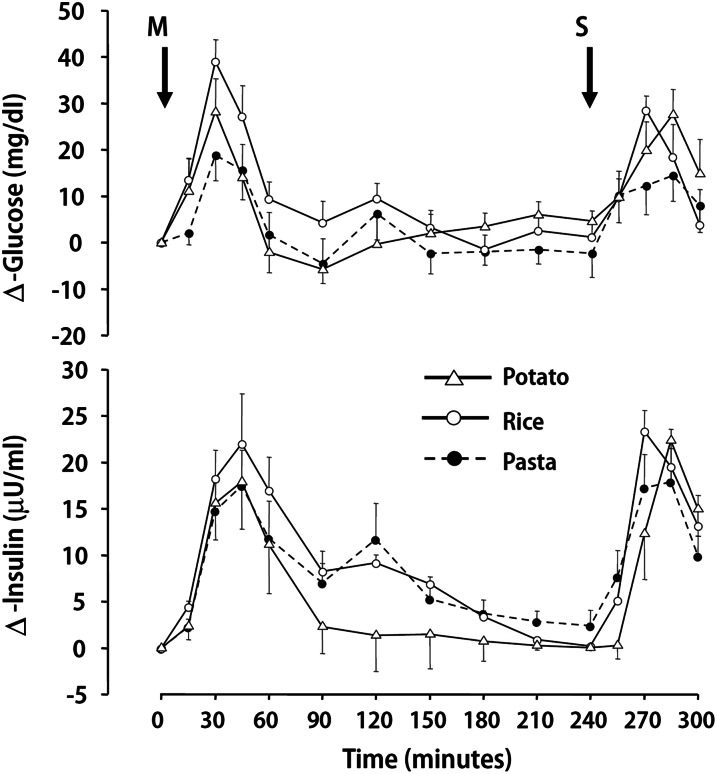
The objective of this review is to discuss the effect of white vegetable consumption on glycemia, satiety, and food intake. White vegetables is a term used to refer to vegetables that are white or near white in color and include potatoes, cauliflowers, turnips, onions, parsnips, white corn, kohlrabi, and mushrooms (technically fungi but generally considered a vegetable). They vary greatly in their contribution to the energy and nutrient content of the diet and glycemia and satiety. As with other foods, the glycemic effect of many white vegetables has been measured. The results illustrate that interpretation of the semiquantitative comparative ratings of white vegetables as derived by the glycemic index must be context dependent. As illustrated by using the potato as an example, the glycemic index of white vegetables can be misleading if not interpreted in the context of the overall contribution that the white vegetable makes to the carbohydrate and nutrient composition of the diet and their functionality in satiety and metabolic control within usual meals. It is concluded that application of the glycemic index in isolation to judge the role of white vegetables in the diet and, specifically in the case of potato as consumed in ad libitum meals, has led to premature and possibly counterproductive dietary guidance.
Conflict of interest statement
Author disclosures: G. H. Anderson is member of a global health and advisory committee to McCain Foods, which produces and processes potato products. C. D. Soeandy and C. E. Smith, no conflicts of interest.
Figures
References
-
- Health Canada. Eating Well with Canada’s Food Guide. 2011 [cited 2012 May 15]; Available from: http://www.hc-sc.gc.ca/fn-an/alt_formats/hpfb-dgpsa/pdf/food-guide-alime....
-
- United States Department of Agriculture, United States Department of Health and Human Services. Dietary Guidelines for Americans. Washington, DC: 2010.
-
- Vaclavik VA, Christian EW. Essentials of food science. 3rd ed. Heldman DR, editor. New York: Springer Science + Business Media, LLC; 2008
-
- Garden-Robinson J. What color is your food? Taste a rainbow of fruits and vegetables for better health. 2009 [cited 2012 Sep 10]; Available from: http://www.ag.ndsu.edu/pubs/yf/foods/fn595w.htm.
-
- Miller D. Color wheel of fruits and vegetables. 2008 [cited 2012 Sep 10]; Available from: http://www.disabled-world.com/artman/publish/fruits-vegetables.shtml.
Publication types
MeSH terms
Substances
LinkOut - more resources
Full Text Sources
Other Literature Sources
