


Rehabilitation Interventions for Unilateral Neglect after Stroke: A Systematic Review from 1997 through 2012
- PMID: 23675339
- PMCID: PMC3650319
- DOI: 10.3389/fnhum.2013.00187
Rehabilitation Interventions for Unilateral Neglect after Stroke: A Systematic Review from 1997 through 2012
Abstract
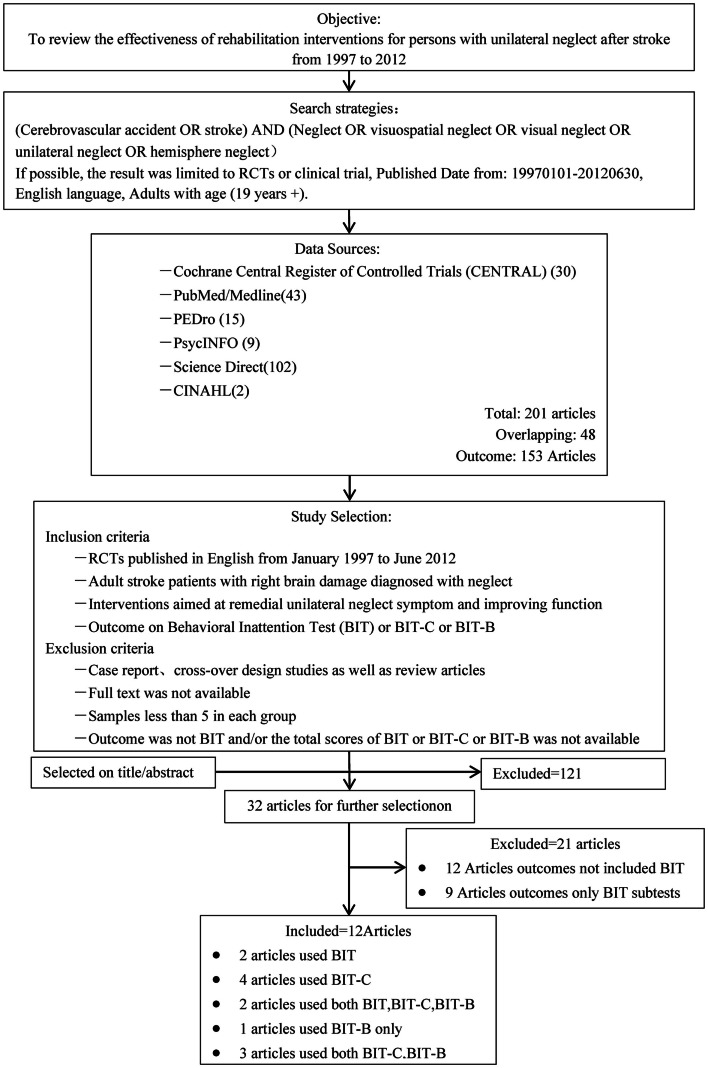
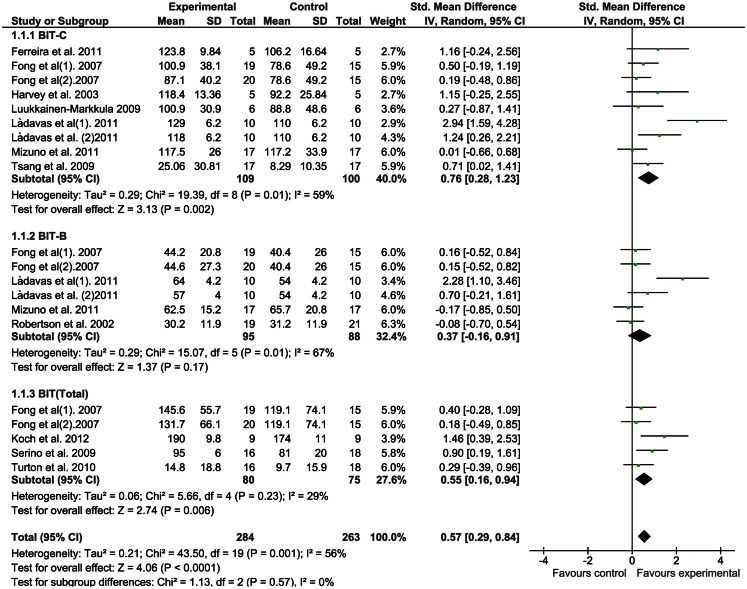
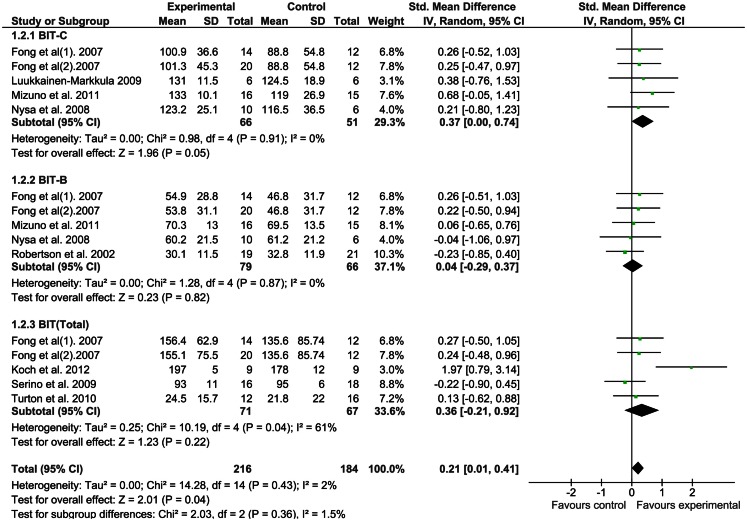
A systematic review of the effectiveness of rehabilitation for persons with unilateral neglect (UN) after stroke was conducted by searching the computerized databases from 1997 through 2012. Randomized controlled trials (RCTs) of neglect treatment strategies for stroke patients which used the Behavioral Inattention Test (BIT) as the primary outcome measure were eligible for inclusion. Out of 201 studies initially identified, 12 RCTs covering 277 participants were selected for analysis. All had the same weakness of low power with smaller samples and limitation in the blinding of the design. Prism Adaptation (PA) was the most commonly used intervention while continuous Theta-burst stimulation (cTBS) appeared to be a new approach. Meta-analysis showed that for immediate effects, the BIT conventional subscore had a significant and large mean effect size (ES = 0.76; 95% CI 0.28-1.23; p = 0.002) whereas the BIT total score showed a modestly significant mean ES (ES = 0.55; 95% CI 0.16-0.94; p = 0.006). No significant mean ES in sensitivity analysis was found for long-lasting effects across all BIT outcomes. PA appeared to be the most effective intervention based on the results of pooled analysis. More rigorous studies should be done on repetitive transcranial magnetic stimulation (rTMS) before it can be concluded that it is a promising treatment for UN.
Keywords: Behavioral Inattention Test; rehabilitation; stroke; systematic review; unilateral neglect.
Figures
References
LinkOut - more resources
Full Text Sources
Other Literature Sources
Miscellaneous
