


Targeting caspase-3 as dual therapeutic benefits by RNAi facilitating brain-targeted nanoparticles in a rat model of Parkinson's disease
- PMID: 23675438
- PMCID: PMC3652845
- DOI: 10.1371/journal.pone.0062905
Targeting caspase-3 as dual therapeutic benefits by RNAi facilitating brain-targeted nanoparticles in a rat model of Parkinson's disease
Erratum in
- PLoS One. 2013;8(9). doi:10.1371/annotation/5f08fe1e-8868-421c-92ea-1a4aa987d11f. Lv, Jing [corrected to Lu, Jing]
Abstract
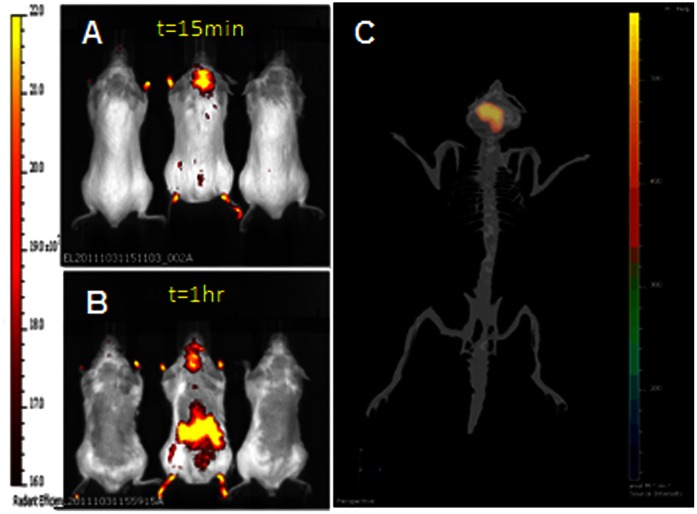
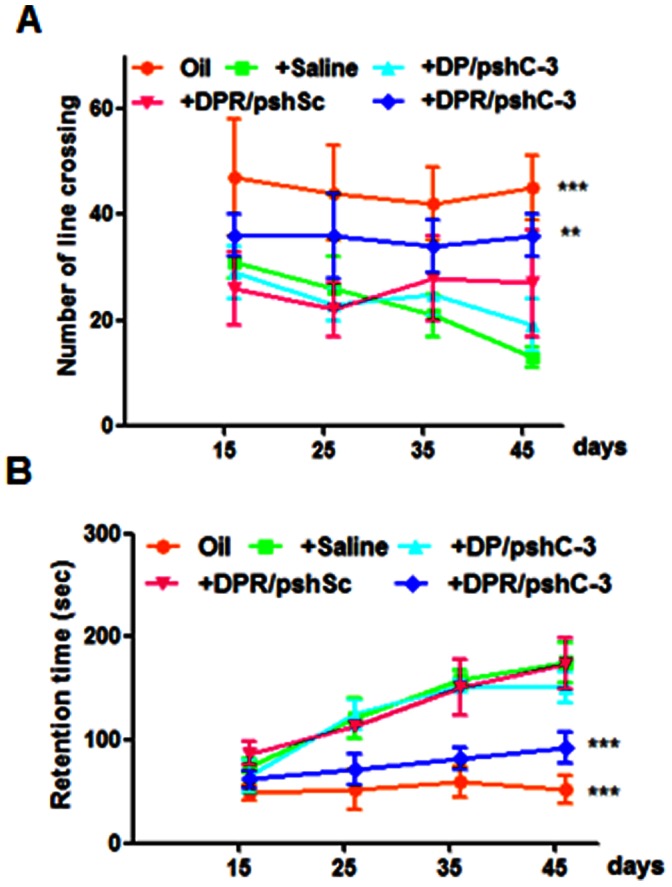
The activation of caspase-3 is an important hallmark in Parkinson's disease. It could induce neuron death by apoptosis and microglia activation by inflammation. As a result, inhibition the activation of caspase-3 would exert synergistic dual effect in brain in order to prevent the progress of Parkinson's disease. Silencing caspase-3 genes by RNA interference could inhibit the activation of caspase-3. We developed a brain-targeted gene delivery system based on non-viral gene vector, dendrigraft poly-L-lysines. A rabies virus glycoprotein peptide with 29 amino-acid linked to dendrigraft poly-L-lysines could render gene vectors the ability to get across the blood brain barrier by specific receptor mediated transcytosis. The resultant brain-targeted vector was complexed with caspase-3 short hairpin RNA coding plasmid DNA, yielding nanoparticles. In vivo imaging analysis indicated the targeted nanoparticles could accumulate in brain more efficiently than non-targeted ones. A multiple dosing regimen by weekly intravenous administration of the nanoparticles could reduce activated casapse-3 levels, significantly improve locomotor activity and rescue dopaminergic neuronal loss and in Parkinson's disease rats' brain. These results indicated the rabies virus glycoprotein peptide modified brain-targeted nanoparticles were promising gene delivery system for RNA interference to achieve anti-apoptotic and anti-inflammation synergistic therapeutic effects by down-regulation the expression and activation of caspase-3.
Conflict of interest statement
Figures




References
-
- Fahn S (2006) Levodopa in the treatment of Parkinson’s disease. J Neural Transm Suppl 71: 1–15. - PubMed
-
- Azzouz M, Martin-Rendon E, Barber RD, Mitrophanous KA, Carter EE, et al. (2002) Multicistronic lentiviral vector-mediated striatal gene transfer of aromatic L-amino acid decarboxylase, tyrosine hydroxylase, and GTP cyclohydrolase I induces sustained transgene expression, dopamine production, and functional improvement in a rat model of Parkinson’s disease. J Neurosci 23: 10302–10312. - PMC - PubMed
-
- Rangasamy SB, Soderstrom K, Bakay RA, Kordower JH (2010) Neurotrophic factor therapy for Parkinson’s disease. Prog Brain Res 237–264. - PubMed
Publication types
MeSH terms
Substances
LinkOut - more resources
Full Text Sources
Other Literature Sources
Medical
Research Materials
