


New frontier in regenerative medicine: site-specific gene correction in patient-specific induced pluripotent stem cells
- PMID: 23675640
- PMCID: PMC3689164
- DOI: 10.1089/hum.2012.251
New frontier in regenerative medicine: site-specific gene correction in patient-specific induced pluripotent stem cells
Abstract
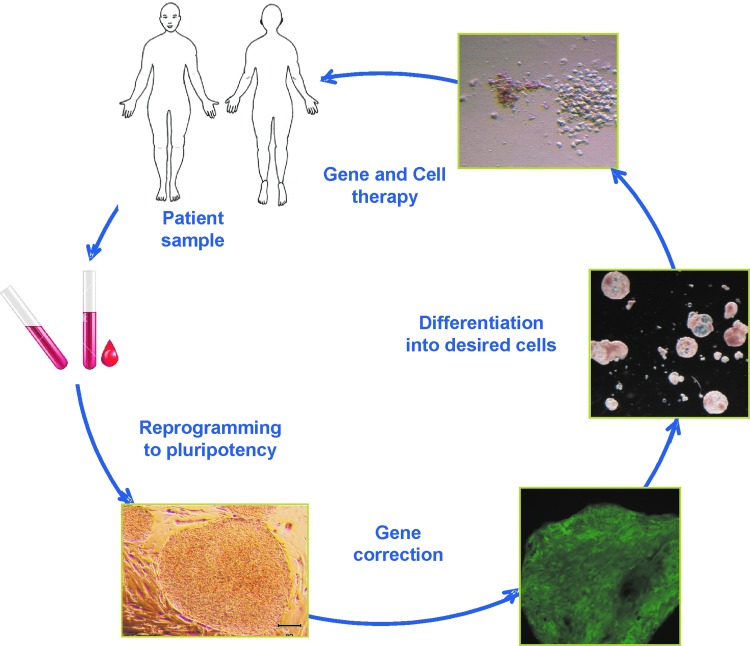
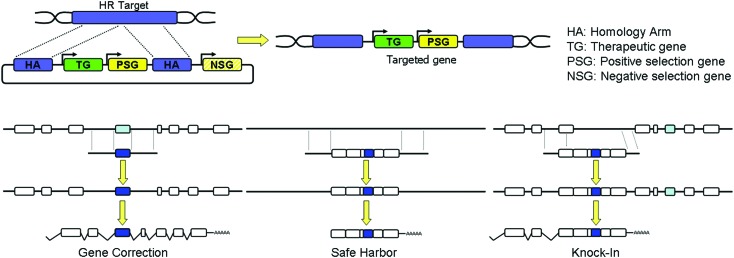
Advances in cell and gene therapy are opening up new avenues for regenerative medicine. Because of their acquired pluripotency, human induced pluripotent stem cells (hiPSCs) are a promising source of autologous cells for regenerative medicine. They show unlimited self-renewal while retaining the ability, in principle, to differentiate into any cell type of the human body. Since Yamanaka and colleagues first reported the generation of hiPSCs in 2007, significant efforts have been made to understand the reprogramming process and to generate hiPSCs with potential for clinical use. On the other hand, the development of gene-editing platforms to increase homologous recombination efficiency, namely DNA nucleases (zinc finger nucleases, TAL effector nucleases, and meganucleases), is making the application of locus-specific gene therapy in human cells an achievable goal. The generation of patient-specific hiPSC, together with gene correction by homologous recombination, will potentially allow for their clinical application in the near future. In fact, reports have shown targeted gene correction through DNA-Nucleases in patient-specific hiPSCs. Various technologies have been described to reprogram patient cells and to correct these patient hiPSCs. However, no approach has been clearly more efficient and safer than the others. In addition, there are still significant challenges for the clinical application of these technologies, such as inefficient differentiation protocols, genetic instability resulting from the reprogramming process and hiPSC culture itself, the efficacy and specificity of the engineered DNA nucleases, and the overall homologous recombination efficiency. To summarize advances in the generation of gene corrected patient-specific hiPSCs, this review focuses on the available technological platforms, including their strengths and limitations regarding future therapeutic use of gene-corrected hiPSCs.
Figures
References
-
- Anderson W.F. Blaese R.M. Culver K. The ADA human gene therapy clinical protocol: Points to consider: Response with clinical protocol, July 6, 1990. Hum. Gene Ther. 1990;1:331–362. - PubMed
Publication types
MeSH terms
LinkOut - more resources
Full Text Sources
Other Literature Sources
Medical
Miscellaneous
