


Mediterranean diet and cognitive function in older age
- PMID: 23676264
- PMCID: PMC3674216
- DOI: 10.1097/EDE.0b013e318294a065
Mediterranean diet and cognitive function in older age
Abstract
Background: Adherence to a Mediterranean diet may help prevent cognitive decline in older age, but studies are limited. We examined the association of adherence to the Mediterranean diet with cognitive function and decline.
Methods: We included 6174 participants, aged 65+ years, from the cognitive substudy of the Women's Health Study. Women provided dietary information in 1998 and completed a cognitive battery 5 years later, followed by two assessments at 2-year intervals. The primary outcomes were composite scores of global cognition and verbal memory. The alternate Mediterranean diet adherence nine-point score was constructed based on intakes of vegetables, fruits, legumes, whole grains, nuts, fish, red and processed meats, moderate alcohol, and the ratio of monounsaturated-to-saturated fats.
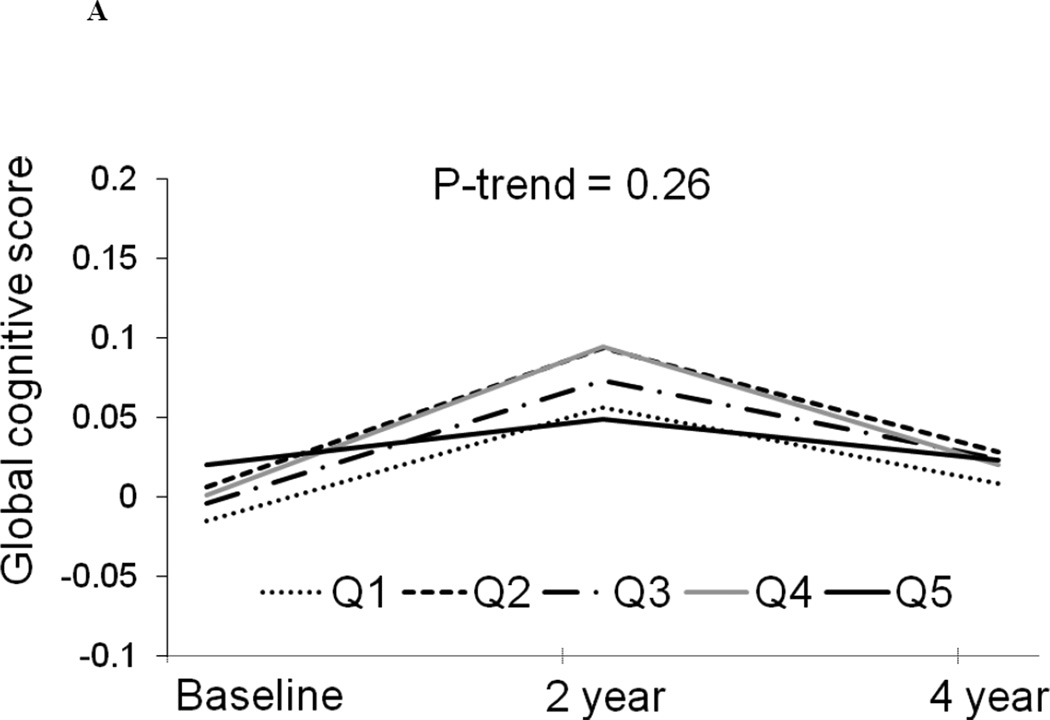
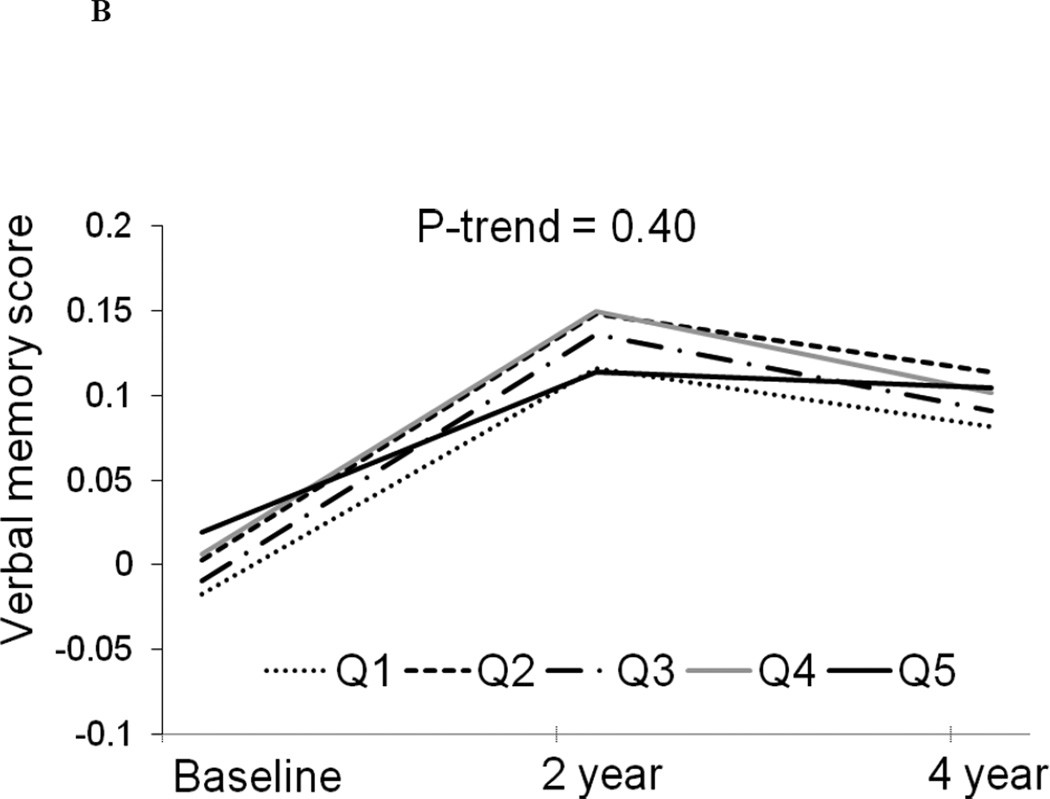
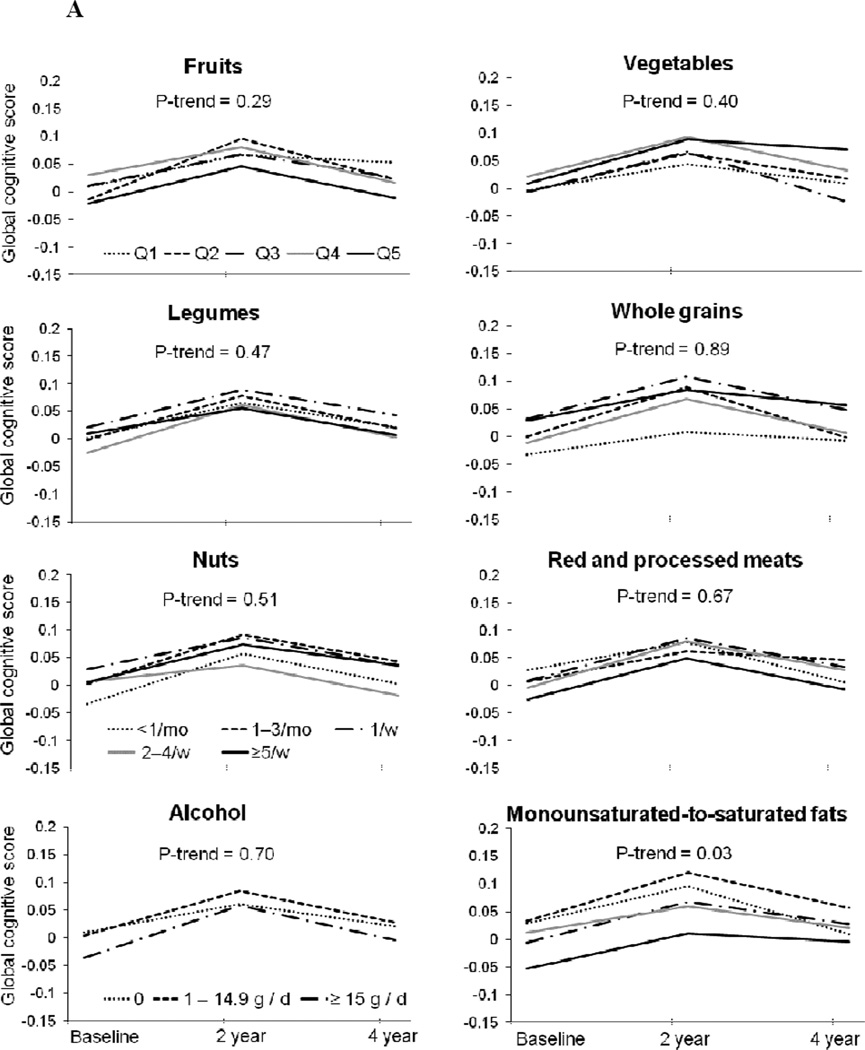
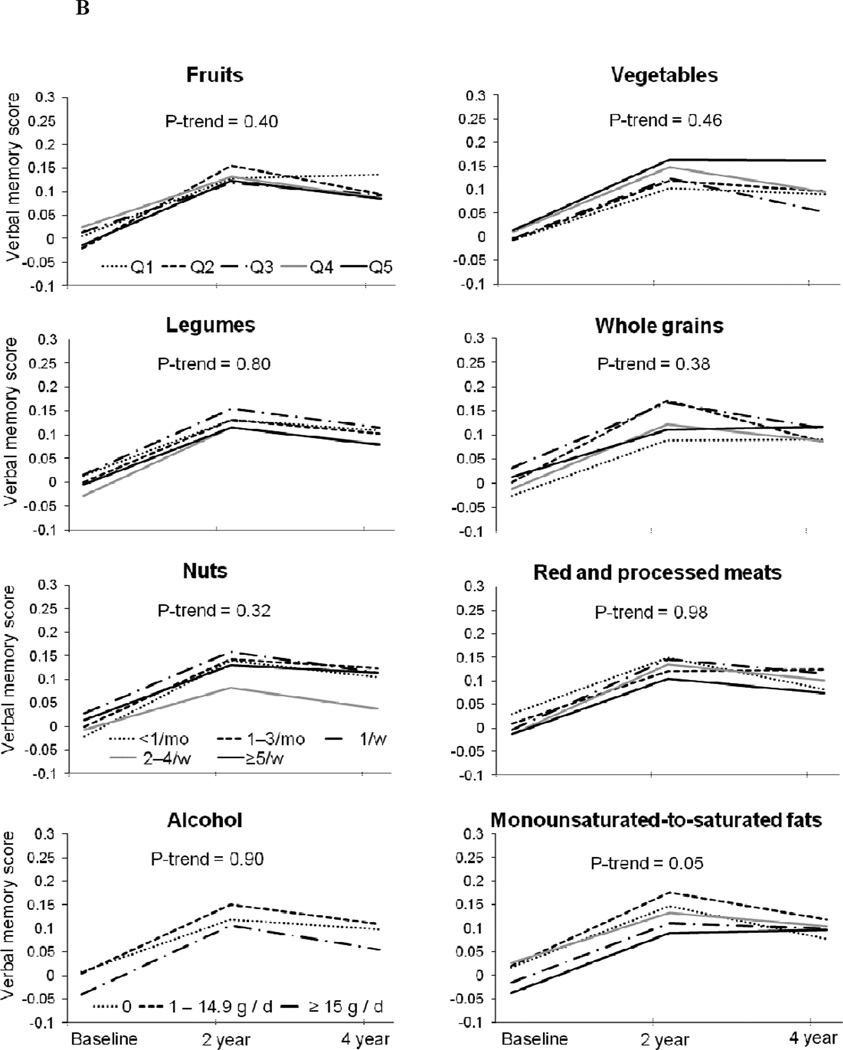
Results: After multivariable adjustment, the alternate Mediterranean diet score was not associated with trajectories of repeated cognitive scores (P for score quintiles medians-x-time interaction = 0.26 for global cognition and 0.40 for verbal memory), nor with overall global cognition and verbal memory at older ages, assessed by averaging the three cognitive measures (P trend = 0.63 and 0.44, respectively). Among alternate Mediterranean diet components, a higher monounsaturated-to-saturated fats ratio was associated with more favorable cognitive trajectories (P for ratio quintiles medians-x-time = 0.03 for global cognition and 0.05 for verbal memory). Greater whole grain intake was not associated with cognitive trajectories but was related to better averaged global cognition (P trend = 0.02).
Conclusions: In this large study of older women, we observed no association of the Mediterranean diet with cognitive decline. Relations between individual Mediterranean diet components, particularly whole grains, and cognitive function merit further study.
Conflict of interest statement
None of the authors report any potential financial or personal conflicts of interest pertaining to this manuscript.
Figures
Comment in
-
Commentary: Mediterranean diet and cognitive function: are we approaching clarity in this area?Epidemiology. 2013 Jul;24(4):500-2. doi: 10.1097/EDE.0b013e318296de56. Epidemiology. 2013. PMID: 23732732 No abstract available.
-
Commentary: Mediterranean diet and cognitive outcomes: epidemiological evidence suggestive, randomized trials needed.Epidemiology. 2013 Jul;24(4):503-6. doi: 10.1097/EDE.0b013e318296bf8e. Epidemiology. 2013. PMID: 23732733 No abstract available.
References
-
- Sofi F, Abbate R, Gensini GF, Casini A. Accruing evidence on benefits of adherence to the Mediterranean diet on health: an updated systematic review and meta-analysis. Am J Clin Nutr. 2010;92(5):1189–1196. - PubMed
Publication types
MeSH terms
Grants and funding
LinkOut - more resources
Full Text Sources
Other Literature Sources
