


VAMP4 is required to maintain the ribbon structure of the Golgi apparatus
- PMID: 23677696
- PMCID: PMC3695666
- DOI: 10.1007/s11010-013-1652-4
VAMP4 is required to maintain the ribbon structure of the Golgi apparatus
Erratum in
- Mol Cell Biochem. 2013 Aug;380(1-2):301. Shakakura, Yasunori [corrected to Sakakura, Yasunori]
Abstract
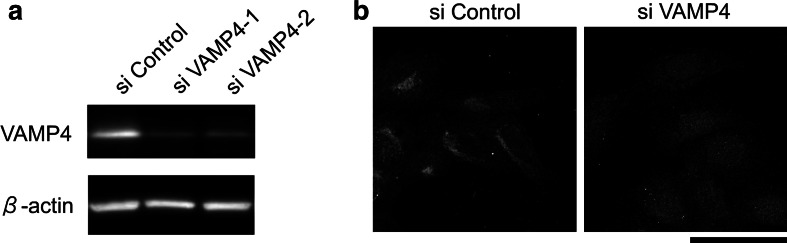
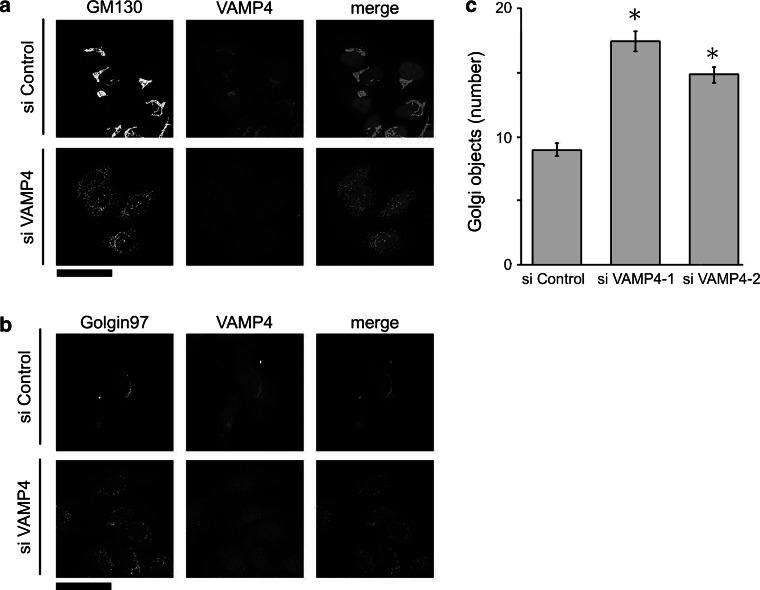
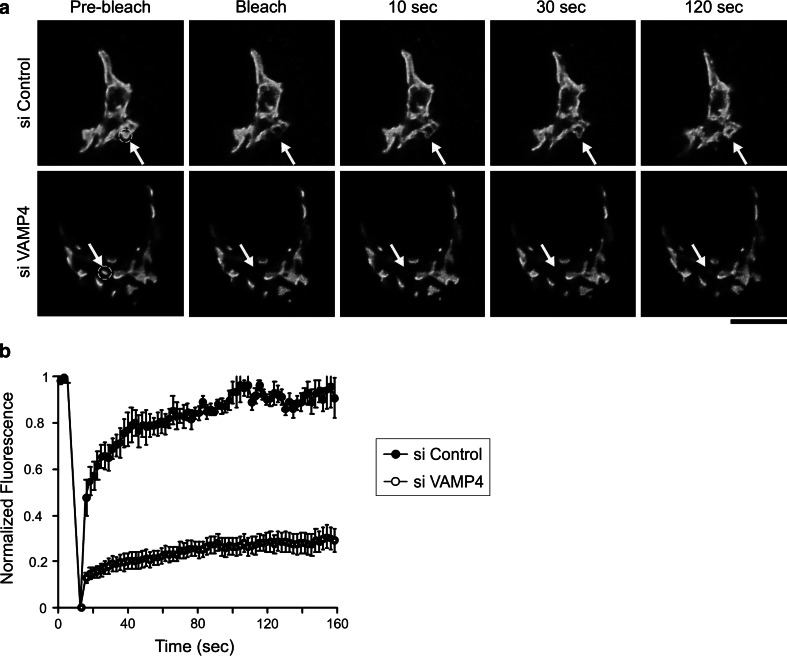
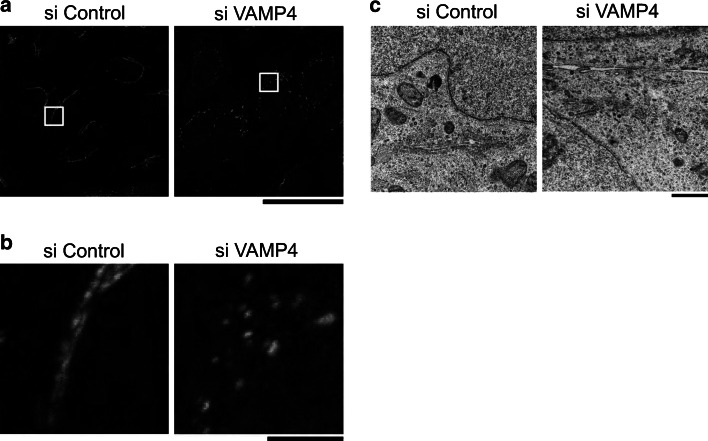
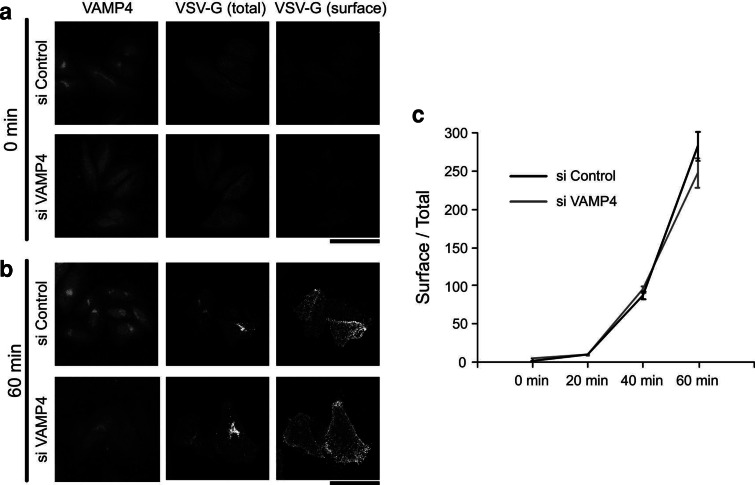
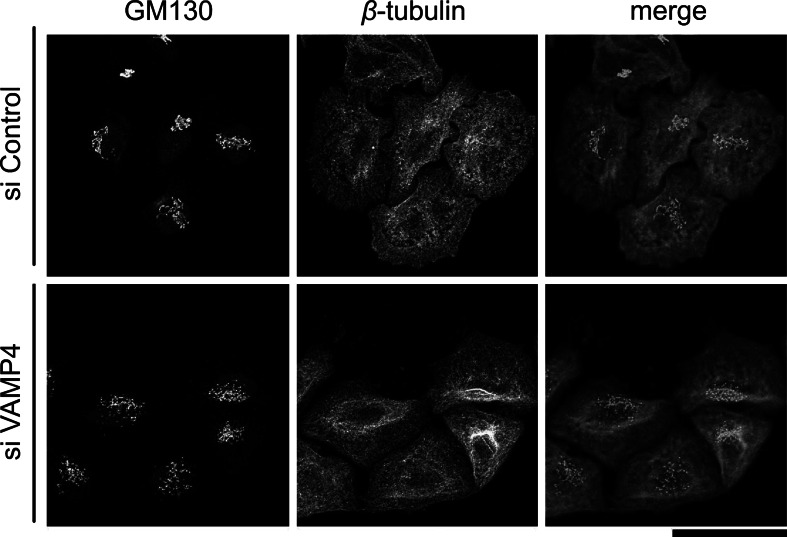
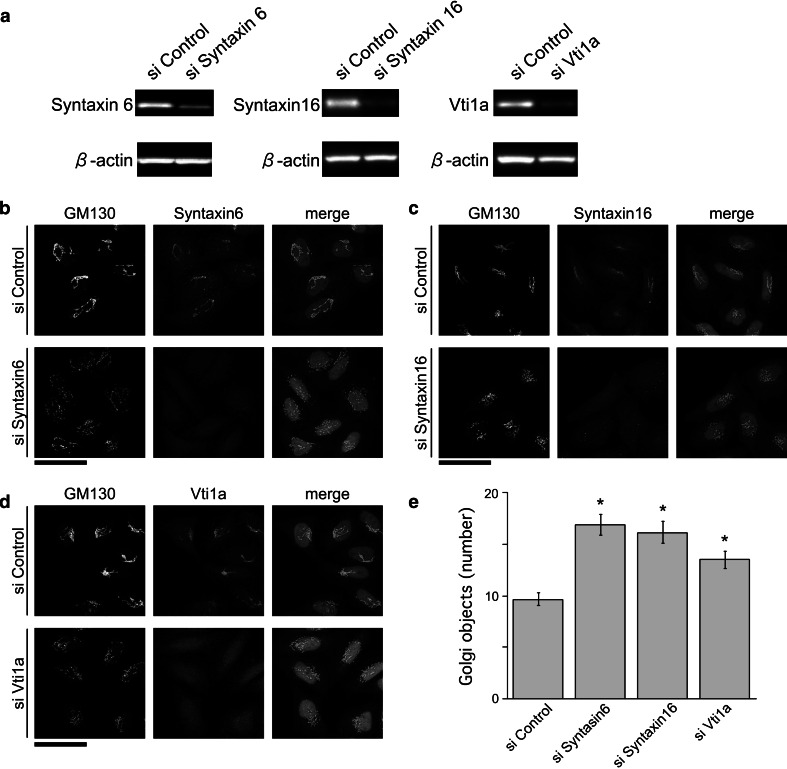
The Golgi apparatus forms a twisted ribbon-like network in the juxtanuclear region of vertebrate cells. Vesicle-associated membrane protein 4 (VAMP4), a v-SNARE protein expressed exclusively in the vertebrate trans-Golgi network (TGN), plays a role in retrograde trafficking from the early endosome to the TGN, although its precise function within the Golgi apparatus remains unclear. To determine whether VAMP4 plays a functional role in maintaining the structure of the Golgi apparatus, we depleted VAMP4 gene expression using RNA interference technology. Depletion of VAMP4 from HeLa cells led to fragmentation of the Golgi ribbon. These fragments were not uniformly distributed throughout the cytoplasm, but remained in the juxtanuclear area. Electron microscopy and immunohistochemistry showed that in the absence of VAMP4, the length of the Golgi stack was shortened, but Golgi stacking was normal. Anterograde trafficking was not impaired in VAMP4-depleted cells, which contained intact microtubule arrays. Depletion of the cognate SNARE partners of VAMP4, syntaxin 6, syntaxin 16, and Vti1a also disrupted the Golgi ribbon structure. Our findings suggested that the maintenance of Golgi ribbon structure requires normal retrograde trafficking from the early endosome to the TGN, which is likely to be mediated by the formation of VAMP4-containing SNARE complexes.
Figures
References
-
- Mironov A, Pavelka M. The Golgi apparatus: state of the art 110 years after Camillo Golgi’s discovery. In: De Matteis MA, Mironov AA, Beznoussenko GV, editors. The Golgi ribbon and the function of the golgins. New York: Springer; 2008. pp. 223–246.
Publication types
MeSH terms
Substances
LinkOut - more resources
Full Text Sources
Other Literature Sources
Molecular Biology Databases
Miscellaneous
