


Early life stress sensitizes the renal and systemic sympathetic system in rats
- PMID: 23678041
- PMCID: PMC3742864
- DOI: 10.1152/ajprenal.00008.2013
Early life stress sensitizes the renal and systemic sympathetic system in rats
Abstract
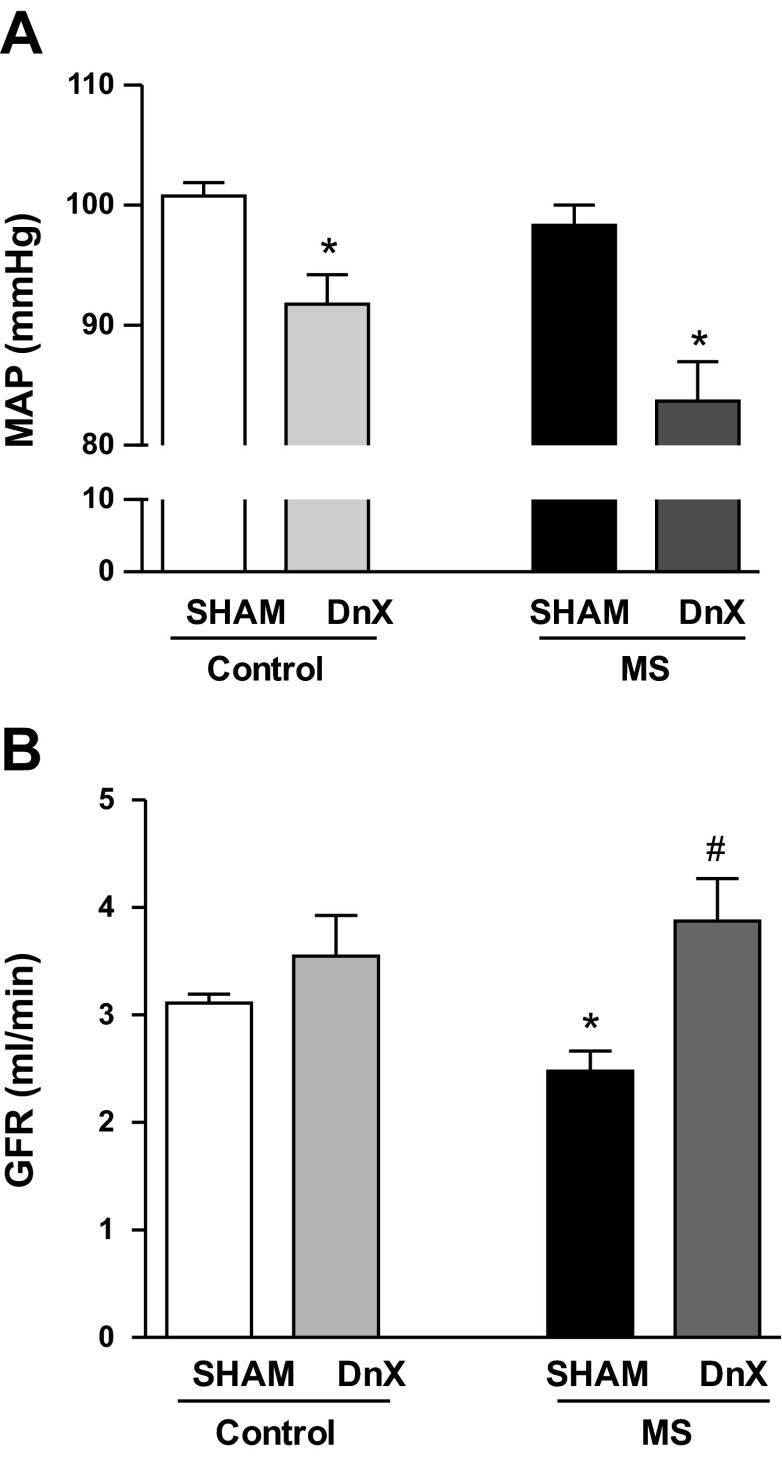
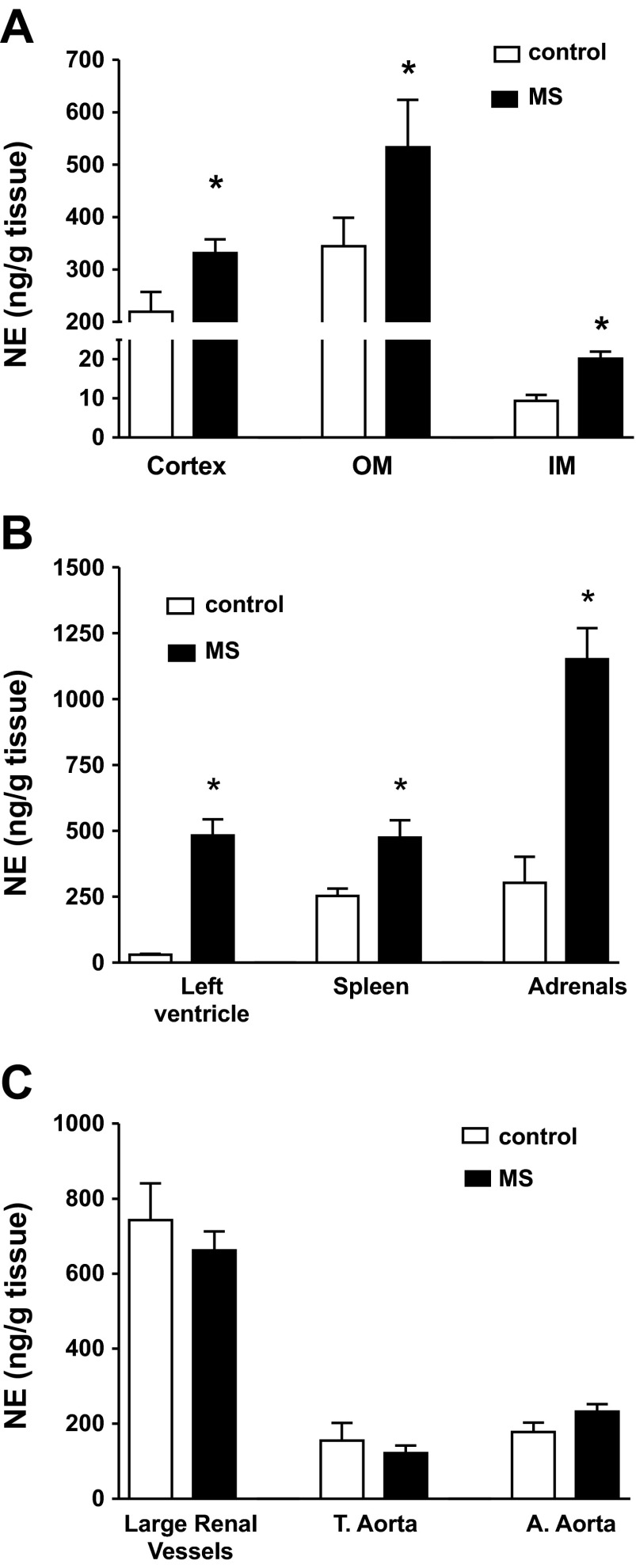
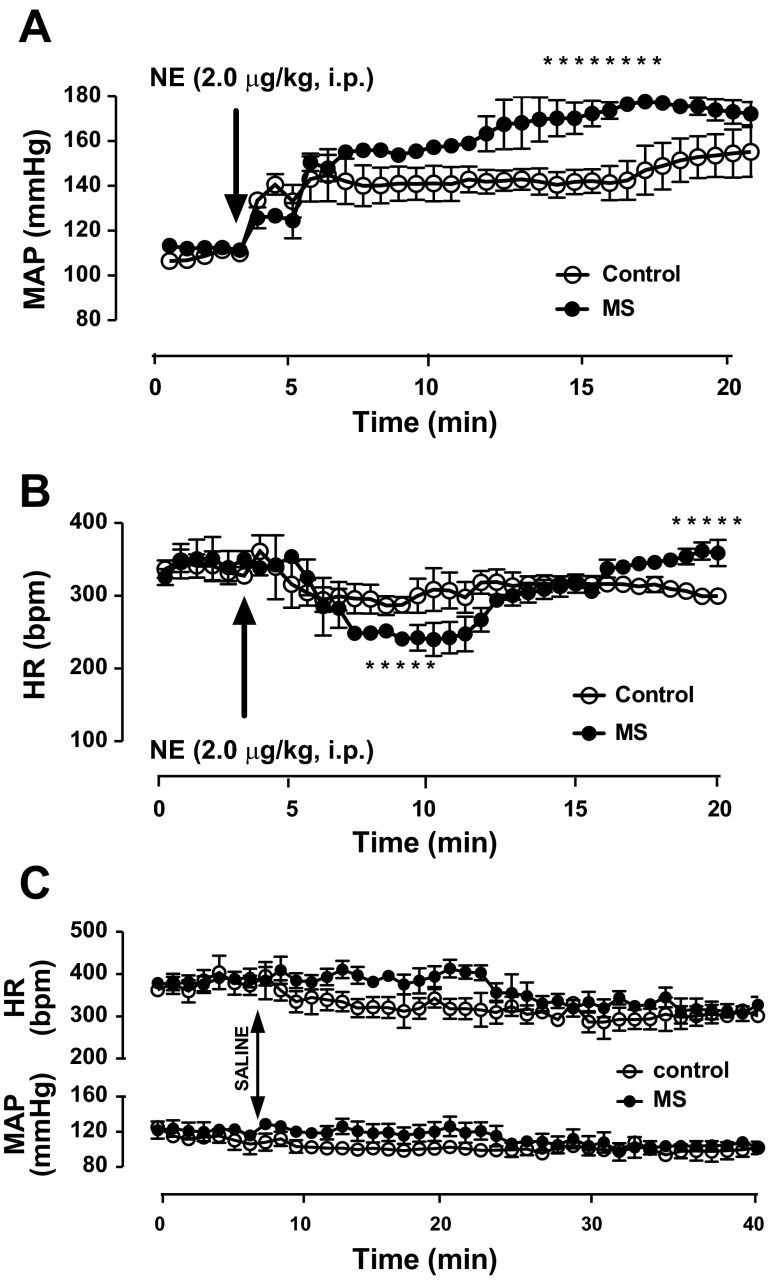
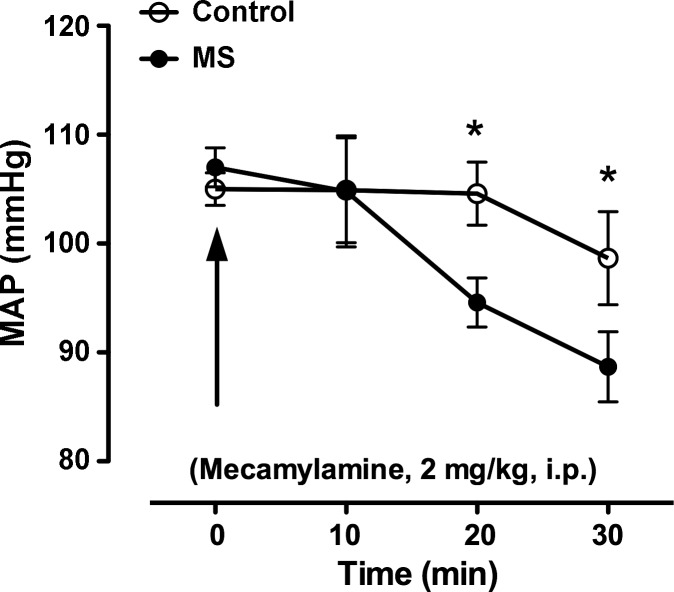
We hypothesized that maternal separation (MS), an early life stress model, induces a sensitization of the sympathetic system. To test this hypothesis, we evaluated the renal and systemic sympathetic system in 12- to 14-wk-old male control or MS rats with the following parameters: 1) effect of renal denervation on conscious renal filtration capacity, 2) norepinephrine (NE) content in key organs involved in blood pressure control, and 3) acute systemic pressor responses to adrenergic stimulation or ganglion blockade. MS was performed by separating pups from their mothers for 3 h/day from day 2 to 14; controls were nonhandled littermates. Glomerular filtration rate (GFR) was examined in renal denervated (DnX; within 2 wk) or sham rats using I¹²⁵-iothalamate plasma clearance. MS-DnX rats showed significantly increased GFR compared with MS-SHAM rats (3.8 ± 0.4 vs. 2.4 ± 0.2 ml/min, respectively, P < 0.05), whereas DnX had no effect in controls, indicating that renal nerves regulate GFR in MS rats. NE content was significantly increased in organ tissues from MS rats (P < 0.05, n = 6-8), suggesting a sensitization of the renal and systemic sympathetic system. Conscious MS rats displayed a significantly greater increase in mean arterial pressure (MAP) in response to NE (2 μg/kg ip) and a greater reduction in MAP in response to mecamylamine (2 mg/kg ip, P < 0.05, n = 4) monitored by telemetry, indicating that MS rats exhibit exaggerated responses to sympathetic stimulation. In conclusion, these data indicate that MS sensitizes the renal and systemic sympathetic system ultimately impairing blood pressure regulation.
Keywords: denervation; early life stress; glomerular filtration rate; maternal separation.
Figures
Comment in
-
Activation of the sympathetic nervous system, is it key to the developmental origins of enhanced cardiovascular risk?Am J Physiol Renal Physiol. 2013 Sep 1;305(5):F641-2. doi: 10.1152/ajprenal.00300.2013. Epub 2013 Jun 5. Am J Physiol Renal Physiol. 2013. PMID: 23739591 Free PMC article. No abstract available.
References
-
- Alexander BT. Fetal programming of hypertension. Am J Physiol Regul Integr Comp Physiol 290: R1– R10, 2006 - PubMed
-
- Alexander BT, Hendon AE, Ferril G, Dwyer TM. Renal denervation abolishes hypertension in low-birth-weight offspring from pregnant rats with reduced uterine perfusion. Hypertension 45: 754– 758, 2005 - PubMed
-
- Bell TD, DiBona GF, Wang Y, Brands MW. Mechanisms for renal blood flow control early in diabetes as revealed by chronic flow measurement and transfer function analysis. J Am Soc Nephrol 17: 2184– 2192, 2006 - PubMed
-
- Bertram CE, Hanson MA. Animal models and programming of the metabolic syndrome. Br Med Bull 60: 103– 121, 2001 - PubMed
-
- Brands MW, Lee WF, Keen HL, Alonso-Galicia M, Zappe DH, Hall JE. Cardiac output and renal function during insulin hypertension in Sprague-Dawley rats. Am J Physiol Regul Integr Comp Physiol 271: R276– R281, 1996 - PubMed
Publication types
MeSH terms
Substances
Grants and funding
LinkOut - more resources
Full Text Sources
Other Literature Sources
Medical
