


Effects of diabetes on hippocampal neurogenesis: links to cognition and depression
- PMID: 23680701
- PMCID: PMC3788092
- DOI: 10.1016/j.neubiorev.2013.03.010
Effects of diabetes on hippocampal neurogenesis: links to cognition and depression
Abstract
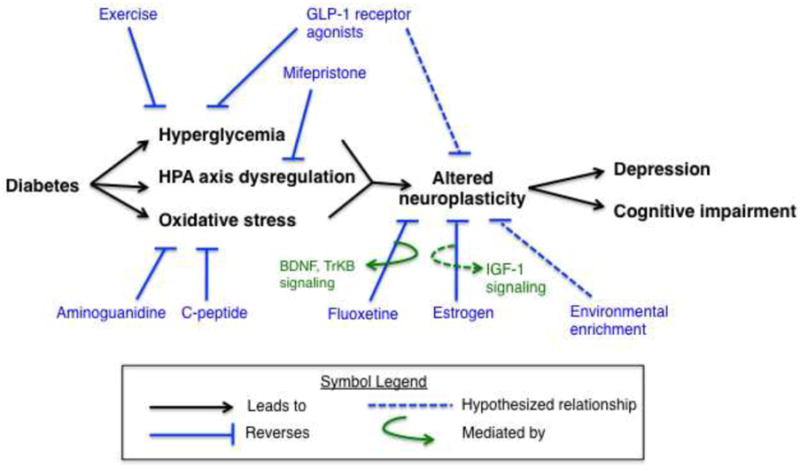
Diabetes often leads to a number of complications involving brain function, including cognitive decline and depression. In addition, depression is a risk factor for developing diabetes. A loss of hippocampal neuroplasticity, which impairs the ability of the brain to adapt and reorganize key behavioral and emotional functions, provides a framework for understanding this reciprocal relationship. The effects of diabetes on brain and behavioral functions in experimental models of type 1 and type 2 diabetes are reviewed, with a focus on the negative impact of impaired hippocampal neurogenesis, dendritic remodeling and increased apoptosis. Mechanisms shown to regulate neuroplasticity and behavior in diabetes models, including stress hormones, neurotransmitters, neurotrophins, inflammation and aging, are integrated within this framework. Pathological changes in hippocampal function can contribute to the brain symptoms of diabetes-associated complications by failing to regulate the hypothalamic-pituitary-axis, maintain learning and memory and govern emotional expression. Further characterization of alterations in neuroplasticity along with glycemic control will facilitate the development and evaluation of pharmacological interventions that could successfully prevent and/or reverse the detrimental effects of diabetes on brain and behavior.
Keywords: Cognition; Depression; Diabetes; Hippocampus; Neurogenesis; Neuroplasticity.
Copyright © 2013 Elsevier Ltd. All rights reserved.
Conflict of interest statement
Figures
References
-
- ADA. American Diabetes Association Diabetes Statistics 2011
-
- Adili F, Larijani B, Haghighatpanah M. Diabetic patients: Psychological aspects. Ann N Y Acad Sci. 2006;1084:329–349. - PubMed
-
- Airan RD, Meltzer LA, Roy M, Gong Y, Chen H, Deisseroth K. High-speed imaging reveals neurophysiological links to behavior in an animal model of depression. Science. 2007;317:819–823. - PubMed
-
- Allen TJ, Cooper ME, Lan HY. Use of genetic mouse models in the study of diabetic nephropathy. Curr Diab Rep. 2004;4:435–440. - PubMed
-
- Alvarez EO, Beauquis J, Revsin Y, Banzan AM, Roig P, De Nicola AF, Saravia F. Cognitive dysfunction and hippocampal changes in experimental type 1 diabetes. Behav Brain Res. 2009;198:224–230. - PubMed
Publication types
MeSH terms
Grants and funding
LinkOut - more resources
Full Text Sources
Other Literature Sources
Medical
