The chemopreventive efficacies of nonsteroidal anti-inflammatory drugs: the relationship of short-term biomarkers to long-term skin tumor outcome
- PMID: 23682071
- PMCID: PMC3701752
- DOI: 10.1158/1940-6207.CAPR-13-0064
The chemopreventive efficacies of nonsteroidal anti-inflammatory drugs: the relationship of short-term biomarkers to long-term skin tumor outcome
Abstract
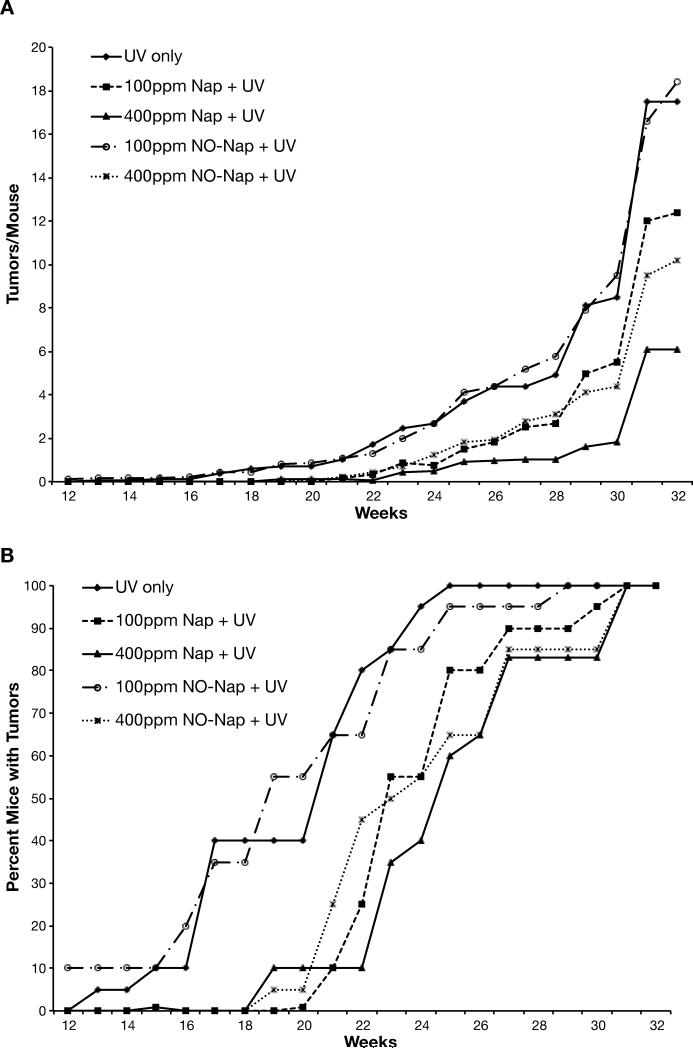
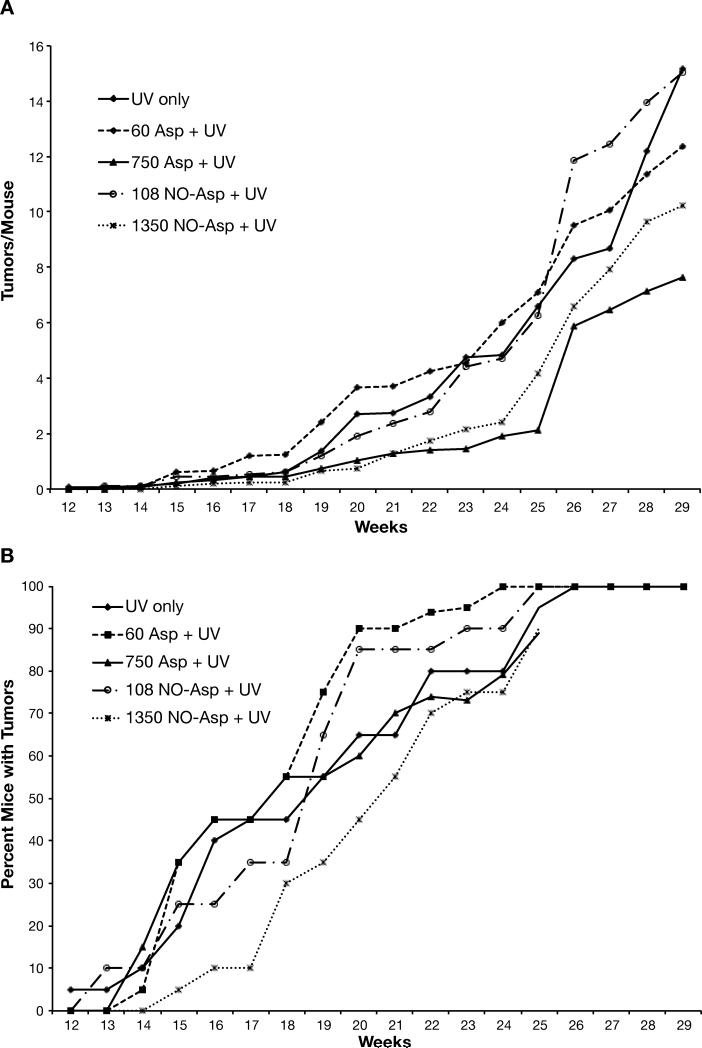
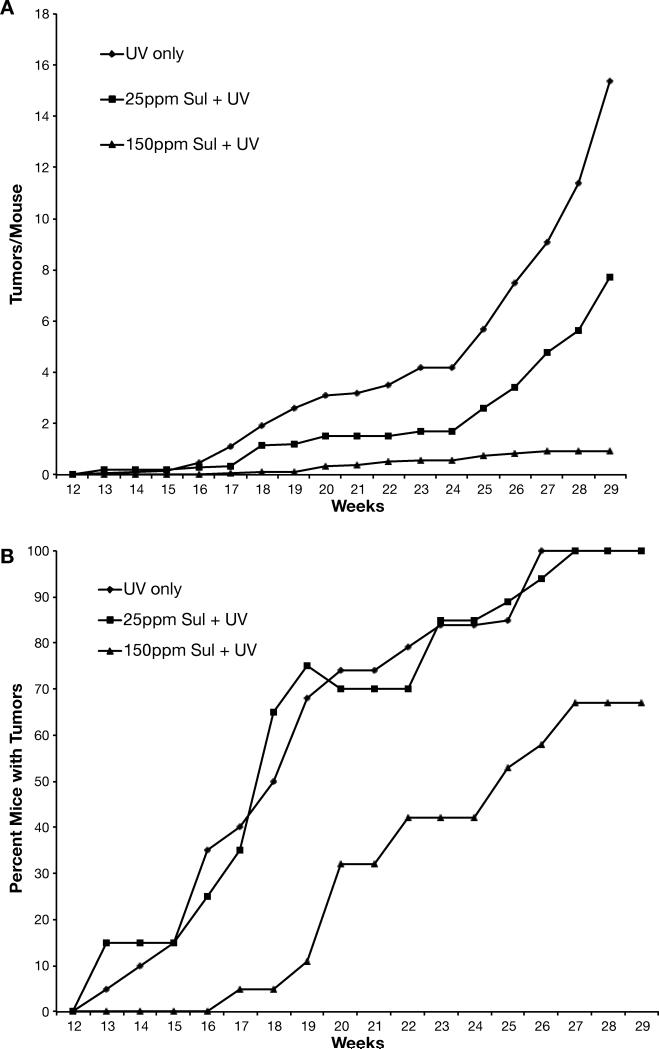
The ultraviolet B (UVB) component of sunlight, which causes DNA damage and inflammation, is the major cause of nonmelanoma skin cancer (NMSC), the most prevalent of all cancers. Nonsteroidal anti-inflammatory drugs (NSAID) and coxibs have been shown to be effective chemoprevention agents in multiple preclinical trials, including NMSC, colon, and urinary bladder cancer. NSAIDs, however, cause gastrointestinal irritation, which led to the recent development of nitric oxide (NO) derivatives that may partially ameliorate this toxicity. This study compared the efficacy of several NSAIDs and NO-NSAIDs on UV-induced NMSC in SKH-1 hairless mice and determined whether various short-term biomarkers were predictive of long-term tumor outcome with these agents. Naproxen at 100 (P = 0.05) and 400 ppm (P < 0.01) in the diet reduced tumor multiplicity by 26% and 63%, respectively. The NO-naproxen at slightly lower molar doses shows similar activities. Aspirin at 60 or 750 ppm in the diet reduced tumor multiplicity by 19% and 50%, whereas the equivalent doses (108 and 1,350 ppm) were slightly less effective. Sulindac at 25 and 150 ppm in the diet, doses far below the human equivalent dose was the most potent NSAID with reductions of 50% and 94%, respectively. In testing short-term biomarkers, we found that agents that reduce UV-induced prostaglandin E2 synthesis and/or inhibit UV-induced keratinocyte proliferation yielded long-term tumor efficacy.
©2013 AACR.
Figures
References
-
- Ananthaswamy HN. Ultraviolet light as a carcinogen. In: Bowden GT, Fischer SM, editors. Chemical Carcinogens and Anticarcinogens. Cambridge University Press; Cambridge, UK: 1997. pp. 255–79.
-
- Dlugosz AA, Yuspa SH. Staurosporine induces protein kinase C agonist effects and maturation of normal and neoplastic mouse keratinocytes in vitro. Cancer Res. 1991;51:4677–84. - PubMed
-
- Hruza LL, Pentland AP. Mechanisms of UV-induced inflammation. J Invest Dermatol. 1993;100:35S–41S. - PubMed
-
- Muller-Decker K. Cyclooxygenase-dependent signaling is causally linked to nonmelanoma skin carcinogenesis: pharmacological, genetic, and clinical evidence. Cancer Metastasis Rev. 2011;30:343–61. - PubMed
-
- Rundhaug JE, Fischer SM. Cyclo-oxygenase-2 plays a critical role in UV-induced skin carcinogenesis. Photochem Photobiol. 2008;84:322–9. - PubMed
Publication types
MeSH terms
Substances
Grants and funding
LinkOut - more resources
Full Text Sources
Other Literature Sources
Medical