


Serum cytokines associated with severity and complications of kala-azar
- PMID: 23683334
- PMCID: PMC4001482
- DOI: 10.1179/2047773213Y.0000000078
Serum cytokines associated with severity and complications of kala-azar
Abstract
Objectives: Recent clinical data suggest that severe kala-azar (or visceral leishmaniasis) is an exaggerated innate immune response mediated by inflammatory cytokines, leading to a systemic inflammatory syndrome similar to what is observed in malaria, sepsis and other diseases. We tested this hypothesis by measuring serum cytokines in individuals with kala-azar.
Methods: We compared patients with severe kala-azar (i.e. hemorrhagic manifestations, n = 38) with patients without evidence of hemorrhage (n = 96). We conducted a detailed clinical and laboratory evaluation, measuring serum IL-1beta, IL-6, IL-8, IL-10, IL-12, interferon-gamma, and TNF-alpha, and markers of disseminated intravascular coagulation (DIC).
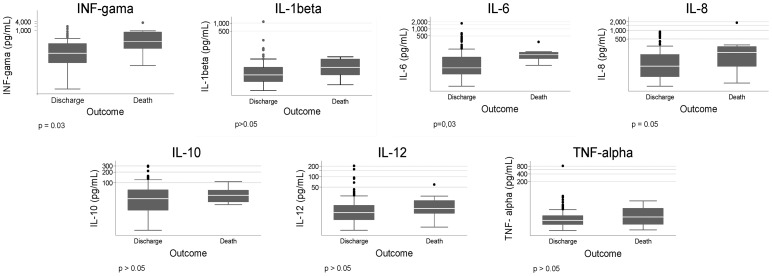
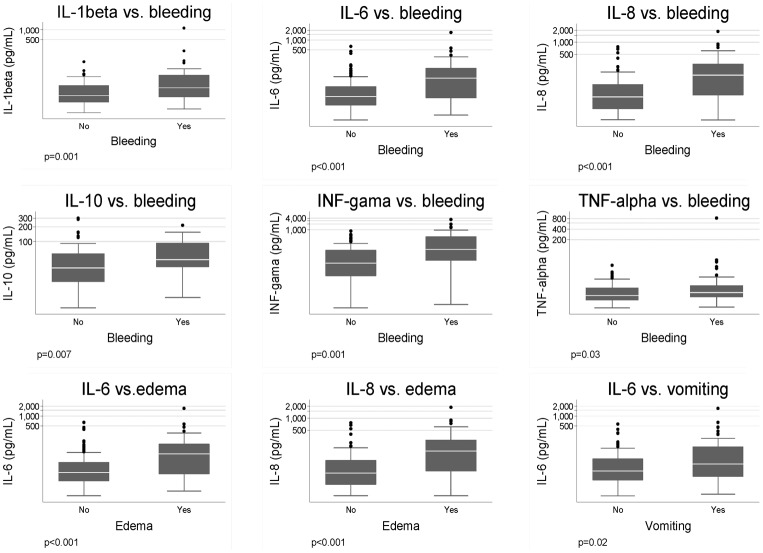
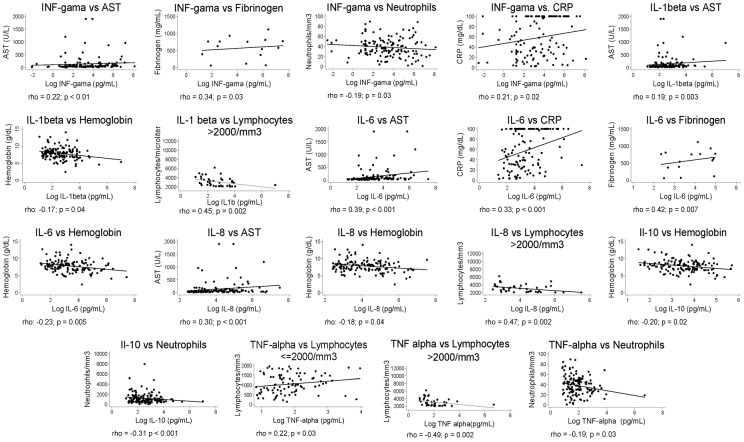
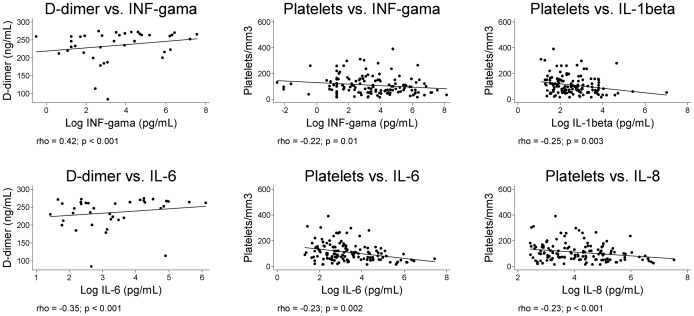
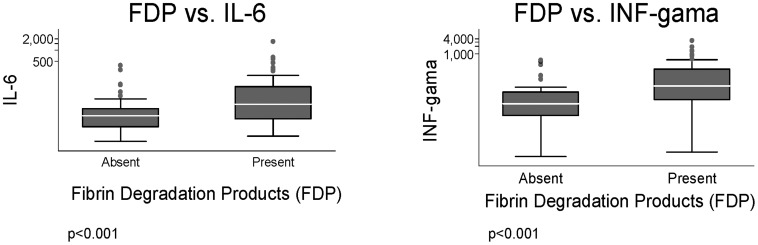
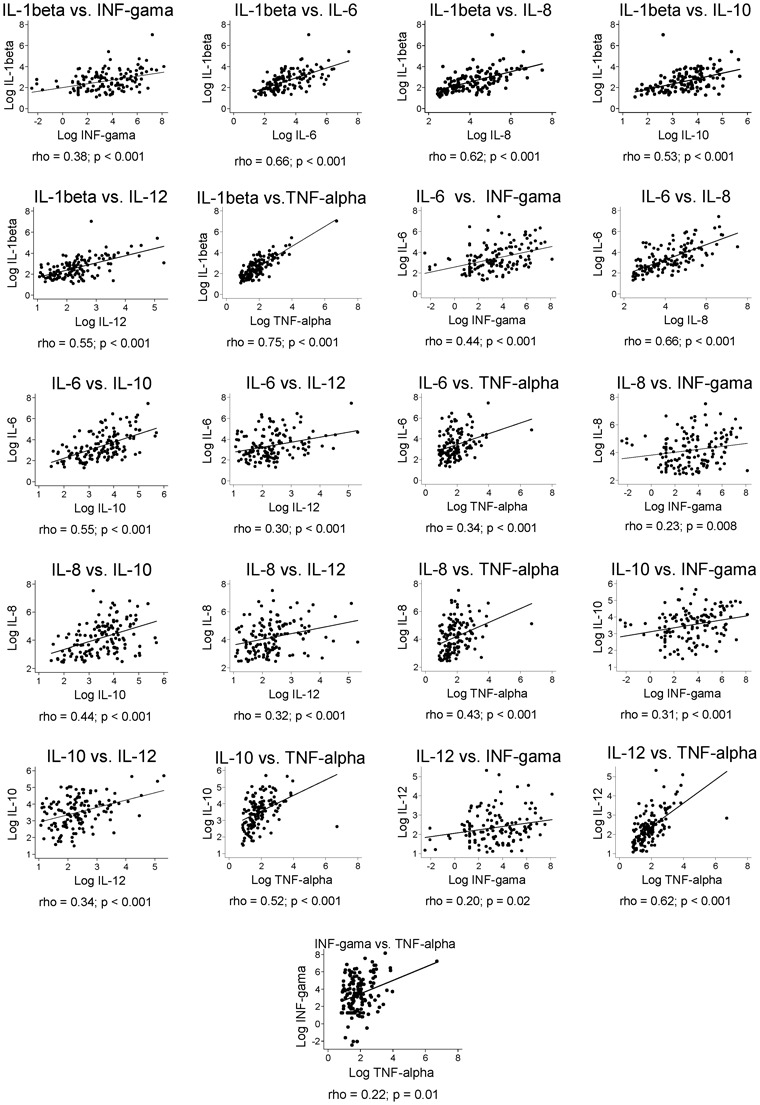
Results: Infants had higher levels of inflammatory cytokines, while HIV-infected patients had lower concentrations of IL-10 and interferon-gamma. Higher levels of IL-6, interferon-gamma, and IL-8 were found among deceased patients. IL-8 and interferon-gamma were independently associated with bleeding. Several cytokines were associated with different signs of severe clinical and laboratory manifestations, including DIC. IL-6 was highly positively and independently associated with IL-1beta, IL-8, IL-10, and negatively associated with TNF-alpha. IL-1beta and TNF-alpha were also highly independently associated with disease severity.
Conclusion: In its severe form, kala-azar, a neglected tropical disease, initiates a systemic inflammatory response that leads to DIC and other manifestations. Children may have higher risk of death due to the more intense cytokine release. The data supports the notion that IL-6 is the central cytokine that is associated with lethal disease, but interferon-gamma, IL1beta, IL-8, and TNF-alpha are also involved with disease severity. Inhibition of IL-6 is a potential target of adjuvant therapy for severe or pediatric forms of this disease.
Figures
References
-
- Herwaldt BL. Leishmaniasis. Lancet. 1999;354(9185):1191–9. - PubMed
-
- Seaman J, Mercer AJ, Sondorp HE, Herwaldt BL. Epidemic visceral leishmaniasis in southern Sudan: treatment of severely debilitated patients under wartime conditions and with limited resources. Ann Intern Med. 1996;124(7):664–72. - PubMed
-
- Werneck GL, Batista MS, Gomes JR, Costa DL, Costa CH. Prognostic factors for death from visceral leishmaniasis in Teresina, Brazil. Infection. 2003;31(3):174–7. - PubMed
-
- Abdelmoula MS, M’Hamdi Z, Amri F, Tebib N, Ben Turkia H, Ben Dridi MF. [Visceral leishmaniasis in children: prognostic factors]. Tunis Med. 2003;81(8):535–9. French. - PubMed
-
- Collin SDR, Ritmeijer K, Keus K, Melaku Y, Kipngetich S, Davies C. Conflict and kala-azar: determinants of adverse outcomes of kala-azar among patients in southern Sudan. Clin Infect Dis. 2004;38(5):612–9. - PubMed
Publication types
MeSH terms
Substances
LinkOut - more resources
Full Text Sources
Other Literature Sources
Medical
