


Non-tuberculous mycobacterial disease is common in patients with non-cystic fibrosis bronchiectasis
- PMID: 23683809
- PMCID: PMC4472485
- DOI: 10.1016/j.ijid.2013.03.018
Non-tuberculous mycobacterial disease is common in patients with non-cystic fibrosis bronchiectasis
Abstract
Background: Non-tuberculous mycobacteria (NTM) are ubiquitous environmental organisms. Cystic fibrosis (CF) patients are susceptible to NTM, but data about NTM in patients with non-CF bronchiectasis are limited.
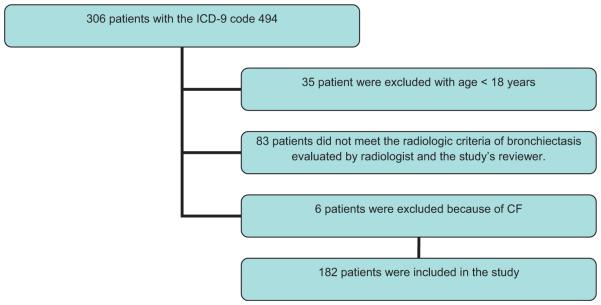
Methods: We conducted a retrospective, descriptive study at the University of Illinois Medical Center. All patients diagnosed with bronchiectasis (code 494) using the International Classification of Diseases, ninth revision (ICD-9), between 1999 and 2006, were identified. Clinical data including lung function, radiology studies, and presence of NTM in sputum were abstracted for those who met the study criteria.
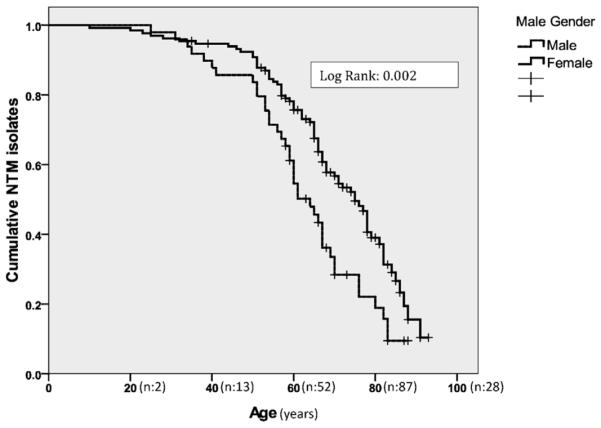
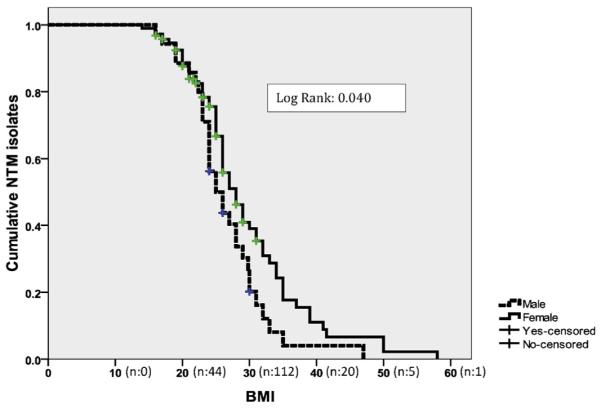
Results: One hundred eighty-two patients were enrolled in the study. Patients were divided into two groups: bronchiectasis with NTM isolates (n = 68) and bronchiectasis without isolates (n =114), and compared for clinical characteristics and underlying diseases. Mycobacterium avium complex (MAC) was the most common isolate. Fifty-five patients (30%) met the American Thoracic Society criteria for diagnosis of NTM disease. Gram-negative rods were commonly co-isolated. The probability of NTM isolation was significantly higher in elderly female patients (p = 0.04). Moreover, the probability of NTM isolation was significantly higher in the female group with low body mass index (BMI) (p = 0.002).
Conclusions: NTM infections are common in non-CF bronchiectasis. MAC is the most frequently isolated NTM in these patients. There is also great variability in age and sex characteristics for NTM in non-CF bronchiectasis patients. Female patients with a low BMI are a high risk group for NTM infection in non-CF bronchiectasis. Routine screening for NTM is strongly recommended in this patient population.
Keywords: BMI; Bronchiectasis; NTM; Non-CF; Non-tuberculous mycobacterial diseases.
Published by Elsevier Ltd.
Figures
References
-
- Smith MP. Non-cystic fibrosis bronchiectasis. J R Coll Physicians Edinb. 2011;41:132–9. quiz 9. - PubMed
-
- Barker AF. Bronchiectasis. N Engl J Med. 2002;346:1383–93. - PubMed
-
- Griffith DE, Aksamit T, Brown-Elliott BA, Catanzaro A, Daley C, Gordin F, et al. An official ATS/IDSA statement: diagnosis, treatment, and prevention of nontuberculous mycobacterial diseases. Am J Respir Crit Care Med. 2007;175:367–416. - PubMed
MeSH terms
Grants and funding
LinkOut - more resources
Full Text Sources
Other Literature Sources
Medical
Miscellaneous
