


Inclusion of persons with mental illness in patient-centred medical homes: cross-sectional findings from Ontario, Canada
- PMID: 23687535
- PMCID: PMC3654503
Inclusion of persons with mental illness in patient-centred medical homes: cross-sectional findings from Ontario, Canada
Abstract
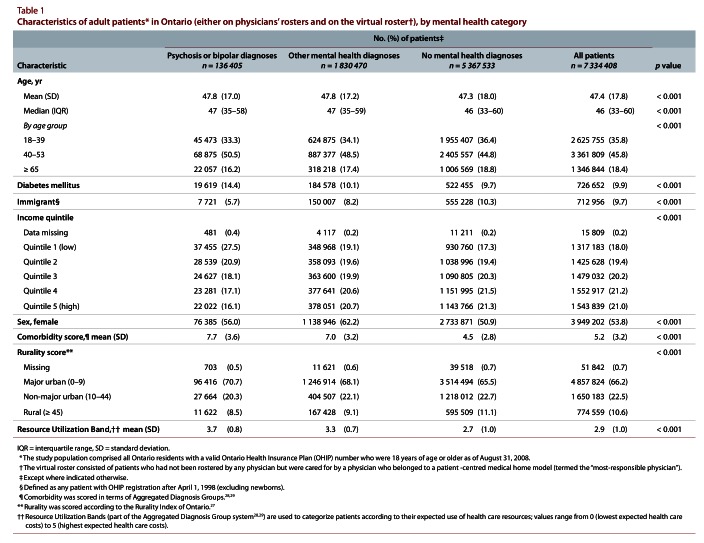
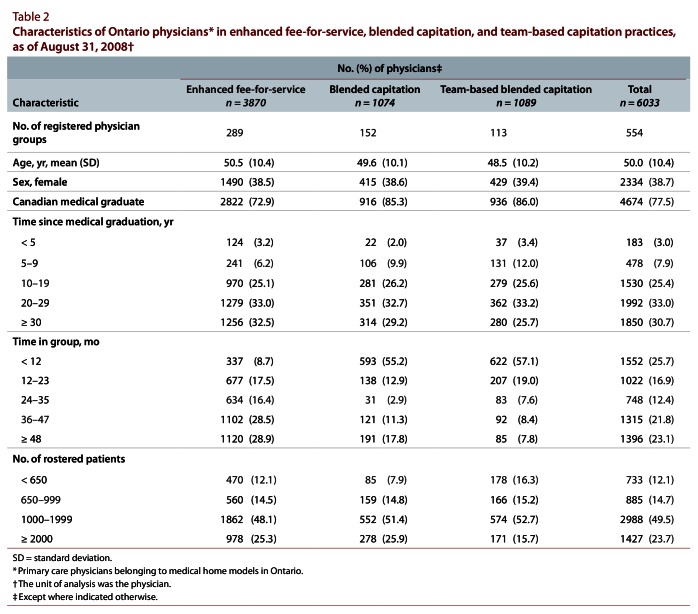
Background: In Ontario, Canada, the patient-centred medical home is a model of primary care delivery that includes 3 model types of interest for this study: enhanced fee-for-service, blended capitation, and team-based blended capitation. All 3 models involve rostering of patients and have similar practice requirements but differ in method of physician reimbursement, with the blended capitation models incorporating adjustments for age and sex, but not case mix, of rostered patients. We evaluated the extent to which persons with mental illness were included in physicians' total practices (as rostered and non-rostered patients) and were included on physicians' rosters across types of medical homes in Ontario.
Methods: Using population-based administrative data, we considered 3 groups of patients: those with psychotic or bipolar diagnoses, those with other mental health diagnoses, and those with no mental health diagnoses. We modelled the prevalence of mental health diagnoses and the proportion of patients with such diagnoses who were rostered across the 3 medical home model types, controlling for demographic characteristics and case mix.
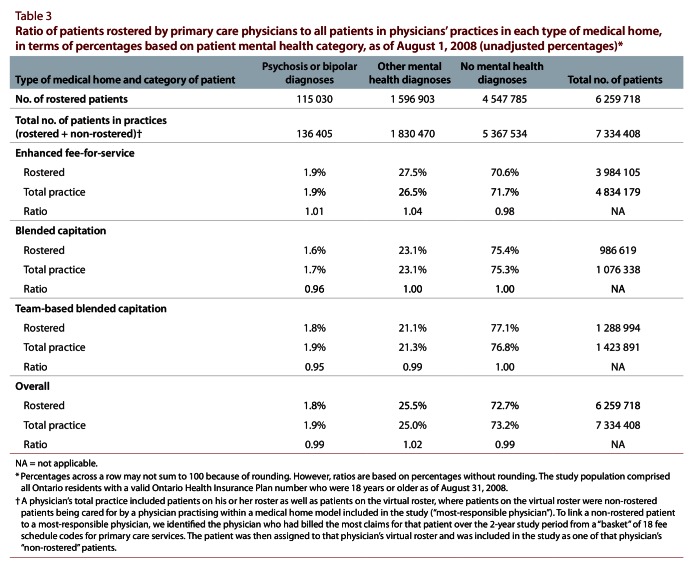
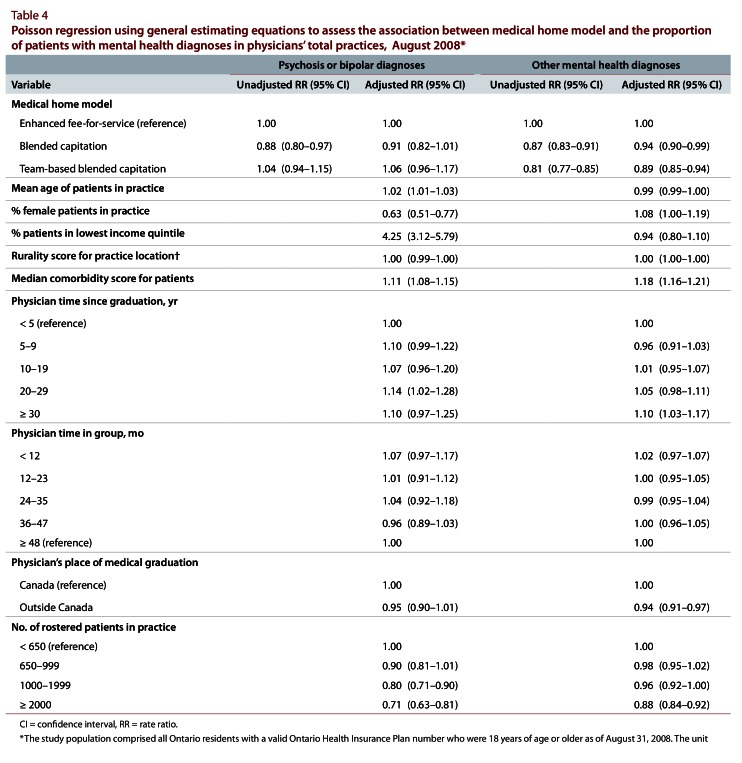
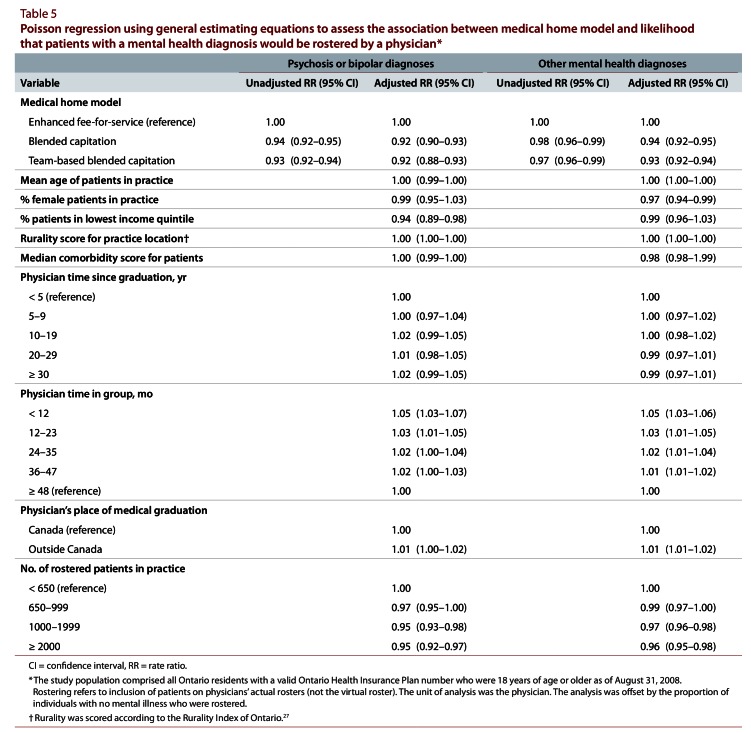
Results: Compared with enhanced fee-for-service practices, and relative to patients without mental illness, the proportions of patients with psychosis or bipolar disorders were not different in blended capitation and team-based blended capitation practices (rate ratio [RR] 0.91, 95% confidence interval [CI] 0.82-1.01; RR 1.06, 95% CI 0.96-1.17, respectively). However, there were fewer patients with other mental illnesses (RR 0.94, 95% CI 0.90-0.99; RR 0.89, 95% CI 0.85-0.94, respectively). Compared with expected proportions, practices based on both capitation models were significantly less likely than enhanced fee-for-service practices to roster patients with psychosis or bipolar disorders (for blended capitation, RR 0.92, 95% CI 0.90-0.93; for team-based capitation, RR 0.92, 95% CI 0.88-0.93) and also patients with other mental illnesses (for blended capitation, RR 0.94, 95% CI 0.92-0.95; for team-based capitation, RR 0.93, 95% CI 0.92-0.94).
Interpretation: Persons with mental illness were under-represented in the rosters of Ontario's capitation-based medical homes. These findings suggest a need to direct attention to the incentive structure for including patients with mental illness.
Conflict of interest statement
Competing interests: During the conduct of this study, Leah Steele received salary support in part through a Career Scientist Award from the Ontario Ministry of Health and Long-Term Care. No other competing interests declared.
Figures
References
-
- Rosenthal Thomas C. The medical home: growing evidence to support a new approach to primary care. J Am Board Fam Med. 2008;21(5):427–440. doi: 10.3122/jabfm.2008.05.070287. http://www.scholaruniverse.com/ncbi-linkout?id=18772297. - DOI - PubMed
-
- Wang Philip S, Lane Michael, Olfson Mark, Pincus Harold A, Wells Kenneth B, Kessler Ronald C. Twelve-month use of mental health services in the United States: results from the National Comorbidity Survey Replication. Arch Gen Psychiatry. 2005;62(6):629–640. doi: 10.1001/archpsyc.62.6.629. http://www.scholaruniverse.com/ncbi-linkout?id=15939840. - DOI - PubMed
-
- Hinshaw S P, Cicchetti D. Stigma and mental disorder: conceptions of illness, public attitudes, personal disclosure, and social policy. Dev Psychopathol. 2000;12(4):555–598. http://www.scholaruniverse.com/ncbi-linkout?id=11202034. - PubMed
Publication types
MeSH terms
LinkOut - more resources
Full Text Sources