. 2013;11(5):e1001560.
doi: 10.1371/journal.pbio.1001560. Epub 2013 May 14.

Secondary evolution of a self-incompatibility locus in the Brassicaceae genus Leavenworthia

Affiliations

Secondary evolution of a self-incompatibility locus in the Brassicaceae genus Leavenworthia

Sier-Ching Chantha et al. PLoS Biol. 2013.

Abstract

Self-incompatibility (SI) is the flowering plant reproductive system in which self pollen tube growth is inhibited, thereby preventing self-fertilization. SI has evolved independently in several different flowering plant lineages. In all Brassicaceae species in which the molecular basis of SI has been investigated in detail, the product of the S-locus receptor kinase (SRK) gene functions as receptor in the initial step of the self pollen-rejection pathway, while that of the S-locus cysteine-rich (SCR) gene functions as ligand. Here we examine the hypothesis that the S locus in the Brassicaceae genus Leavenworthia is paralogous with the S locus previously characterized in other members of the family. We also test the hypothesis that self-compatibility in this group is based on disruption of the pollen ligand-producing gene. Sequence analysis of the S-locus genes in Leavenworthia, phylogeny of S alleles, gene expression patterns, and comparative genomics analyses provide support for both hypotheses. Of special interest are two genes located in a non-S locus genomic region of Arabidopsis lyrata that exhibit domain structures, sequences, and phylogenetic histories similar to those of the S-locus genes in Leavenworthia, and that also share synteny with these genes. These A. lyrata genes resemble those comprising the A. lyrata S locus, but they do not function in self-recognition. Moreover, they appear to belong to a lineage that diverged from the ancestral Brassicaceae S-locus genes before allelic diversification at the S locus. We hypothesize that there has been neo-functionalization of these S-locus-like genes in the Leavenworthia lineage, resulting in evolution of a separate ligand-receptor system of SI. Our results also provide support for theoretical models that predict that the least constrained pathway to the evolution of self-compatibility is one involving loss of pollen gene function.


Conflict of interest statement

The authors have declared that no competing interests exist.

Figures
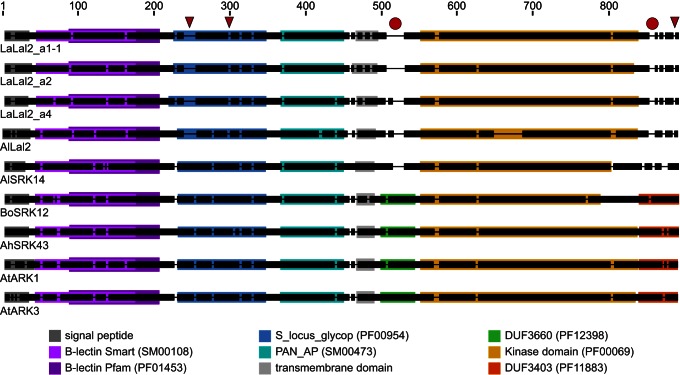
Figure 1
Figure 1. Schematic representation of aligned sequences and protein domain organization of Lal2 alleles and closely related gene family members.
The amino acid sequences of Leavenworthia a1-1, a2, and a4 LaLal2 alleles, Arabidopsis lyrata AlLal2 (NCBI Gene ID 9305017), A. lyrata SRK14 (a class B SRK allele), Brassica oleracea SRK12, Arabidopsis halleri SRK43, as well as A. thaliana ARK3 and ARK1 were aligned along with their annotated domains. Thick black bars represent amino acid regions, and thin lines represent gaps of one or more amino acids introduced to optimize the alignment. Red arrowheads highlight alignment gaps observed specifically in all Lal2 sequences. Red circles indicate alignment gaps found in region of all Lal2 sequences and in AlSRK14 corresponding to the DUF3660 and DUF3403 domains of all other sequences. Protein domains are represented with colored boxes and their accession numbers are indicated in parentheses next to corresponding names in the color legend.
Figure 2
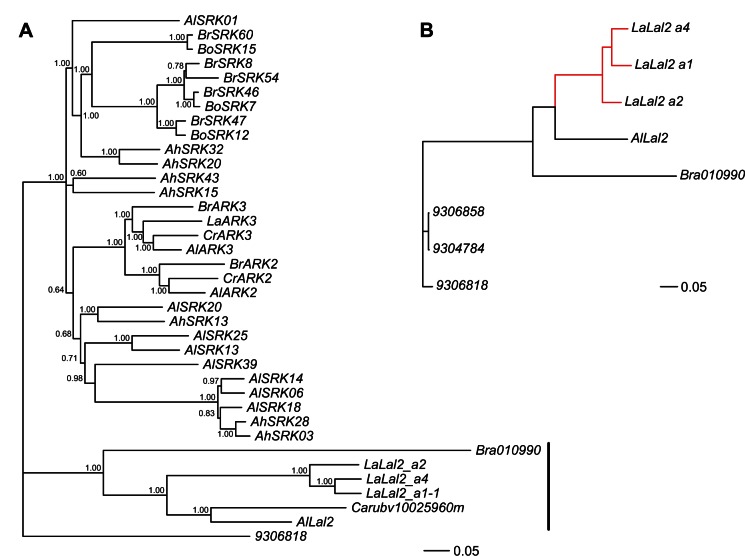
Figure 2. Phylogenetic reconstruction of the relationships among Lal2, ARK, and SRK sequences and among Lal2-like sequences in the Brassicaceae.
Bayesian 50% consensus phylogeny for the full coding sequence of Lal2, ARK, and SRK sequences used in this study. (A) Posterior probabilities for each bifurcation are indicated at the nodes. Lal2 sequences form a clade separate and distinct from ARK and SRK sequences (vertical bar). The phylogeny in (B) was generated in PhyML and used to test for codon-specific positive selection with the branch-site model. Positive selection was allowed in the foreground branches (indicated in red). Outgroups are identified by their NCBI gene ID numbers.
Figure 3
Figure 3. Alignment of amino acid sequences of Leavenworthia and A. lyrata SCRL alleles.
The A. lyrata AlSCRL sequence corresponds to NCBI Gene ID_9305018. The a1-1 and a1-2 LaSCRL alleles are from the SI race and have full open reading-frames, while the a2 and a4 alleles are from SC races and encode truncated proteins. In the a1-1 and a1-2 alleles, blue box highlights the predicted signal peptide; arrow indicates conserved position of the intron; red arrowhead marks the predicted cleavage site of the a1-1 and a1-2 preproteins. Cysteines found in the predicted mature protein sequences are colored in red. Asterisks represent stop codons. Hyphens represent gaps that were introduced to optimize the alignment.
Figure 4
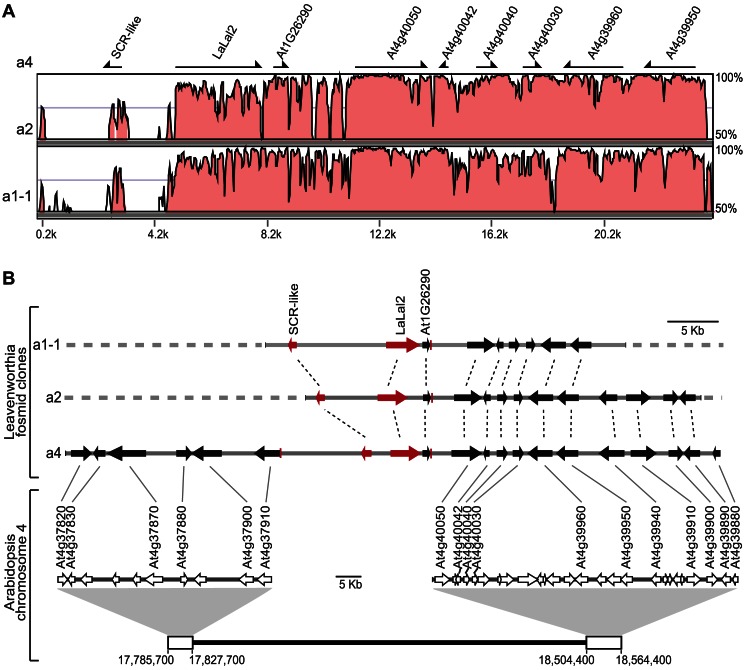
Figure 4. Characterization of the S locus genomic region in Leavenworthia.
(A) VISTA alignment showing sequence conservation in a selected region of the Leavenworthia a1-1, a2, and a4 S haplotypes. The a4 S haplotype was used as the reference sequence. Arrows indicate genes annotated using the A. thaliana reference genome. (B) Structural gene organization of the Leavenworthia S haplotypes and synteny with a region of A. thaliana chromosome 4. Arrows represent genes in the Leavenworthia S haplotypes (black and red) and in the syntenic region of A. thaliana (white). Thick gray dashed lines represent unavailable sequences in the a2 and a1-1 S haplotypes. Thin dashed lines indicate orthologous genes within Leavenworthia. For clarity, only syntenic genes were identified above corresponding white arrows in the A. thaliana region and are connected to Leavenworthia orthologous genes by thin gray lines. Short red lines indicate the 5′ or 3′ borders of regions syntenic to A. thaliana chromosome 4.
Figure 5
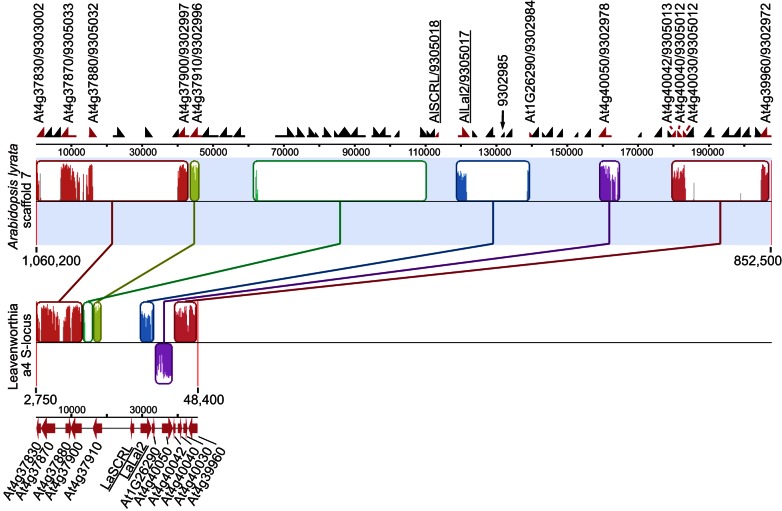
Figure 5. Synteny of a genomic region in Arabidopsis lyrata scaffold 7 and the Lal2 S-locus region of Leavenworthia.
Mauve alignment of A. lyrata scaffold 7 region between positions 852,500 and 1,060,200 (from gene AT4G37830/NCBI gene ID 9303002 to AT4G39950/NCBI gene ID 9302972) and a selected region of the a4 fosmid clone sequence. Collinear and homologous regions are represented by similarly colored blocks and are connected by lines. In the Leavenworthia sequence, the purple block below the thin black line represents an inverted region. Annotated genes are shown above the A. lyrata panel and below the Leavenworthia panel. Genes were annotated with the A. thaliana reference genome, and the NCBI Gene ID numbers for A. lyrata genes are also given. Red arrows represent genes found in both A. lyrata and Leavenworthia syntenic regions; black arrows represent genes found in A. lyrata only. For clarity, only genes found in the syntenic region of Leavenworthia are identified, and also NCBI Gene ID 9302985. Underlined are SCRL and LaLal2 genes in the Leavenworthia core S-locus region and their orthologous A. lyrata genes NCBI gene ID_9305018 (AlSCRL) and NCBI gene ID_9305017 (AlLal2).
Figure 6
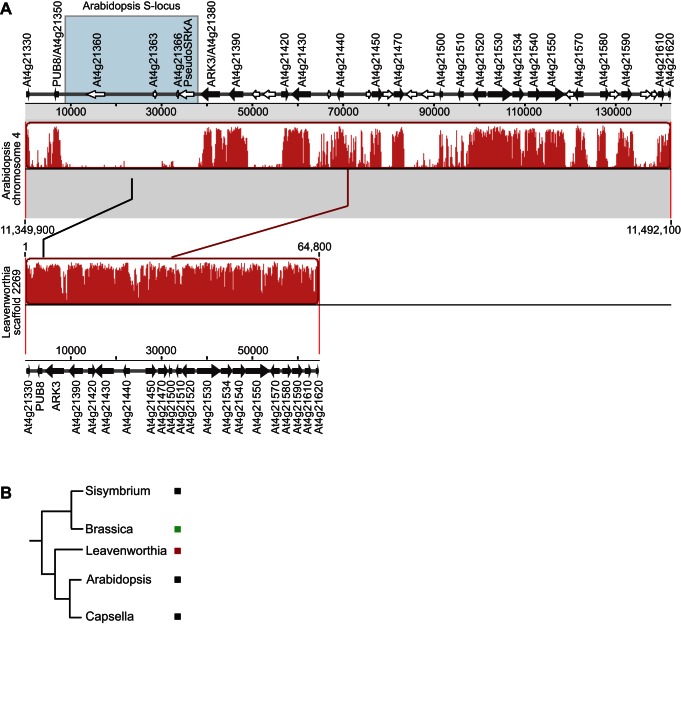
Figure 6. The Arabidopsis S locus in Leavenworthia and S locus positions in Brassicaceae genera.
(A) Mauve alignment showing synteny of the A. thaliana chromosome 4 region comprised between positions 11,349,900 bp and 11,492,100 bp (from genes At4g21330 to At4g21620) and a selected region of 64,800 bp of Leavenworthia genome scaffold 2269. Annotated genes are shown above the A. thaliana panel and below the Leavenworthia panel. Black arrows represent genes found in both A. thaliana and Leavenworthia syntenic regions; white arrows represent genes found in A. thaliana only. Blue box highlights the A. thaliana core S-locus region that corresponds to a large deletion in Leavenworthia. For clarity, only syntenic genes and genes found in A. thaliana core S locus are identified above corresponding arrows. (B) Phylogeny of five Brassicaeae genera for which S locus synteny information is available. Black square denotes that the S locus is found in a region flanked by genes At4g21350 (PUB8) and At4g21380 (ARK3). Green square denotes that the S locus is found in a region flanked by genes At1g66680 and At1g66690. Red square denotes that the S locus is found in a region flanked by genes At4g37910 and At4g40050.
Figure 7
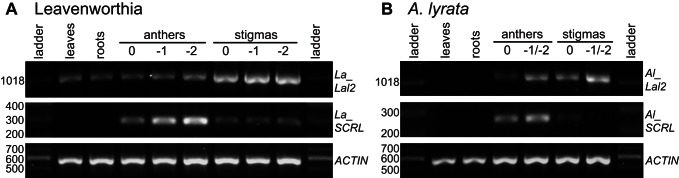
Figure 7. Expression pattern analysis of Lal2 and SCRL by RT-PCR in vegetative and reproductive tissues.
(A) Expression of the LaLal2 and LaSCRL in a Leavenworthia plant homozygous at the a1-1 S haplotype. (B) Expression of AlLal2 and AlSCRL in a self-incompatible A. lyrata plant.
Figure 8
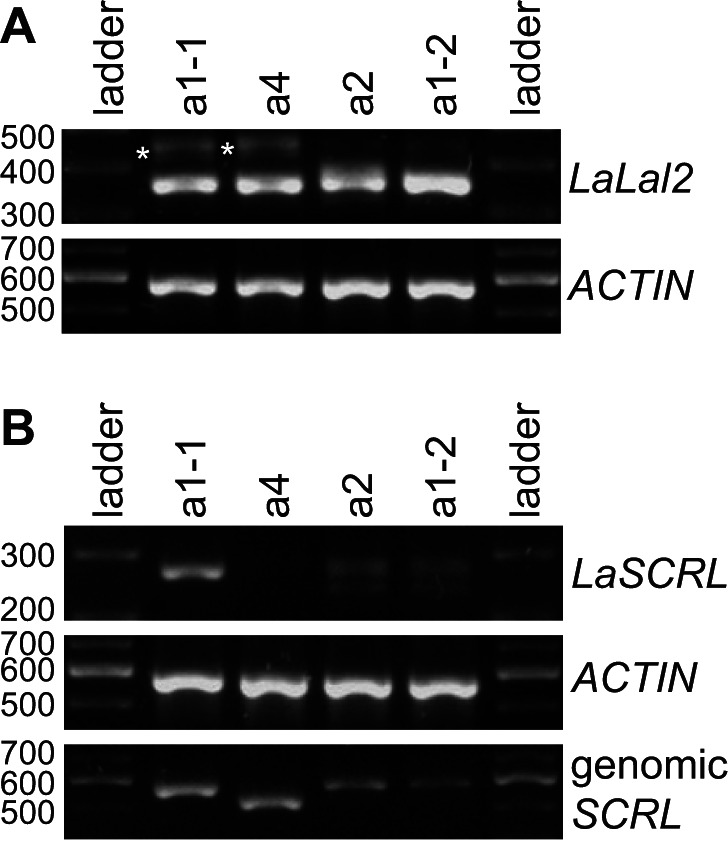
Figure 8. Expression analysis by RT-PCR of LaLal2 and LaSCRL alleles in Leavenworthia SI and SC plants homozygous at the S locus.
(A) Expression analysis of LaLal2 alleles in stigmas collected 2 d before anthesis. Asterisks indicate bands corresponding to an alternatively spliced form of LaLal2 transcripts. The ACTIN gene was used as an internal control. (B) Expression analysis of LaSCRL alleles in anthers collected 2 d before anthesis. Because of the high sequence divergence between the different SCRL alleles, primer pairs used for amplification were allele-specific except for the a2 and a1-2 alleles, for which the same primer pair was used. The ACTIN gene was used as an internal control. Genomic DNA extracted from the four haplotypes was used to amplify SCRL with their respective primer pairs to show that all the primer pairs used in PCR reactions amplify SCRL.
Figure 9
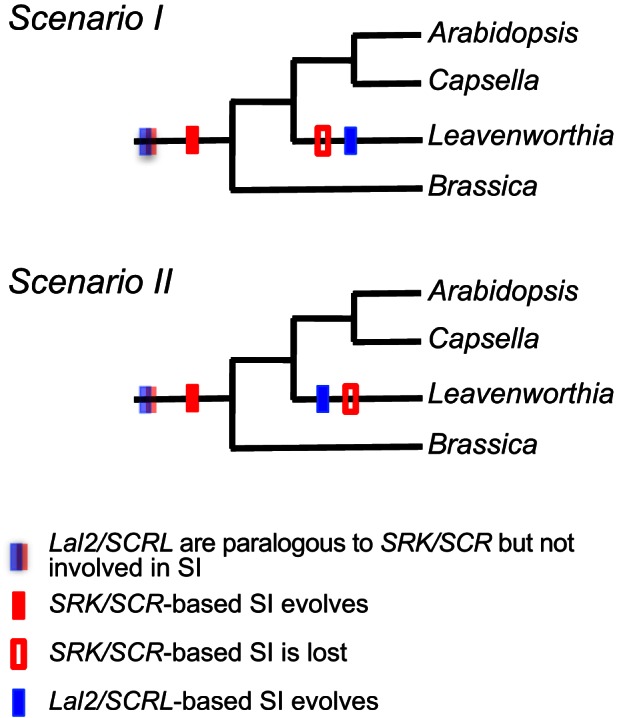
Figure 9. Possible evolutionary scenarios to account for the unique characteristics of the Leavenworthia S locus.
(Scenario I) Lal2/SCRL pollen protein-receptor function evolves from SRK/SCR paralogs in the Leavenworthia lineage, following the loss of SRK/SCR-based SI in this lineage. (Scenario II) Lal2/SCRL pollen protein-receptor function evolves from SRK/SCR paralogs in the Leavenworthia lineage and two separate S loci coexist for a portion of the history of the Leavenworthia lineage, followed by eventual loss of SRK/SCR in this lineage.

References

    1. Whitehouse HLK (1950) Multiple-allelomorph incompatibility of pollen and style in the evolution of the Angiosperms. Ann Bot 14: 199–216.
    1. De Nettancourt D (1977) Incompatibility in Angiosperms. Berlin: Springer-Verlag. 230 p.
    1. Bateman AJ (1952) Self-incompatibility in Angiosperms. I. Theory. Heredity 6: 285–310.
    1. Franklin-Tong VE (2008) Self-incompatibility in flowering plants: evolution, diversity, and mechanisms. Springer. 341 p.
    1. Igic B, Bohs L, Kohn JR (2004) Historical inferences from the self-incompatibility locus. New Phytol 161: 97–105 doi:10.1046/j.1469-8137.2003.00952.x. - DOI

Publication types