


Genotyping-by-sequencing (GBS): a novel, efficient and cost-effective genotyping method for cattle using next-generation sequencing
- PMID: 23690931
- PMCID: PMC3656875
- DOI: 10.1371/journal.pone.0062137
Genotyping-by-sequencing (GBS): a novel, efficient and cost-effective genotyping method for cattle using next-generation sequencing
Abstract
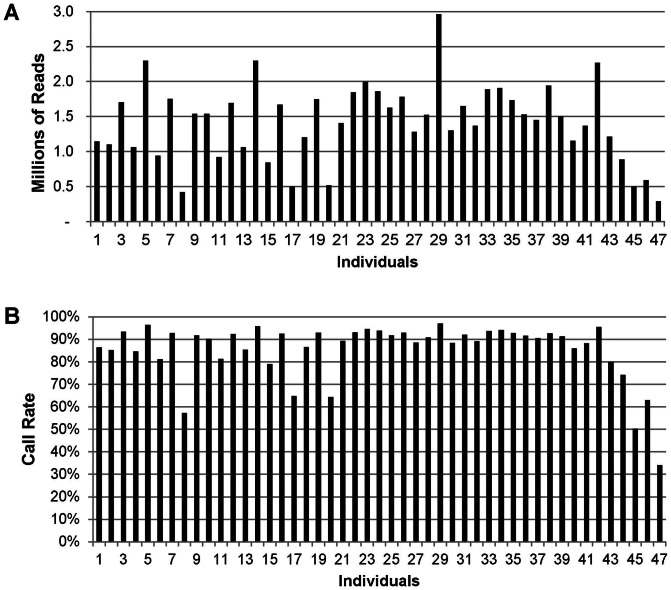
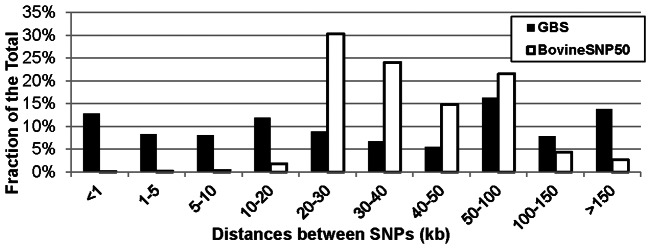
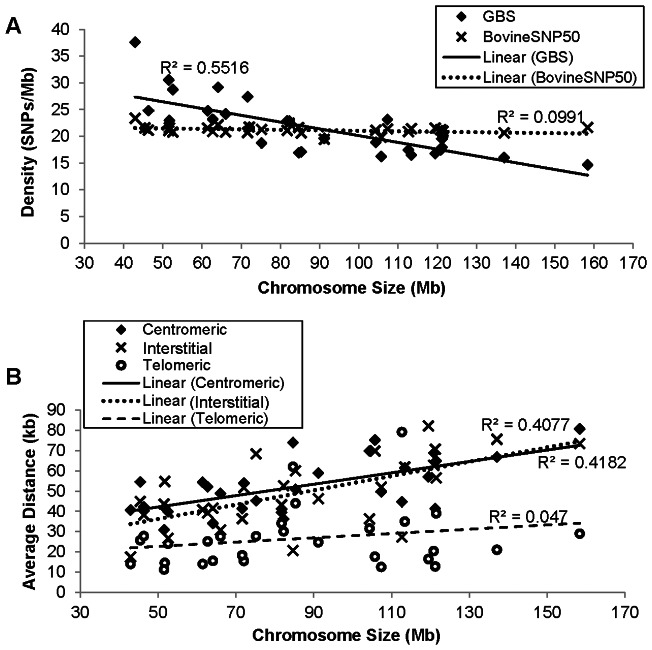
High-throughput genotyping methods have increased the analytical power to study complex traits but high cost has remained a barrier for large scale use in animal improvement. We have adapted genotyping-by-sequencing (GBS) used in plants for genotyping 47 animals representing 7 taurine and indicine breeds of cattle from the US and Africa. Genomic DNA was digested with different enzymes, ligated to adapters containing one of 48 unique bar codes and sequenced by the Illumina HiSeq 2000. PstI was the best enzyme producing 1.4 million unique reads per animal and initially identifying a total of 63,697 SNPs. After removal of SNPs with call rates of less than 70%, 51,414 SNPs were detected throughout all autosomes with an average distance of 48.1 kb, and 1,143 SNPs on the X chromosome at an average distance of 130.3 kb, as well as 191 on unmapped contigs. If we consider only the SNPs with call rates of 90% and over, we identified 39,751 on autosomes, 850 on the X chromosome and 124 on unmapped contigs. Of these SNPs, 28,843 were not tightly linked to other SNPs. Average marker density per autosome was highly correlated with chromosome size (coefficient of correlation = -0.798, r(2) = 0.637) with higher density in smaller chromosomes. Average SNP call rate was 86.5% for all loci, with 53.0% of the loci having call rates >90% and the average minor allele frequency being 0.212. Average observed heterozygosity ranged from 0.046-0.294 among individuals, and from 0.064-0.197 among breeds, with Brangus showing the highest diversity as expected. GBS technique is novel, flexible, sufficiently high-throughput, and capable of providing acceptable marker density for genomic selection or genome-wide association studies at roughly one third of the cost of currently available genotyping technologies.
Conflict of interest statement
Figures
References
-
- Pryce J, Hayes B (2012) A review of how dairy farmers can use and profit from genomic technologies. Animal Production Science 52: 180–184.
-
- Andersson L (2001) Genetic dissection of phenotypic diversity in farm animals Nature Review Genetics. 2: 130–138. - PubMed
-
- Snelling WM, Allan MF, Keele JW, Kuehn LA, McDaneld T, et al. (2010) Genome-wide association study of growth in crossbred beef cattle. Journal of Animal Science 88: 837–848. - PubMed
-
- Peters SO, Kizilkaya K, Garrick DJ, Fernando RL, Reecy JM, et al.. (2012) Bayesian genome wide association analyses of growth and yearling ultrasound measures of carcass traits in Brangus heifers. Journal of Animal Science. - PubMed
Publication types
MeSH terms
Substances
LinkOut - more resources
Full Text Sources
Other Literature Sources
Miscellaneous
