


A simple high-content cell cycle assay reveals frequent discrepancies between cell number and ATP and MTS proliferation assays
- PMID: 23691072
- PMCID: PMC3656927
- DOI: 10.1371/journal.pone.0063583
A simple high-content cell cycle assay reveals frequent discrepancies between cell number and ATP and MTS proliferation assays
Abstract
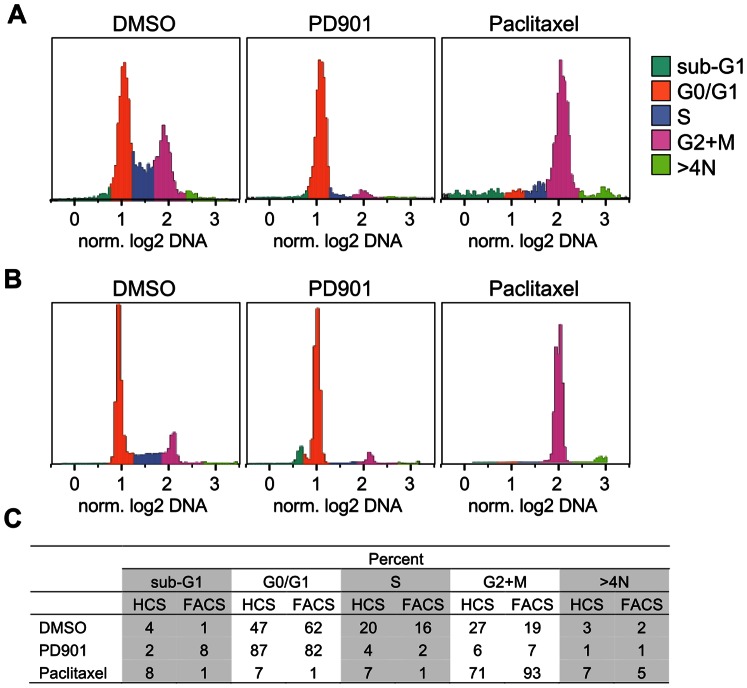
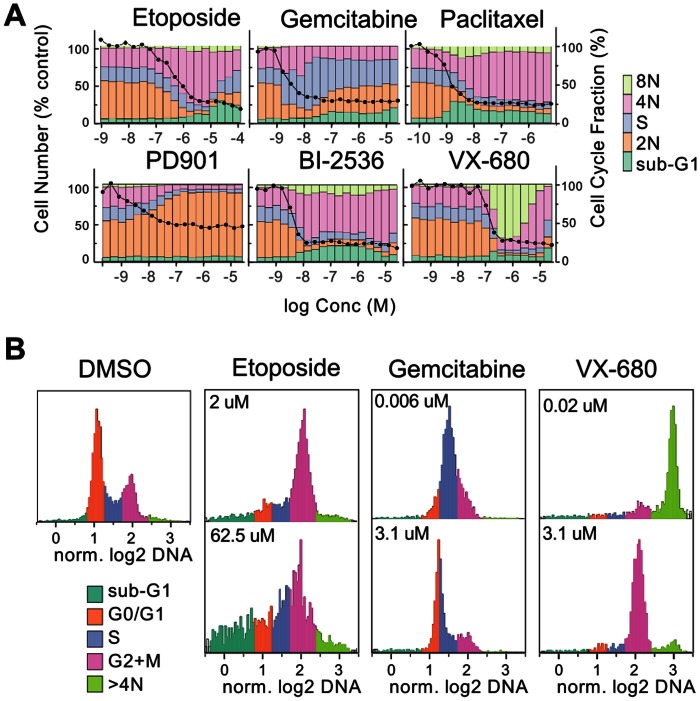
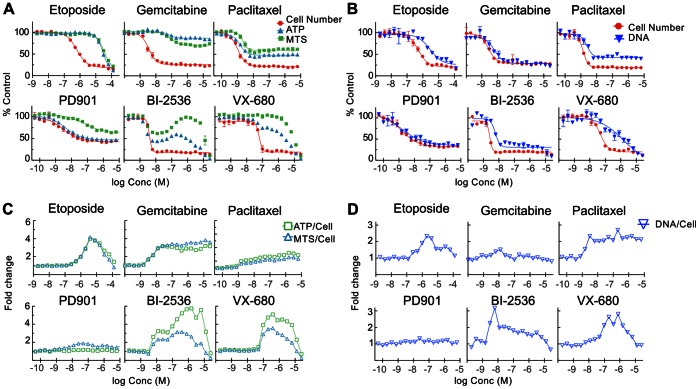
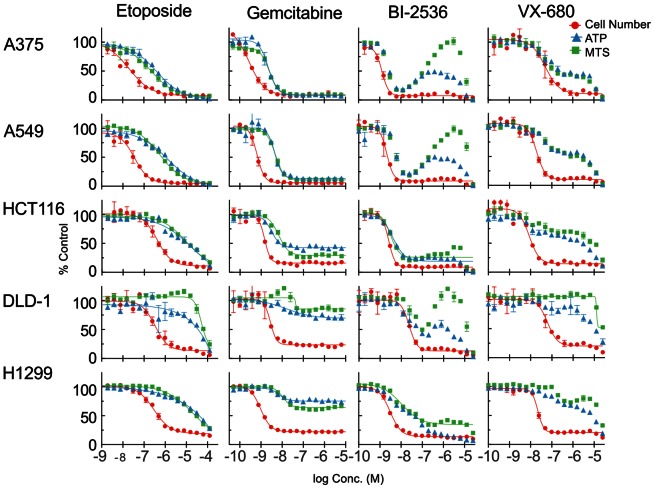
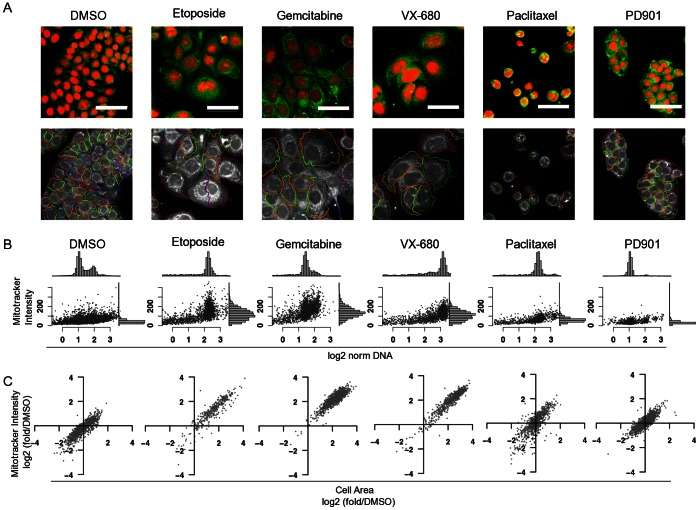
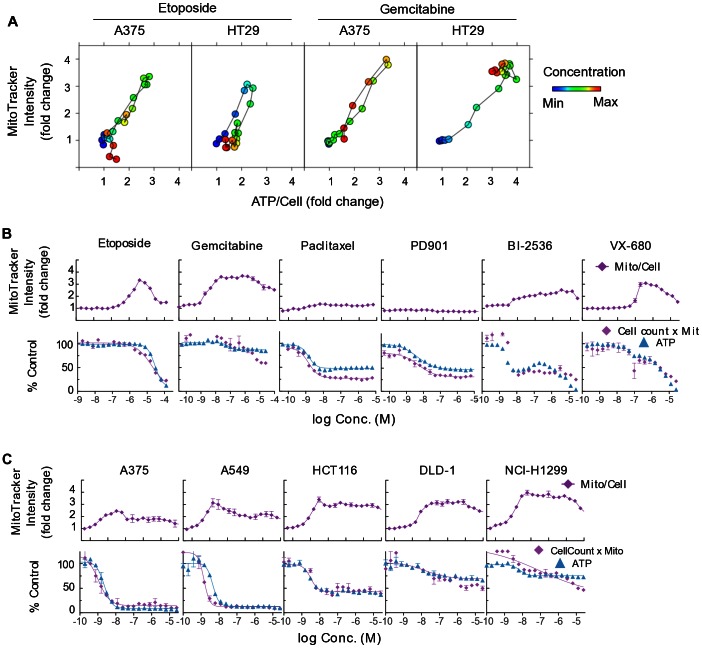
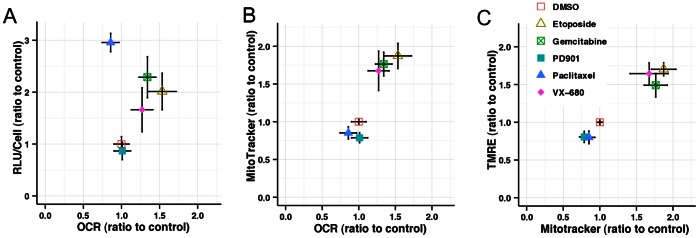
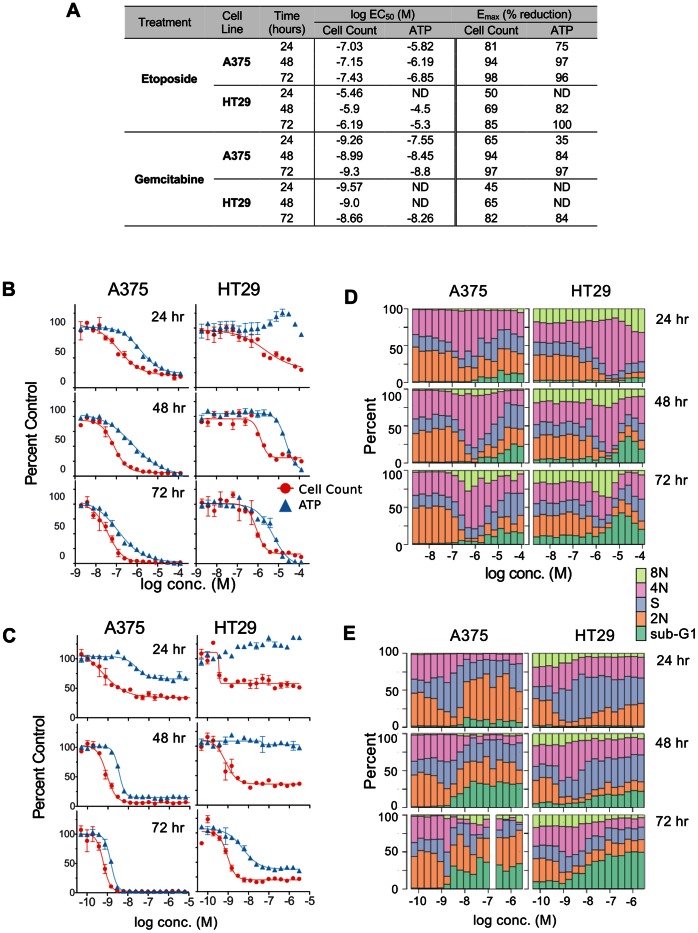
In order to efficiently characterize both antiproliferative potency and mechanism of action of small molecules targeting the cell cycle, we developed a high-throughput image-based assay to determine cell number and cell cycle phase distribution. Using this we profiled the effects of experimental and approved anti-cancer agents with a range mechanisms of action on a set of cell lines, comparing direct cell counting versus two metabolism-based cell viability/proliferation assay formats, ATP-dependent bioluminescence, MTS (3-(4,5-dimethylthiazol-2-yl)-5-(3-carboxymethoxyphenyl)-2-(4-sulfophenyl)-2H-tetrazolium) reduction, and a whole-well DNA-binding dye fluorescence assay. We show that, depending on compound mechanisms of action, the metabolism-based proxy assays are frequently prone to 1) significant underestimation of compound potency and efficacy, and 2) non-monotonic dose-response curves due to concentration-dependent phenotypic 'switching'. In particular, potency and efficacy of DNA synthesis-targeting agents such as gemcitabine and etoposide could be profoundly underestimated by ATP and MTS-reduction assays. In the same image-based assay we showed that drug-induced increases in ATP content were associated with increased cell size and proportionate increases in mitochondrial content and respiratory flux concomitant with cell cycle arrest. Therefore, differences in compound mechanism of action and cell line-specific responses can yield significantly misleading results when using ATP or tetrazolium-reduction assays as a proxy for cell number when screening compounds for antiproliferative activity or profiling panels of cell lines for drug sensitivity.
Conflict of interest statement
Figures
References
-
- Quent VMC, Loessner D, Friis T, Reichert JC, Hutmacher DW (2010) Discrepancies between metabolic activity and DNA content as tool to assess cell proliferation in cancer research. J Cell Mol Med 14: 1003–1013 doi:10.1111/j.1582-4934.2010.01013.x. - DOI - PMC - PubMed
-
- Crouch SP, Kozlowski R, Slater KJ, Fletcher J (1993) The use of ATP bioluminescence as a measure of cell proliferation and cytotoxicity. J Immunol Methods 160: 81–88. - PubMed
-
- Mueller H, Kassack MU, Wiese M (2004) Comparison of the usefulness of the MTT, ATP, and calcein assays to predict the potency of cytotoxic agents in various human cancer cell lines. J Biomol Screen 9: 506–515 doi:10.1177/1087057104265386. - DOI - PubMed
-
- Hannah R, Beck M (2001) Celltiter-Glo™ Luminescent Cell Viability Assay: A Sensitive And Rapid Method For Determining Cell Viability. Promega Cell Notes.
-
- Berridge M, Herst P, Tan A (2005) Tetrazolium dyes as tools in cell biology: New insights into their cellular reduction. BIOTECHNOLOGY ANNUAL REVIEW 11: 127–152 doi:10.1016/S1387-2656(05)11004-7. - DOI - PubMed
Publication types
MeSH terms
Substances
LinkOut - more resources
Full Text Sources
Other Literature Sources
