


Functional divergence of the brain-size regulating gene MCPH1 during primate evolution and the origin of humans
- PMID: 23697381
- PMCID: PMC3674976
- DOI: 10.1186/1741-7007-11-62
Functional divergence of the brain-size regulating gene MCPH1 during primate evolution and the origin of humans
Abstract
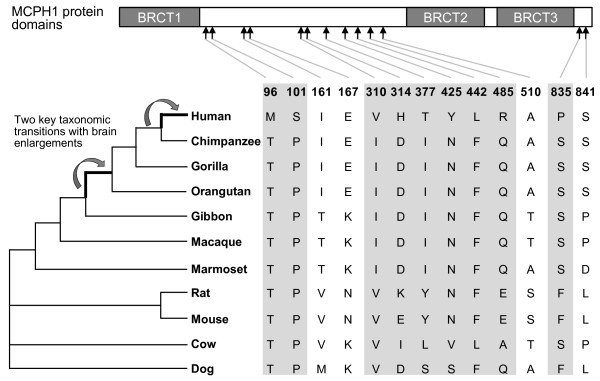
Background: One of the key genes that regulate human brain size, MCPH1 has evolved under strong Darwinian positive selection during the evolution of primates. During this evolution, the divergence of MCPH1 protein sequences among primates may have caused functional changes that contribute to brain enlargement.
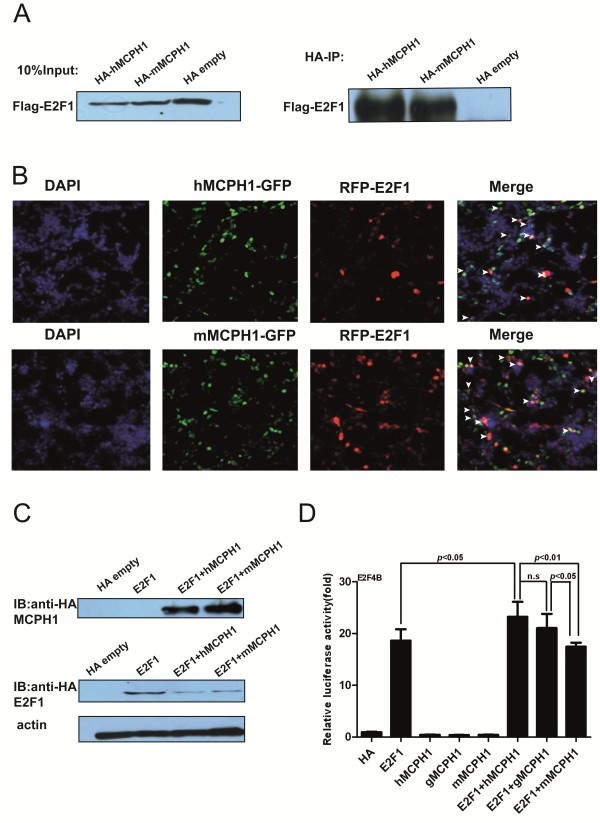
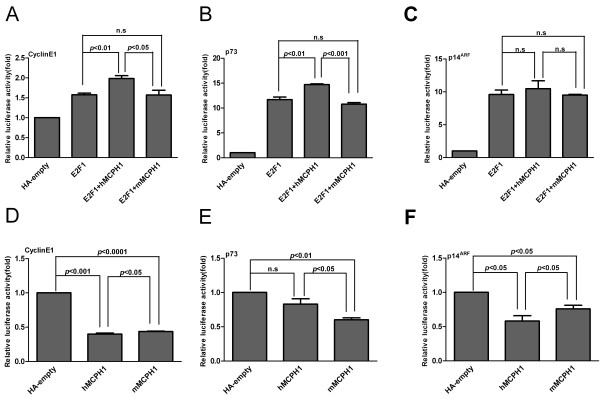
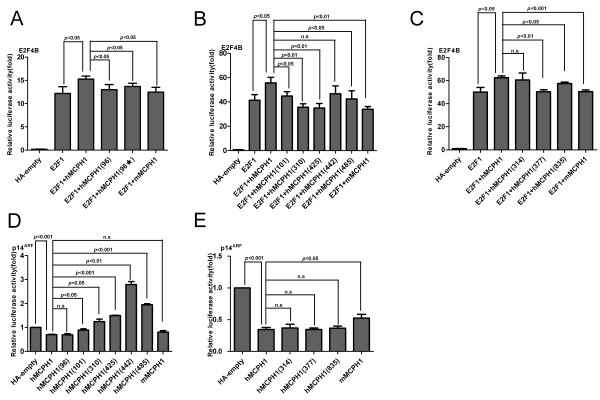
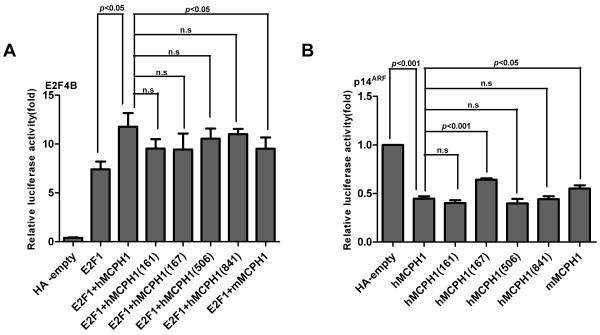
Results: To test this hypothesis, we used co-immunoprecipitation and reporter gene assays to examine the activating and repressing effects of MCPH1 on a set of its down-stream genes and then compared the functional outcomes of a series of mutant MCPH1 proteins that carry mutations at the human- and great-ape-specific sites. The results demonstrate that the regulatory effects of human MCPH1 and rhesus macaque MCPH1 are different in three of eight down-stream genes tested (p73, cyclinE1 and p14ARF), suggesting a functional divergence of MCPH1 between human and non-human primates. Further analyses of the mutant MCPH1 proteins indicated that most of the human-specific mutations could change the regulatory effects on the down-stream genes. A similar result was also observed for one of the four great-ape-specific mutations.
Conclusions: Collectively, we propose that during primate evolution in general and human evolution in particular, the divergence of MCPH1 protein sequences under Darwinian positive selection led to functional modifications, providing a possible molecular mechanism of how MCPH1 contributed to brain enlargement during primate evolution and human origin.
Figures
References
-
- Jackson AP, Eastwood H, Bell SM, Adu J, Toomes C, Carr IM, Roberts E, Hampshire DJ, Crow YJ, Mighell AJ, Karbani G, Jafri H, Rashid Y, Mueller RF, Markham AF, Woods CG. Identification of microcephalin, a protein implicated in determining the size of the human brain. Am J Hum Genet. 2002;71:136–142. doi: 10.1086/341283. - DOI - PMC - PubMed
-
- Bilguvar K, Oztürk AK, Louvi A, Kwan KY, Choi M, Tatli B, Yalnizoglu D, Tüysüz B, Caglayan AO, Gökben S, Kaymakçalan H, Barak T, Bakircioğlu M, Yasuno K, Ho W, Sanders S, Zhu Y, Yilmaz S, Dinçer A, Johnson MH, Bronen RA, Koçer N, Per H, Mane S, Pamir MN, Yalçinkaya C, Kumandaş S, Topçu M, Ozmen M, Sestan N. Whole-exome sequencing identifies recessive WDR62 mutations in severe brain malformations. Nature. 2010;467:207–210. doi: 10.1038/nature09327. - DOI - PMC - PubMed
-
- Nicholas AK, Khurshid M, Désir J, Carvalho OP, Cox JJ, Thornton G, Kausar R, Ansar M, Ahmad W, Verloes A, Passemard S, Misson JP, Lindsay S, Gergely F, Dobyns WB, Roberts E, Abramowicz M, Woods CG. WDR62 is associated with the spindle pole and is mutated in human microcephaly. Nat Genet. 2010;42:1010–1014. doi: 10.1038/ng.682. - DOI - PMC - PubMed
Publication types
MeSH terms
Substances
LinkOut - more resources
Full Text Sources
Other Literature Sources
Research Materials
Miscellaneous
