


Age differences in emotional reactions to daily negative social encounters
- PMID: 23697389
- PMCID: PMC4111301
- DOI: 10.1093/geronb/gbt045
Age differences in emotional reactions to daily negative social encounters
Abstract
Objectives: Negative social interactions are the most frequently reported daily stressors and most detrimental for well-being, yet we know little about older adults' efforts to regulate their emotional reactions to such encounters. This study examined age differences in emotional reactions to social encounters and the implications of these reactions for daily well-being.
Methods: Middle-aged, young-old, and oldest-old adults (59% women; aged 40-95, N = 110) completed daily interviews for 14 days. Each day, participants reported whether they had social interactions that made them feel irritated, hurt, or annoyed (experienced emotional reaction) and social interactions in which they could have felt irritated, hurt, or annoyed but avoided feeling that way (minimized emotional reaction).
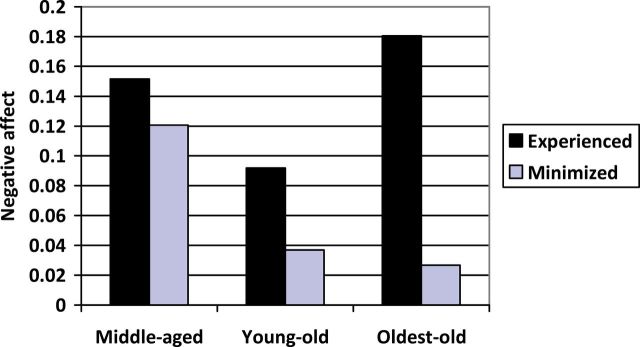
Results: Findings revealed no age differences in the types of emotional reactions reported (experienced or minimized). Associations between emotional reactions and daily well-being varied by age group. Oldest-old individuals' well-being was less negatively affected by minimized emotional reactions, but more negatively affected by experienced emotional reactions compared with younger individuals' well-being.
Discussion: Findings support the strength and vulnerability integration model that suggests that when older individuals use avoidant strategies, they show better emotion regulation than younger individuals.
Keywords: Avoidance; Daily diary; Emotion; Negative social interactions; Oldest-old; Well-being..
© The Author 2013. Published by Oxford University Press on behalf of The Gerontological Society of America. All rights reserved. For permissions, please e-mail: journals.permissions@oup.com.
Figures
References
-
- Almeida D. M. (2005). Resilience and vulnerability to daily stressors assessed via diary methods. Current Directions in Psychological Science, 14, 64–68. 10.1111/j.0963-7214.2005.00336.x
-
- Almeida D. M., Kessler R. C. (1998). Everyday stressors and gender differences in daily distress. Journal of Personality and Social Psychology, 75, 670–680. 10.1037/0022-3514.75.3.670 - PubMed
-
- Almeida D. M., Wethington E., Kessler R. C. (2002). The Daily Inventory of Stressful Events: An interview-based approach for measuring daily stressors. Assessment, 9, 41–55. 10.1177/ 1073191102009001006 - PubMed
-
- Birditt K. S. (2012). Daily health, stress, and relationships study. Unpublished data
Publication types
MeSH terms
Grants and funding
LinkOut - more resources
Full Text Sources
Other Literature Sources
Medical
