


Usefulness of serum carcinoembryonic antigen (CEA) in evaluating response to chemotherapy in patients with advanced non small-cell lung cancer: a prospective cohort study
- PMID: 23697613
- PMCID: PMC3665670
- DOI: 10.1186/1471-2407-13-254
Usefulness of serum carcinoembryonic antigen (CEA) in evaluating response to chemotherapy in patients with advanced non small-cell lung cancer: a prospective cohort study
Abstract
Background: High serum carcinoembryonic antigen (CEA) levels are an independent prognostic factor for recurrence and survival in patients with non-small cell lung cancer (NSCLC). Its role as a predictive marker of treatment response has not been widely characterized.
Methods: 180 patients with advanced NSCLC (stage IIIB or Stage IV), who had an elevated CEA serum level (>10 ng/ml) at baseline and who had no more than one previous chemotherapy regimen, were included. CEA levels were measured after two treatment cycles of platinum based chemotherapy (93%) or a tyrosine kinase inhibitor (7%). We evaluate the change in serum CEA levels and the association with response measured by RECIST criteria.
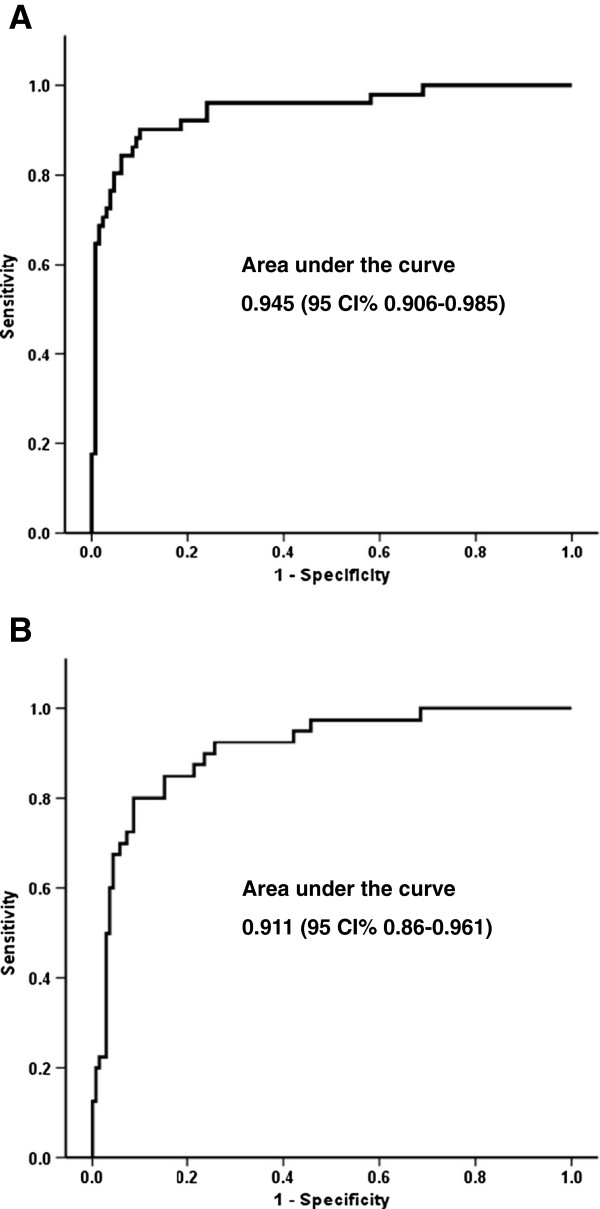
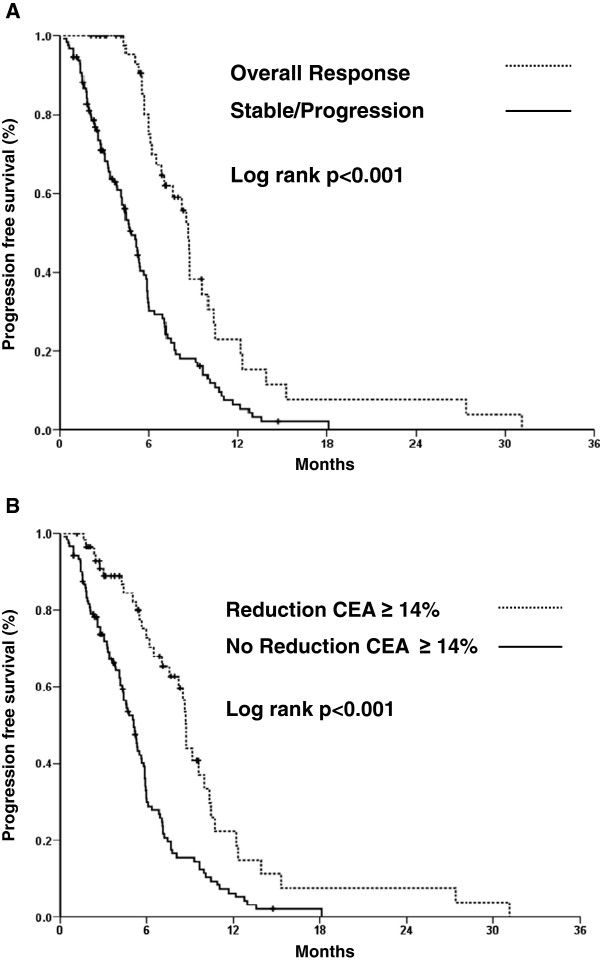
Results: After two chemotherapy cycles, the patients who achieved an objective response (OR, 28.3%) had a reduction of CEA levels of 55.6% (95%CI [box drawings light horizontal]64.3 to [box drawings light horizontal]46.8) compared to its basal level, with an area under the ROC curve (AURC) of 0.945 (95%CI 0.91-0.99), and a sensitivity and specificity of 90.2 and 89.9%, respectively, for a CEA reduction of ≥14%. Patients that achieved a decrease in CEA levels ≥14% presented an overall response in 78% of cases, stable disease in 20.3% and progression in 1.7%, while patients that did not attain a reduction ≥14% had an overall response of 4.1%, stable disease of 63.6% and progression of 32.2% (p < 0.001). Patients with stable (49.4%) and progressive disease (22.2%) had an increase of CEA levels of 9.4% (95%CI 1.5-17.3) and 87.5% (95%CI 60.9-114) from baseline, respectively (p < 0.001). The AURC for progressive disease was 0.911 (95%CI 0.86-0.961), with sensitivity and specificity of 85 and 15%, respectively, for a CEA increase of ≥18%. PFS was longer in patients with a ≥14% reduction in CEA (8.7 vs. 5.1 months, p < 0.001). Neither reduction of CEA nor OR were predictive of OS.
Conclusions: A CEA level reduction is a sensitive and specific marker of OR, as well as a sensitive indicator for progression to chemotherapy in patients with advanced NSCLC who had an elevated CEA at baseline and had received no more than one chemotherapy regimen. A 14% decrease in CEA levels is associated with a better PFS.
Figures
References
-
- Paesmans M, Sculier JP, Libert P. Response to chemotherapy has predictive value for further survival of patients with advanced non-small cell lung cancer: 10 years experience of the European Lung Cancer Working Party. Eur J Cancer. 1997;33(14):2326–2332. doi: 10.1016/S0959-8049(97)00325-0. - DOI - PubMed
MeSH terms
Substances
LinkOut - more resources
Full Text Sources
Other Literature Sources
Medical
