


Obesity-associated oxidative stress: strategies finalized to improve redox state
- PMID: 23698776
- PMCID: PMC3676851
- DOI: 10.3390/ijms140510497
Obesity-associated oxidative stress: strategies finalized to improve redox state
Abstract
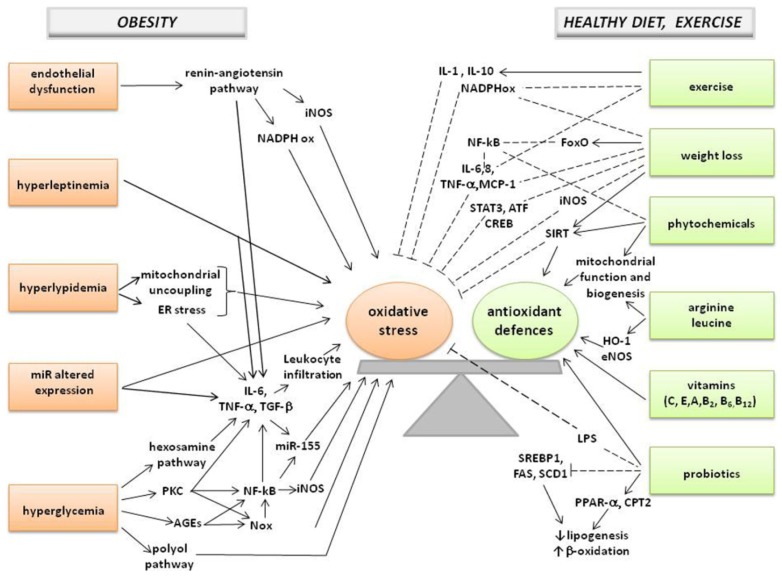
Obesity represents a major risk factor for a plethora of severe diseases, including diabetes, cardiovascular disease, non-alcoholic fatty liver disease, and cancer. It is often accompanied by an increased risk of mortality and, in the case of non-fatal health problems, the quality of life is impaired because of associated conditions, including sleep apnea, respiratory problems, osteoarthritis, and infertility. Recent evidence suggests that oxidative stress may be the mechanistic link between obesity and related complications. In obese patients, antioxidant defenses are lower than normal weight counterparts and their levels inversely correlate with central adiposity; obesity is also characterized by enhanced levels of reactive oxygen or nitrogen species. Inadequacy of antioxidant defenses probably relies on different factors: obese individuals may have a lower intake of antioxidant- and phytochemical-rich foods, such as fruits, vegetables, and legumes; otherwise, consumption of antioxidant nutrients is normal, but obese individuals may have an increased utilization of these molecules, likewise to that reported in diabetic patients and smokers. Also inadequate physical activity may account for a decreased antioxidant state. In this review, we describe current concepts in the meaning of obesity as a state of chronic oxidative stress and the potential interventions to improve redox balance.
Figures
References
-
- WHO. World Health Organization Fact Sheet for World Wide Prevalence of Obesity. [(accessed on 11 February 2013)]. Available online: http://www.who.int/mediacentre/factsheets/fs311/en/indexhtml.
-
- Nishida C., Ko G.T., Kumanyika S. Body fat distribution and noncommunicable diseases in populations: Overview of the 2008 WHO expert consultation on waist circumference and waist-hip ratio. Eur. J. Clin. Nutr. 2010;64:2–5. - PubMed
-
- Lear S.A., James P.T., Ko G.T., Kumanyika S. Appropriateness of waist circumference and waist-to-hip ratio cutoffs for different ethnic groups. Eur. J. Clin. Nutr. 2010;64:42–61. - PubMed
-
- Pérez-Escamilla R., Obbagy J.E., Altman J.M., Essery E.V., McGrane M.M., Wong Y.P., Spahn J.M., Williams C.L. Dietary energy density and body weight in adults and children: A systematic review. J. Acad. Nutr. Diet. 2012;112:671–684. - PubMed
Publication types
MeSH terms
Substances
LinkOut - more resources
Full Text Sources
Other Literature Sources
Medical
