


Insulin/IGF-1 signaling, including class II/III PI3Ks, β-arrestin and SGK-1, is required in C. elegans to maintain pharyngeal muscle performance during starvation
- PMID: 23700438
- PMCID: PMC3659082
- DOI: 10.1371/journal.pone.0063851
Insulin/IGF-1 signaling, including class II/III PI3Ks, β-arrestin and SGK-1, is required in C. elegans to maintain pharyngeal muscle performance during starvation
Abstract
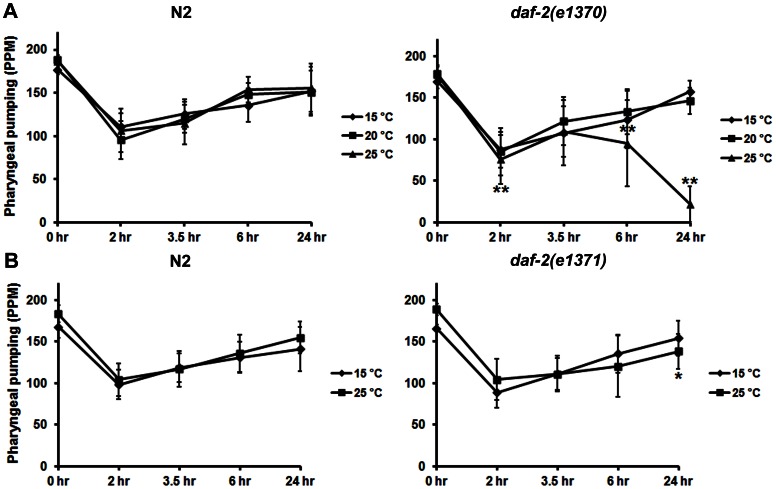
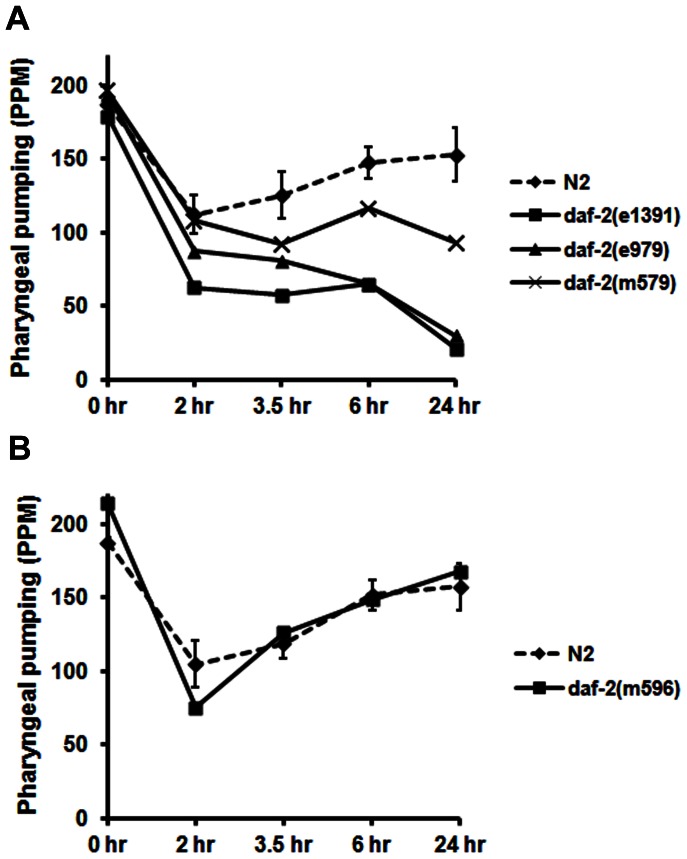
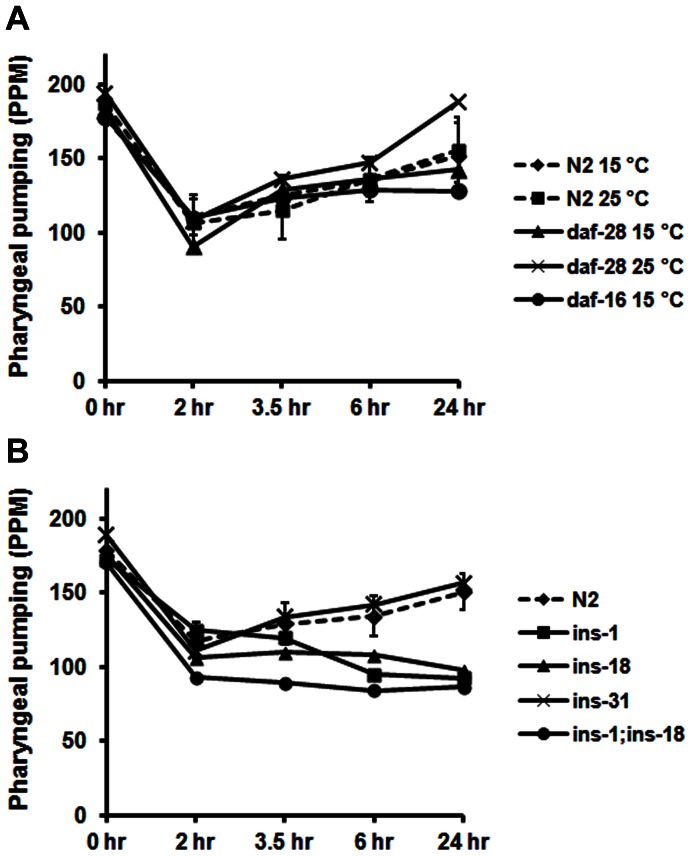
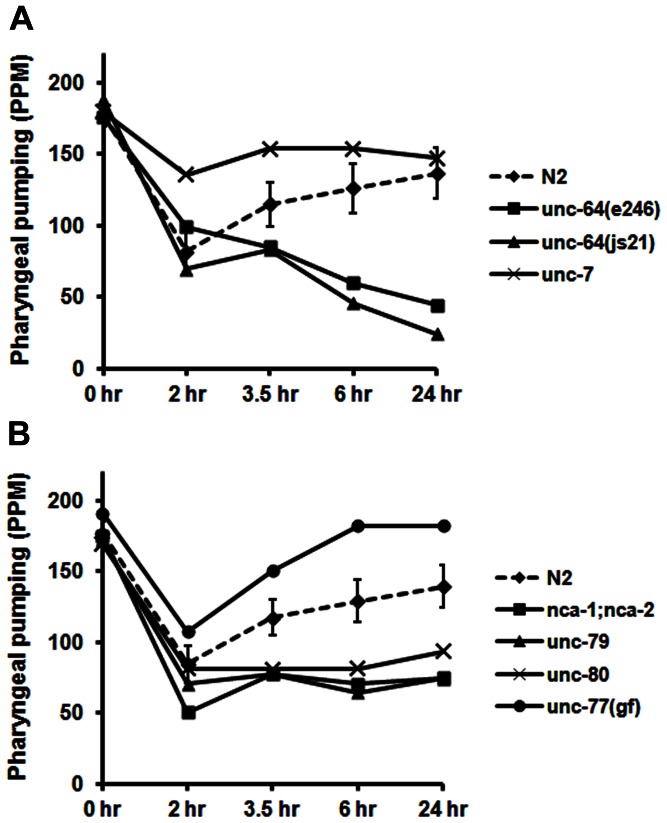
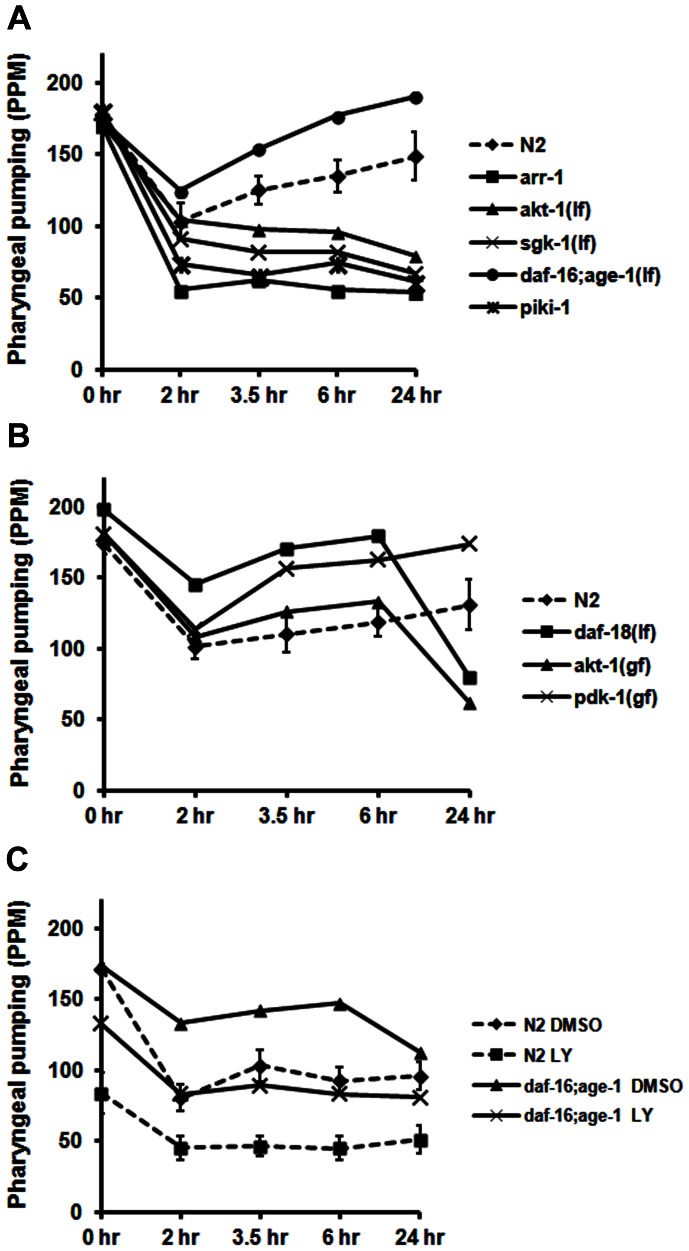
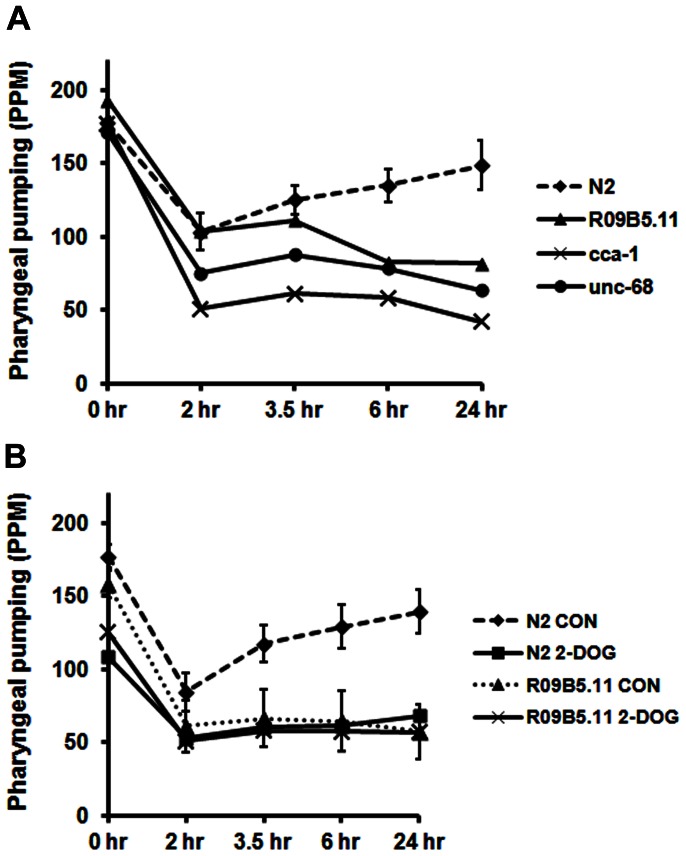
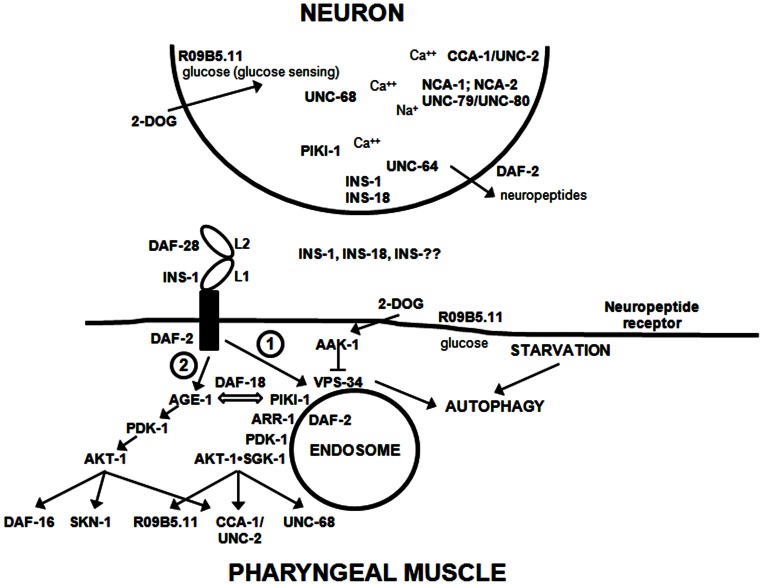
In C. elegans, pharyngeal pumping is regulated by the presence of bacteria. In response to food deprivation, the pumping rate rapidly declines by about 50-60%, but then recovers gradually to baseline levels on food after 24 hr. We used this system to study the role of insulin/IGF-1 signaling (IIS) in the recovery of pharyngeal pumping during starvation. Mutant strains with reduced function in the insulin/IGF-1 receptor, DAF-2, various insulins (INS-1 and INS-18), and molecules that regulate insulin release (UNC-64 and NCA-1; NCA-2) failed to recover normal pumping rates after food deprivation. Similarly, reduction or loss of function in downstream signaling molecules (e.g., ARR-1, AKT-1, and SGK-1) and effectors (e.g., CCA-1 and UNC-68) impaired pumping recovery. Pharmacological studies with kinase and metabolic inhibitors implicated class II/III phosphatidylinositol 3-kinases (PI3Ks) and glucose metabolism in the recovery response. Interestingly, both over- and under-activity in IIS was associated with poorer recovery kinetics. Taken together, the data suggest that optimum levels of IIS are required to maintain high levels of pharyngeal pumping during starvation. This work may ultimately provide insights into the connections between IIS, nutritional status and sarcopenia, a hallmark feature of aging in muscle.
Conflict of interest statement
Figures
References
-
- Lawlor MA, Alessi DR (2001) PKB/Akt: a key mediator of cell proliferation, survival and insulin responses? J Cell Sci 114: 2903–2910. - PubMed
-
- Bhaskar PT, Hay N (2007) The two TORCs and Akt. Dev Cell 12: 487–502. - PubMed
-
- Kenyon C, Chang J, Gensch E, Rudner A, Tabtiang R (1993) A C. elegans mutant that lives twice as long as wild type. Nature 366: 461–464. - PubMed
-
- Tatar M, Kopelman A, Epstein D, Tu MP, Yin CM, et al. (2001) A mutant Drosophila insulin receptor homolog that extends life-span and impairs neuroendocrine function. Science 292: 107–110. - PubMed
MeSH terms
Substances
Grants and funding
LinkOut - more resources
Full Text Sources
Other Literature Sources
Medical
Research Materials
Miscellaneous
