


Potential for cost recovery: women's willingness to pay for injectable contraceptives in Tigray, Ethiopia
- PMID: 23700451
- PMCID: PMC3658963
- DOI: 10.1371/journal.pone.0064032
Potential for cost recovery: women's willingness to pay for injectable contraceptives in Tigray, Ethiopia
Abstract
Objective: To investigate factors associated with a woman's willingness to pay (WTP) for injectable contraceptives in Tigray, Ethiopia.
Methods: We used a multistage random sampling design to generate a representative sample of reproductive age women from the Central Zone of Tigray, Ethiopia to participate in a survey (N = 1490). Respondents who had ever used injectable contraceptives or who were interested in using them were asked whether they would be willing to pay, and if so, how much. Logistic regression odds ratios (ORs) with 95% confidence intervals (CIs) and p-values were used to assess which factors were associated with WTP in our final model.
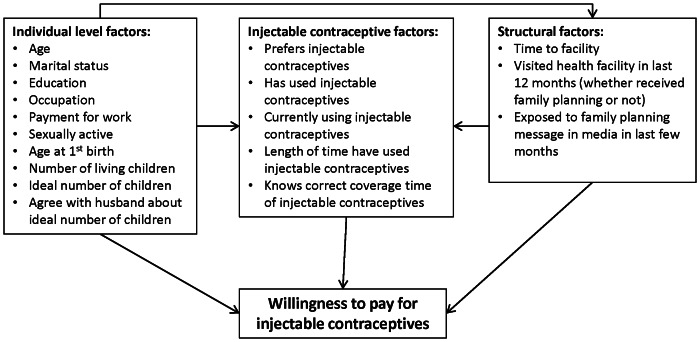
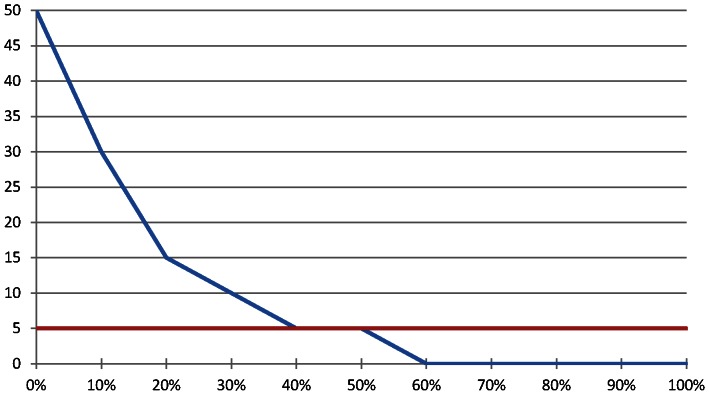
Findings: On average, respondents were willing to pay 11 birr ($0.65 USD) per injection. Being married, completing any amount of education, having given birth, and having visited a health facility in the last 12 months (whether received family planning information or not) were associated with statistically significantly increased odds of WTP. Having initiated sexual activity and having 1-2 children (compared to 0 children) were associated with statistically significantly decreased odds of WTP. We also detected two significant interactions. Among women who prefer injectable contraceptives, their odds of WTP for injectable contraceptives vary across length of time they have used them. And among women who work for pay, their odds of WTP for injectable contraceptives vary by whether they agree with their husband/partner about the ideal number of children.
Conclusion: In a sector that continually struggles with funding, cost recovery for contraceptive services may offer a means of improved financial sustainability while increasing rural access to injectable contraceptives. Results indicate there are opportunities for cost recovery in rural Tigray, Ethiopia and highlight factors that could be leveraged to increase WTP for injectable contraceptives.
Conflict of interest statement
Figures
References
-
- Ahmed S, Li Q, Liu L, Tsui AO (2012) Maternal deaths averted by contraceptive use: an analysis of 172 countries. Lancet 380: 111–125. - PubMed
-
- Cleland J, Conde-Agudelo A, Peterson H, Ross J, Tsui A (2012) Contraception and health. Lancet 380: 149–156. - PubMed
-
- Cleland J, Bernstein S, Ezeh A, Faundes A, Glasier A, et al. (2006) Family planning: the unfinished agenda. Lancet 368: 1810–1827. - PubMed
-
- Foreit JR, Foreit KG (2003) The reliability and validity of willingness to pay surveys for reproductive health pricing decisions in developing countries. Health Policy 63: 37–47. - PubMed
-
- Hennink M, Madise N (2005) Influence of user fees on contraceptive use in Malawi. African Population Studies 20: 125–141.
Publication types
MeSH terms
Substances
LinkOut - more resources
Full Text Sources
Other Literature Sources
