


Resting-state fMRI in the Human Connectome Project
- PMID: 23702415
- PMCID: PMC3720828
- DOI: 10.1016/j.neuroimage.2013.05.039
Resting-state fMRI in the Human Connectome Project
Abstract
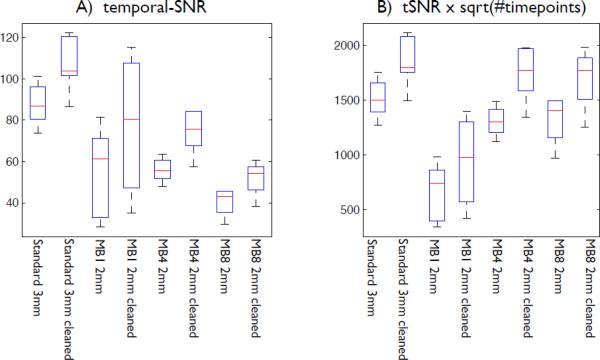
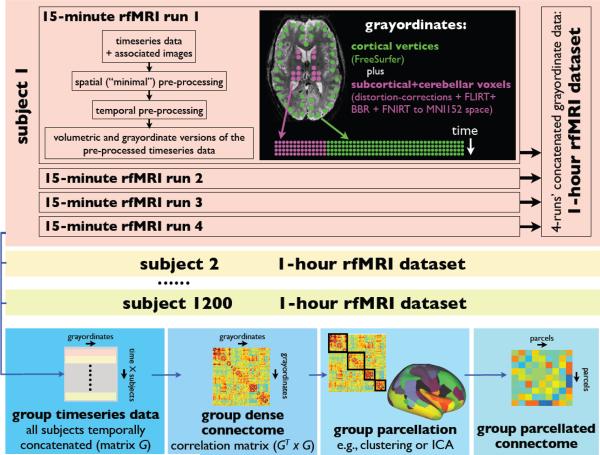
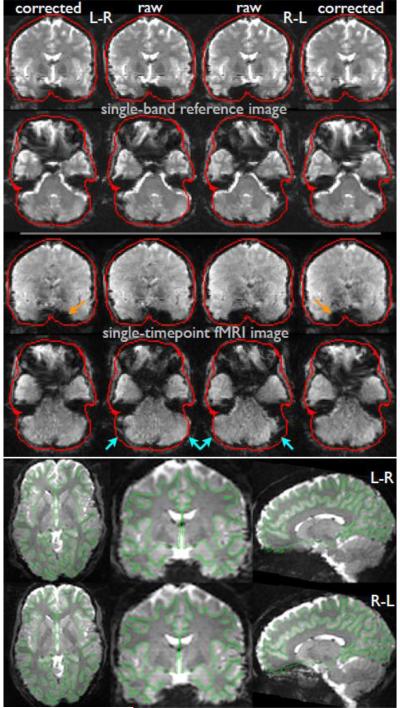
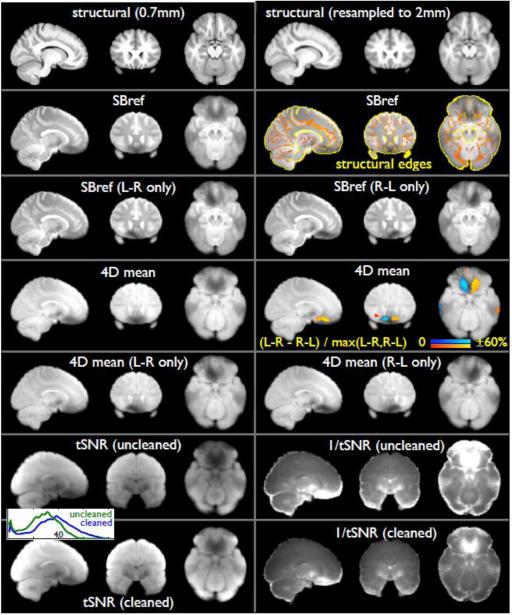
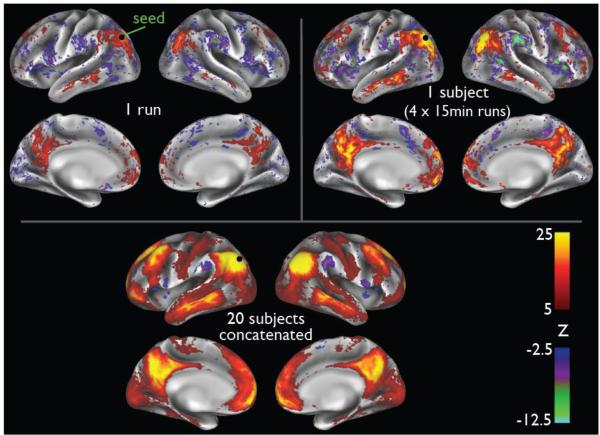
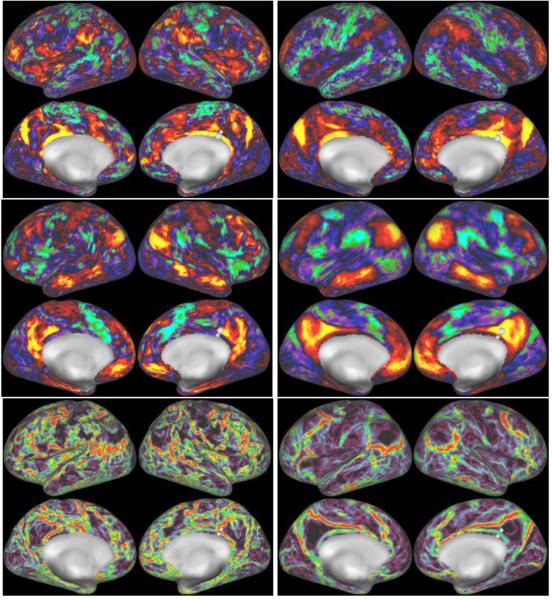
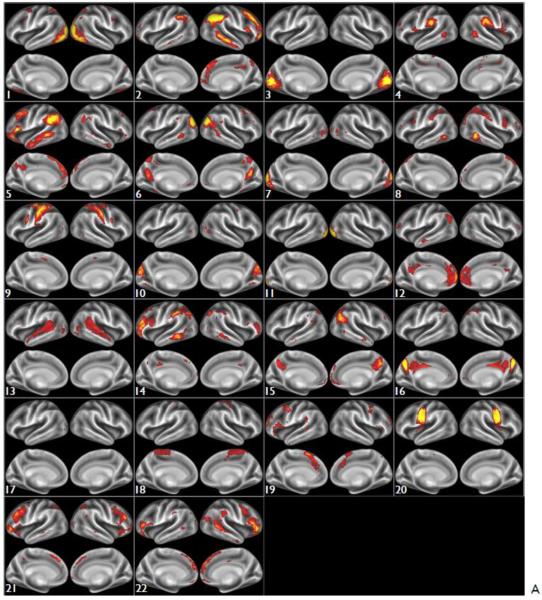
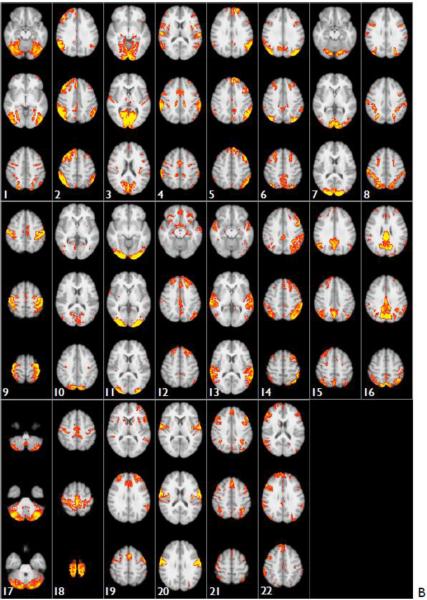
Resting-state functional magnetic resonance imaging (rfMRI) allows one to study functional connectivity in the brain by acquiring fMRI data while subjects lie inactive in the MRI scanner, and taking advantage of the fact that functionally related brain regions spontaneously co-activate. rfMRI is one of the two primary data modalities being acquired for the Human Connectome Project (the other being diffusion MRI). A key objective is to generate a detailed in vivo mapping of functional connectivity in a large cohort of healthy adults (over 1000 subjects), and to make these datasets freely available for use by the neuroimaging community. In each subject we acquire a total of 1h of whole-brain rfMRI data at 3 T, with a spatial resolution of 2×2×2 mm and a temporal resolution of 0.7s, capitalizing on recent developments in slice-accelerated echo-planar imaging. We will also scan a subset of the cohort at higher field strength and resolution. In this paper we outline the work behind, and rationale for, decisions taken regarding the rfMRI data acquisition protocol and pre-processing pipelines, and present some initial results showing data quality and example functional connectivity analyses.
Copyright © 2013 Elsevier Inc. All rights reserved.
Figures
References
-
- Beckmann C, Smith S. Probabilistic independent component analysis for functional magnetic resonance imaging. IEEE Trans. on Medical Imaging. 2004;23(2):137–152. [Beckmann and Smith, 2004] - PubMed
-
- Biswal B, Yetkin F, V. M. H, Hyde J. Functional connectivity in the motor cortex of resting human brain using echo-planar MRI. Magnetic Resonance in Medicine. 1995;34:537–541. [Biswal et al., 1995] - PubMed
-
- Boxerman JL, Bandettini PA, Kwong KK, Baker JR, Davis TL, Rosen BR, Weisskoff RM. The intravascular contribution to FMRI signal change: Monte Carlo modeling and diffusion-weighted studies in vivo. Magnetic Resonance in Medicine. 1995;34(1):4–10. [Boxerman et al., 1995] - PubMed
-
- Breuer FA, Blaimer M, Heidemann RM, Mueller MF, Griswold MA, Jakob PM. Controlled aliasing in parallel imaging results in higher acceleration (CAIPIRINHA) for multi-slice imaging. Magn Reson Med. 2005;53(3):684–91. [Breuer et al., 2005] - PubMed
Publication types
MeSH terms
Grants and funding
- 1U54MH091657-01/MH/NIMH NIH HHS/United States
- 098369/WT_/Wellcome Trust/United Kingdom
- F30-MH097312/MH/NIMH NIH HHS/United States
- F30 MH100872/MH/NIMH NIH HHS/United States
- P30 NS076408/NS/NINDS NIH HHS/United States
- MR/K006673/1/MRC_/Medical Research Council/United Kingdom
- P41-RR08079/EB015894/EB/NIBIB NIH HHS/United States
- P41 EB015894/EB/NIBIB NIH HHS/United States
- F30 MH097312/MH/NIMH NIH HHS/United States
- P41 RR008079/RR/NCRR NIH HHS/United States
- P30-NS057091/NS/NINDS NIH HHS/United States
- U54 MH091657/MH/NIMH NIH HHS/United States
- P30 NS057091/NS/NINDS NIH HHS/United States
LinkOut - more resources
Full Text Sources
Other Literature Sources
Medical
Molecular Biology Databases
