


WEB-based GEne SeT AnaLysis Toolkit (WebGestalt): update 2013
- PMID: 23703215
- PMCID: PMC3692109
- DOI: 10.1093/nar/gkt439
WEB-based GEne SeT AnaLysis Toolkit (WebGestalt): update 2013
Abstract
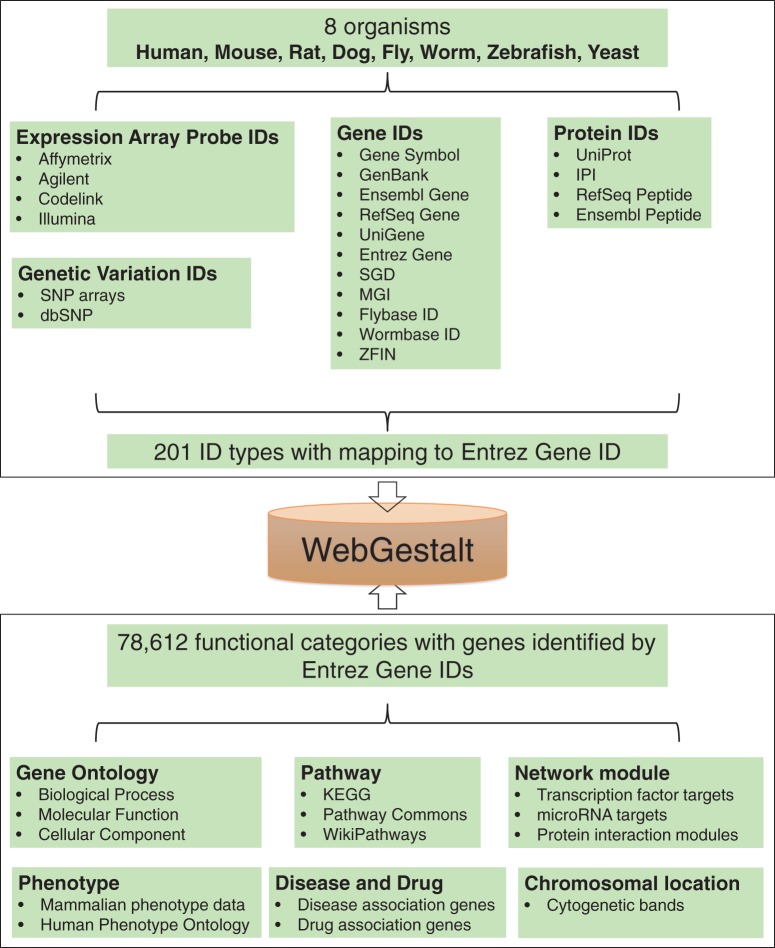
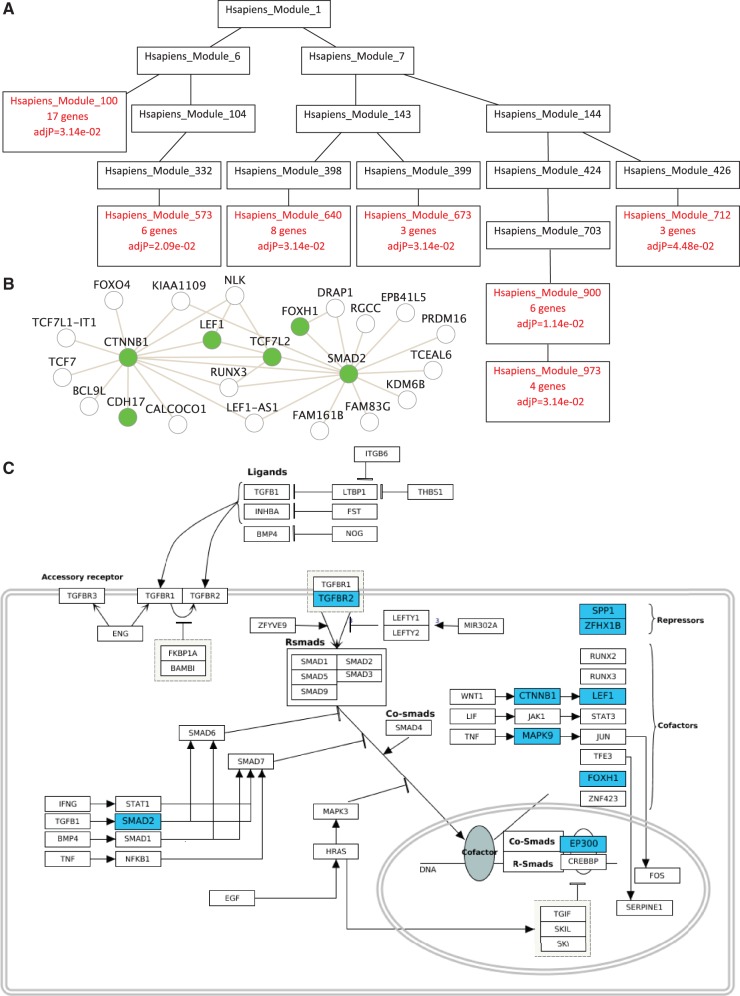
Functional enrichment analysis is an essential task for the interpretation of gene lists derived from large-scale genetic, transcriptomic and proteomic studies. WebGestalt (WEB-based GEne SeT AnaLysis Toolkit) has become one of the popular software tools in this field since its publication in 2005. For the last 7 years, WebGestalt data holdings have grown substantially to satisfy the requirements of users from different research areas. The current version of WebGestalt supports 8 organisms and 201 gene identifiers from various databases and different technology platforms, making it directly available to the fast growing omics community. Meanwhile, by integrating functional categories derived from centrally and publicly curated databases as well as computational analyses, WebGestalt has significantly increased the coverage of functional categories in various biological contexts including Gene Ontology, pathway, network module, gene-phenotype association, gene-disease association, gene-drug association and chromosomal location, leading to a total of 78 612 functional categories. Finally, new interactive features, such as pathway map, hierarchical network visualization and phenotype ontology visualization have been added to WebGestalt to help users better understand the enrichment results. WebGestalt can be freely accessed through http://www.webgestalt.org or http://bioinfo.vanderbilt.edu/webgestalt/.
Figures
References
-
- Huang da W, Sherman BT, Lempicki RA. Systematic and integrative analysis of large gene lists using DAVID bioinformatics resources. Nat. Protoc. 2009;4:44–57. - PubMed
-
- Al-Shahrour F, Diaz-Uriarte R, Dopazo J. FatiGO: a web tool for finding significant associations of Gene Ontology terms with groups of genes. Bioinformatics. 2004;20:578–580. - PubMed
Publication types
MeSH terms
Grants and funding
LinkOut - more resources
Full Text Sources
Other Literature Sources
Medical
