


Restoration of the hip center during THA performed for protrusio acetabuli is associated with better implant survival
- PMID: 23703532
- PMCID: PMC3773116
- DOI: 10.1007/s11999-013-3072-x
Restoration of the hip center during THA performed for protrusio acetabuli is associated with better implant survival
Abstract
Background: Acetabular protrusio is an uncommon finding in hip arthritis. Several reconstructive approaches have been used; however the best approach remains undefined.
Questions/purposes: Our purposes in this study were to (1) describe the THA survivorship for protrusio as a function of the acetabular component, (2) evaluate survivorship of the cup as a function of restoration of radiographic hip mechanics and offset, and (3) report the long-term clinical results.
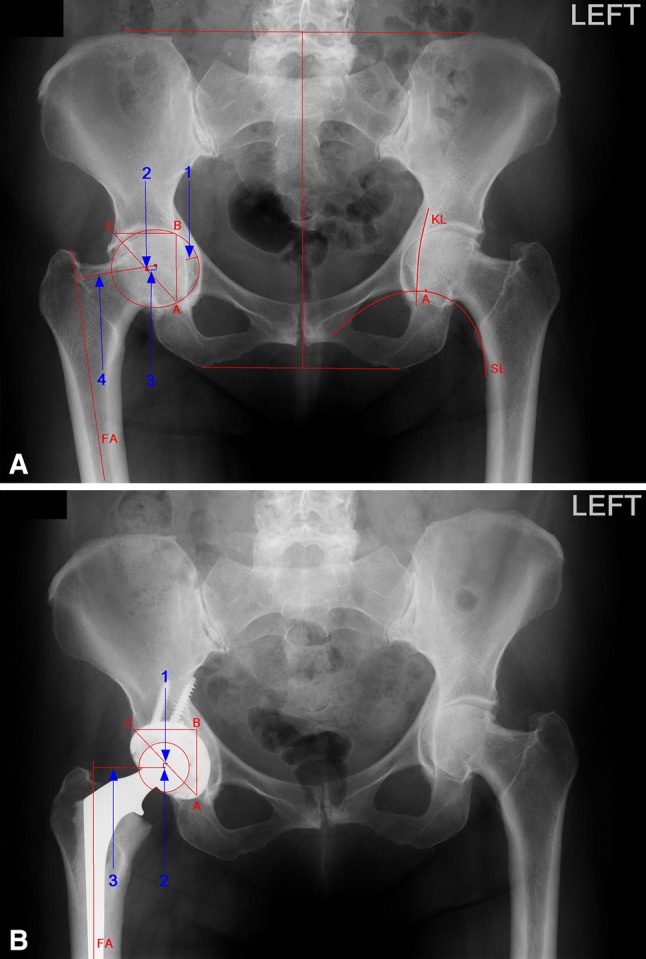
Methods: One hundred twenty-seven patients (162 hips) undergoing primary THA with acetabular protrusio were retrospectively reviewed. The mean age of the patients at surgery was 66±13 years, and the mean followup was 10±6 years (range, 2-25 years).The cup fixation was uncemented in 107 (83 with bone graft) and cemented in 55 hips (14 with bone graft). Preoperative and postoperative radiographs were reviewed for restoration of hip mechanics and offset.
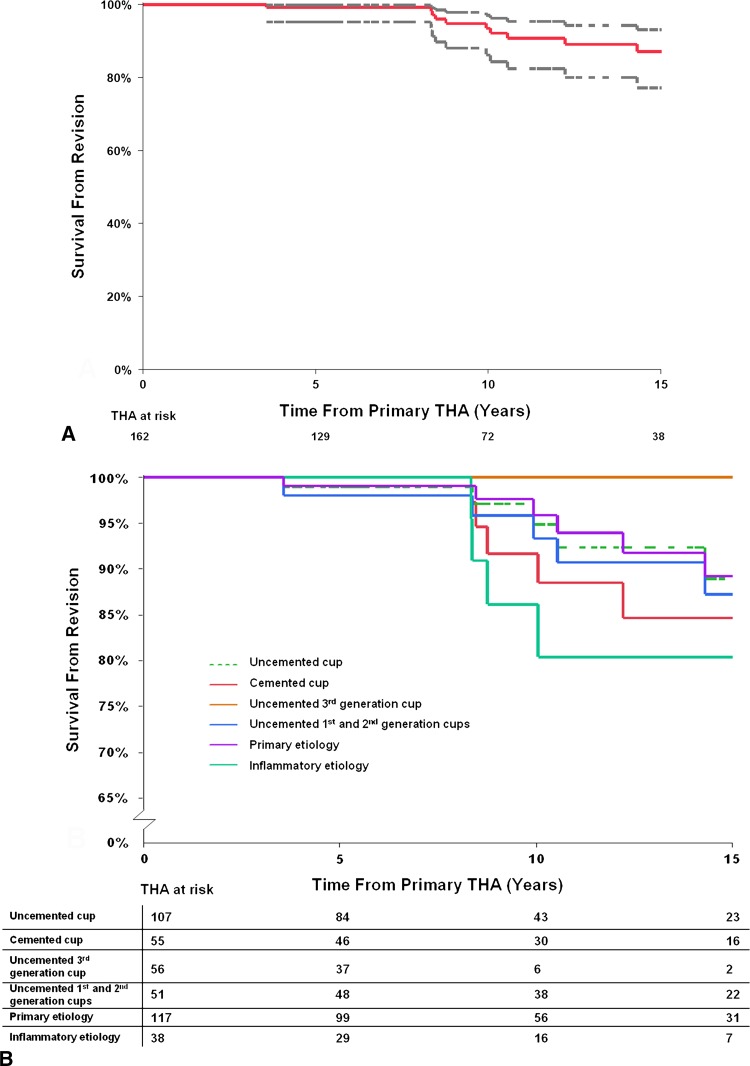
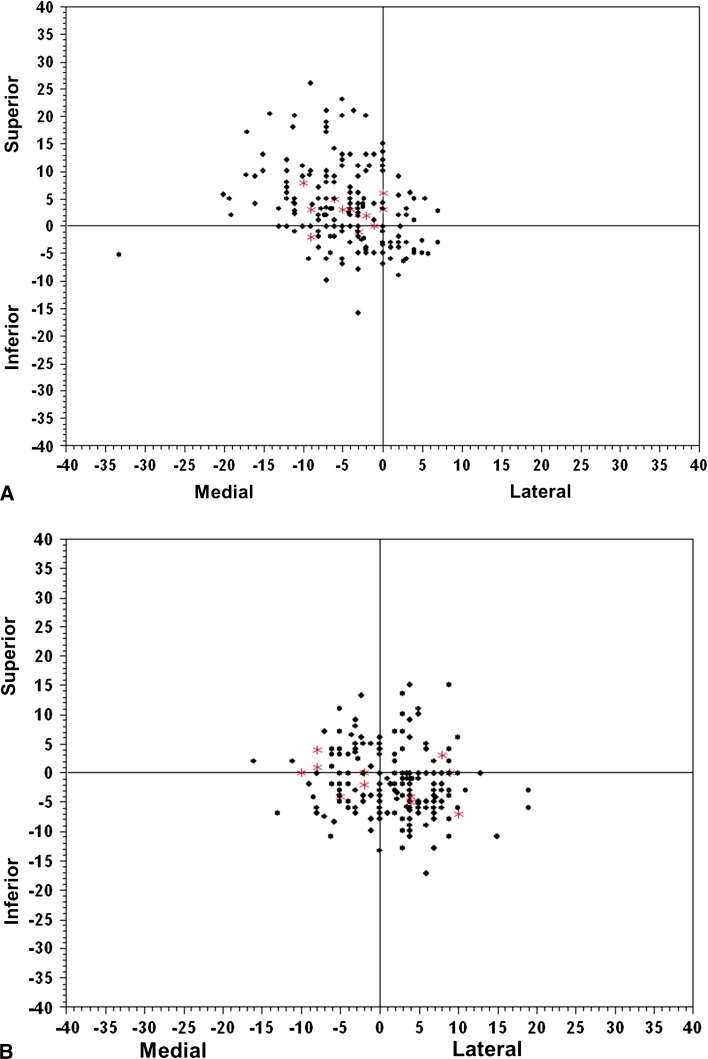
Results: The THA survival from aseptic cup revision at 15 years was 89% (95% CI, 75%-96%) for uncemented compared with 85% (95% CI, 68%-94%) for cemented cups. The risk of aseptic cup revision significantly increased by 24% (hazards ratio, 1.24; 95% CI, 1.02-1.5) for every 1 mm medial or lateral distance away from the native hip center of rotation to the prosthetic head center. Harris hip scores were improved by mean of 27±20 points (n=123) with a higher postoperative score for uncemented bone grafted compared with solely cemented cups (81±16 versus 71±20 points).
Conclusions: Restoring hip center of rotation using an uncemented cup with or without bone graft was associated with increased durability in our series. There was a 24% increase in the risk of aseptic cup revision for every 1 mm medial or lateral distance away from the native hip center to the prosthetic head center.
Level of evidence: Level III, therapeutic study. See Guidelines for Authors for a complete description of levels of evidence.
Figures
Comment in
-
CORR Insights®: restoration of the hip center during THA performed for protrusio acetabuli is associated with better implant survival.Clin Orthop Relat Res. 2013 Oct;471(10):3260-1. doi: 10.1007/s11999-013-3107-3. Epub 2013 Jun 22. Clin Orthop Relat Res. 2013. PMID: 23793791 Free PMC article. No abstract available.
References
-
- Armbuster TG, Guerra J, Jr, Resnick D, Goergen TG, Feingold ML, Niwayama G, Danzig LA. The adult hip: an anatomic study. Part I: the bony landmarks. Radiology. 1978;128:1–10. - PubMed
-
- Charles MN, Bourne RB, Davey JR, Greenwald AS, Morrey BF, Rorabeck CH. Soft-tissue balancing of the hip: the role of femoral offset restoration. Instr Course Lect. 2005;54:131–141. - PubMed
-
- Dearborn JT, Harris WH. High placement of an acetabular component inserted without cement in a revision total hip arthroplasty: results after a mean of ten years. J Bone Joint Surg Am. 1999;81:469–480. - PubMed
-
- Dunlop CC, Jones CW, Maffulli N. Protrusio acetabuli. Bull Hosp Jt Dis. 2005;62:105–114. - PubMed
Publication types
MeSH terms
Grants and funding
LinkOut - more resources
Full Text Sources
Other Literature Sources
Medical
Research Materials
