


Dictionary construction and identification of possible adverse drug events in Danish clinical narrative text
- PMID: 23703825
- PMCID: PMC3756275
- DOI: 10.1136/amiajnl-2013-001708
Dictionary construction and identification of possible adverse drug events in Danish clinical narrative text
Abstract
Objective: Drugs have tremendous potential to cure and relieve disease, but the risk of unintended effects is always present. Healthcare providers increasingly record data in electronic patient records (EPRs), in which we aim to identify possible adverse events (AEs) and, specifically, possible adverse drug events (ADEs).
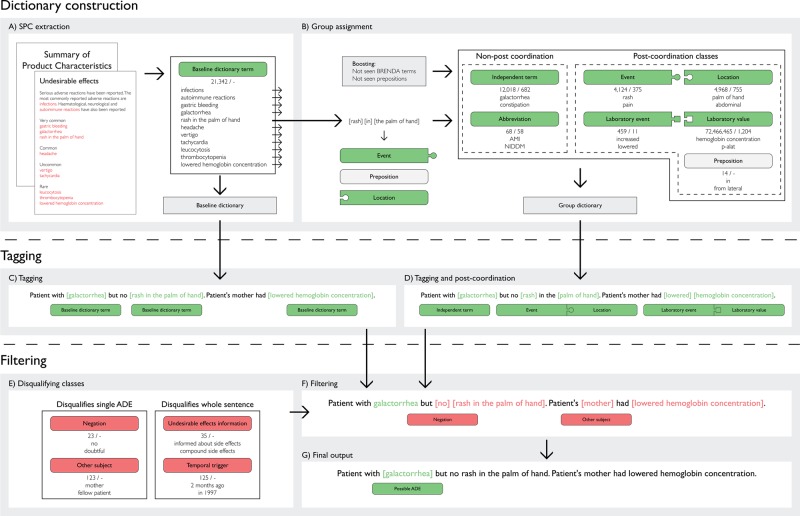
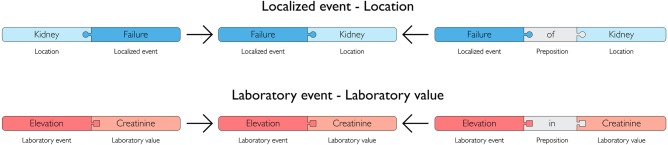
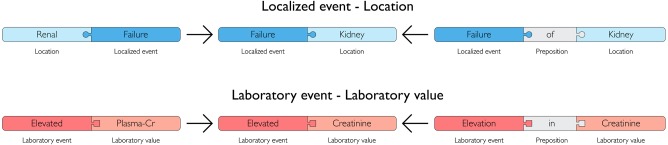
Materials and methods: Based on the undesirable effects section from the summary of product characteristics (SPC) of 7446 drugs, we have built a Danish ADE dictionary. Starting from this dictionary we have developed a pipeline for identifying possible ADEs in unstructured clinical narrative text. We use a named entity recognition (NER) tagger to identify dictionary matches in the text and post-coordination rules to construct ADE compound terms. Finally, we apply post-processing rules and filters to handle, for example, negations and sentences about subjects other than the patient. Moreover, this method allows synonyms to be identified and anatomical location descriptions can be merged to allow appropriate grouping of effects in the same location.
Results: The method identified 1 970 731 (35 477 unique) possible ADEs in a large corpus of 6011 psychiatric hospital patient records. Validation was performed through manual inspection of possible ADEs, resulting in precision of 89% and recall of 75%.
Discussion: The presented dictionary-building method could be used to construct other ADE dictionaries. The complication of compound words in Germanic languages was addressed. Additionally, the synonym and anatomical location collapse improve the method.
Conclusions: The developed dictionary and method can be used to identify possible ADEs in Danish clinical narratives.
Keywords: Adverse Drug Event; Adverse Drug Reaction Reporting Systems; Data Mining; Dictionary; Electronic Health Records.
Figures

References
-
- World Health Organization The importance of pharmacovigilance. Geneva, Switzerland: World Health Organization, 2002
-
- Budnitz DS, Pollock DA, Weidenbach KN, et al. National surveillance of emergency department visits for outpatient adverse drug events. JAMA 2006;296:1858–66 - PubMed
-
- Rottenkolber D, Schmiedl S, Rottenkolber M, et al. Adverse drug reactions in Germany: direct costs of internal medicine hospitalizations. Pharmacoepidemiol Drug Saf 2011;20:626–34 - PubMed
Publication types
MeSH terms
LinkOut - more resources
Full Text Sources
Other Literature Sources
Medical
Miscellaneous
