


An in-depth comparison of the male pediatric and adult urinary proteomes
- PMID: 23707565
- PMCID: PMC3796057
- DOI: 10.1016/j.bbapap.2013.05.008
An in-depth comparison of the male pediatric and adult urinary proteomes
Abstract
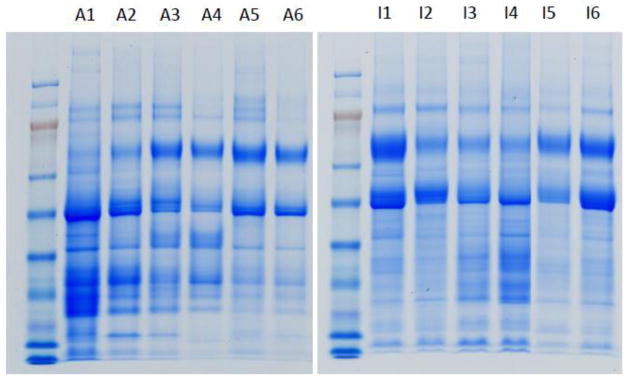
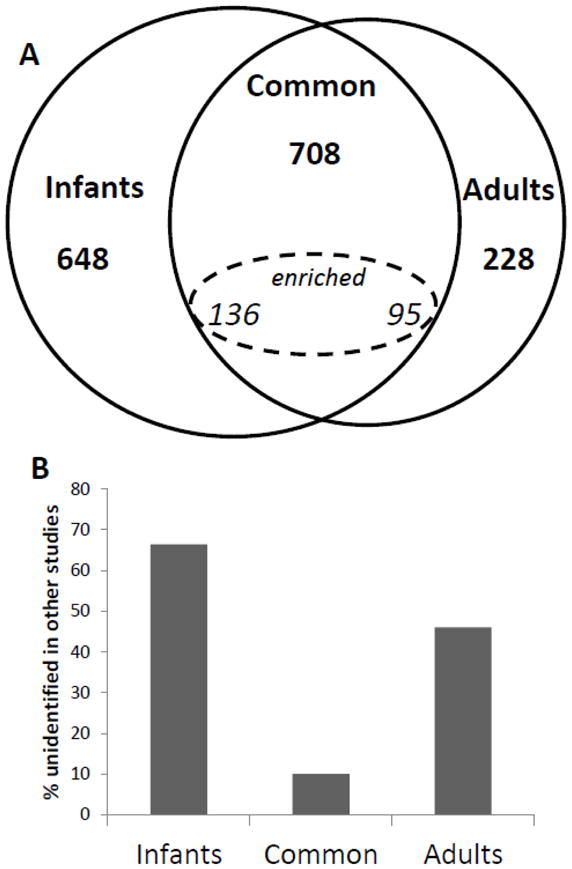
In this study, we performed an in-depth characterization of the male pediatric infant urinary proteome by parallel proteomic analysis of normal healthy adult (n=6) and infant (n=6) males and comparison to available published data. A total of 1584 protein groups were identified. Of these, 708 proteins were identified in samples from both cohorts. Although present in both cohorts, 136 of these common proteins were significantly enriched in urine from adults and 94 proteins were significantly enriched in urine from infants. Using Gene Ontology, we found that the infant-enriched or specific subproteome (743 proteins) had an overrepresentation of proteins that are involved in translation and transcription, cellular growth and metabolic processes. In contrast, the adult enriched or specific subproteome (364 proteins) showed an overexpression of proteins involved in immune response and cell adhesion. This study demonstrates that the non-diseased male urinary proteome is quantitatively affected by age, has age-specific subproteomes, and identifies a common subproteome with no age-dependent abundance variations. These findings highlight the importance of age-matching in urinary proteomics. This article is part of a Special Issue entitled: Biomarkers: A Proteomic Challenge.
Keywords: Mass spectrometry; Pediatric urinary proteome; Spectral counting; Urinary proteomics.
Copyright © 2013 Elsevier B.V. All rights reserved.
Figures
References
-
- Decramer S, Gonzalez de Peredo A, Breuil B, Mischak H, Monsarrat B, Bascands JL, Schanstra JP. Urine in clinical proteomics. Mol Cell Proteomics. 2008;7:1850–1862. - PubMed
Publication types
MeSH terms
Substances
Grants and funding
LinkOut - more resources
Full Text Sources
Other Literature Sources
Medical
