


Aging with HIV: a practical review
- PMID: 23711587
- PMCID: PMC9428066
- DOI: 10.1016/j.bjid.2012.11.007
Aging with HIV: a practical review
Abstract
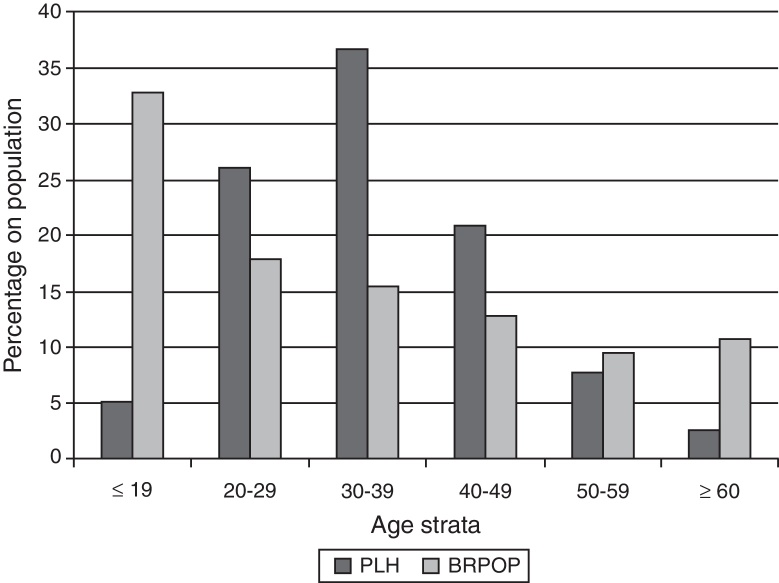
The worldwide elderly population is expected to grow by an additional 694 million people by 2025. By that time, there will be approximately two billion elderly people in the world, most of whom (80%) will be living in developing countries. Based on recent estimates, this population will number over 40 million in 2030 in Brazil and a consequent increase in governmental spending for this population can be expected. Since highly active antiretroviral therapy became available in the mid-1990s, the life expectancy of people living with HIV has increased significantly. Approximately 12 million life years were added to the world between 1996 and 2008 as a consequence of wider access to highly active antiretroviral therapy. In Brazil, the incidence of AIDS among the population aged ≥50 years doubled between 1996 and 2006. The development of antiretroviral therapy has allowed individuals diagnosed at a younger age to live longer, which partially explains the aging tendency associated with the HIV/AIDS epidemic. It is estimated that by 2015, subjects aged ≥50 years will represent 50% of the people living with HIV undergoing clinical treatment. This scenario presents some challenges, including the fact that the diagnosis of HIV tends to be delayed in older patients compared to younger patients because the symptoms of HIV can be confused with those of other common diseases among the elderly and also because healthcare professionals do not consider this population to be at high risk for HIV infection. In regard to the individuals diagnosed with HIV, a further challenge is presented by the morbidity normally associated with aging. Finally, the elderly also exhibit higher susceptibility to the toxic effects and pharmacological interactions of medications. The present article reviews the literature regarding the profile of HIV infection among individuals aged ≥50 years focusing on practical features related to the clinical approach and long-term follow-up of this population.
Keywords: AIDS; Aging; Brazil; Comorbidity; Elderly; HAART; HIV.
Copyright © 2013 Elsevier Editora Ltda. All rights reserved.
Figures
References
-
- World Health Organization – WHO. Active ageing: a policy framework. Geneva; 2005. Available from: http://whqlibdoc.who.int/hq/2002/who_nmh_nph_02.8.pdf [accessed 26.07.12].
-
- United Nations – UN. United Nations Department of Economic and Social Affairs. World population ageing 1950–2050. New York; 2002. Available from: http://www.un.org/esa/population/publications/worldageing19502050/ [accessed 19.11.12].
-
- Instituto Brasileiro de Geografia e Estatística – IBGE (Brazil). Perfil dos Idosos Responsáveis pelos Domicílios no Brasil 2000. Rio de Janeiro; 2002. Available from: http://www.ibge.gov.br/home/estatistica/populacao/perfilidoso/perfidosos... [accessed 18.11.12].
-
- Instituto Brasileiro de Geografia e Estatística – IBGE (Brazil). Síntese de Indicadores Sociais. Brasília; 2007. Available from: http://www.ibge.gov.br/home/estatistica/populacao/trabalhoerendimento/pn... [accessed 26.07.12].
-
- Turra C.M., Rios Neto E. International accounting and economic consequences of aging in Brazil. Program and abstracts: XXVI USSP general population conference; Salvador (Brazil); 2001.
Publication types
MeSH terms
Substances
LinkOut - more resources
Full Text Sources
Other Literature Sources
Medical
